
You scatter granules, set traps and pour vinegar water - yet the ants continue to march determinedly through flowerbeds and across patio slabs. The reason is often not the wrong bait, but the planting scheme: some plants act like an open buffet for ants.
Why ants suddenly appear everywhere in the garden
Ants do not automatically indicate an “unkempt” garden. Quite the opposite: wherever plenty is growing and flowering, they usually find abundant food and secure nesting sites. It only becomes a problem when they settle in large numbers, undermine the lawn or make their way indoors via the house.
The key to understanding this lies in their food supply. Ants are constantly looking for sugar, protein and fat. Many popular garden plants provide exactly that, either directly or indirectly.
By planting certain species, you often unknowingly create an all-inclusive feeding spot for ants - complete with a supply that lasts throughout the season.
The hidden ant magnets in the flowerbed
1. Aphids as the main culprit - and what roses have to do with them
The biggest ant magnet in the garden is not a plant at all, but a tiny insect: the aphid. Aphids sit on shoots and leaves, feed on plant sap and excrete a sugary liquid known as honeydew. Ants are particularly attracted to it.
They “milk” aphids, even defend them against predators such as ladybirds, and thereby help the pests spread even further. Some plants are especially prone to aphid infestations, making them a direct invitation to ants:
- Roses: A classic choice for front gardens, but highly susceptible to aphid colonies on young shoots and buds.
- Young fruit trees: The soft, fresh shoots of apple, plum, cherry and peach trees in particular are frequently affected.
- Delicate perennials and summer flowers: Such as delphiniums, dahlias and nasturtiums.
Anyone who loves roses and young fruit trees can therefore easily attract an ant trail straight into the flowerbed. This is not because ants are especially interested in the plants themselves, but because their “livestock” is living there.
2. Fruit trees as a source of sugar
Fruit trees are twice as appealing to ants: firstly because of aphids, and secondly because of sweet plant sap and overripe fruit.
The following are particularly noticeable:
- Apple trees: Tiny splits in the skin or damaged areas release sweet juice - a feast for ants.
- Plum and damson trees: Ripe or split fruit drips, while fallen fruit is often left on the ground - all of it rich in sugar.
- Pears: Much the same applies as with apples, especially for varieties that ripen heavily.
Leaving fallen fruit beneath a tree for an extended period greatly intensifies the effect. Ants find not only sugar there, but also other insects and protein sources.
3. Berry bushes: picturesque charm with a side effect
Home-grown berries are a delight for children, birds and ants alike. Busy ant activity is especially common around these bushes:
- Raspberries: Soft, sweet fruit that quickly becomes mushy and falls to the ground.
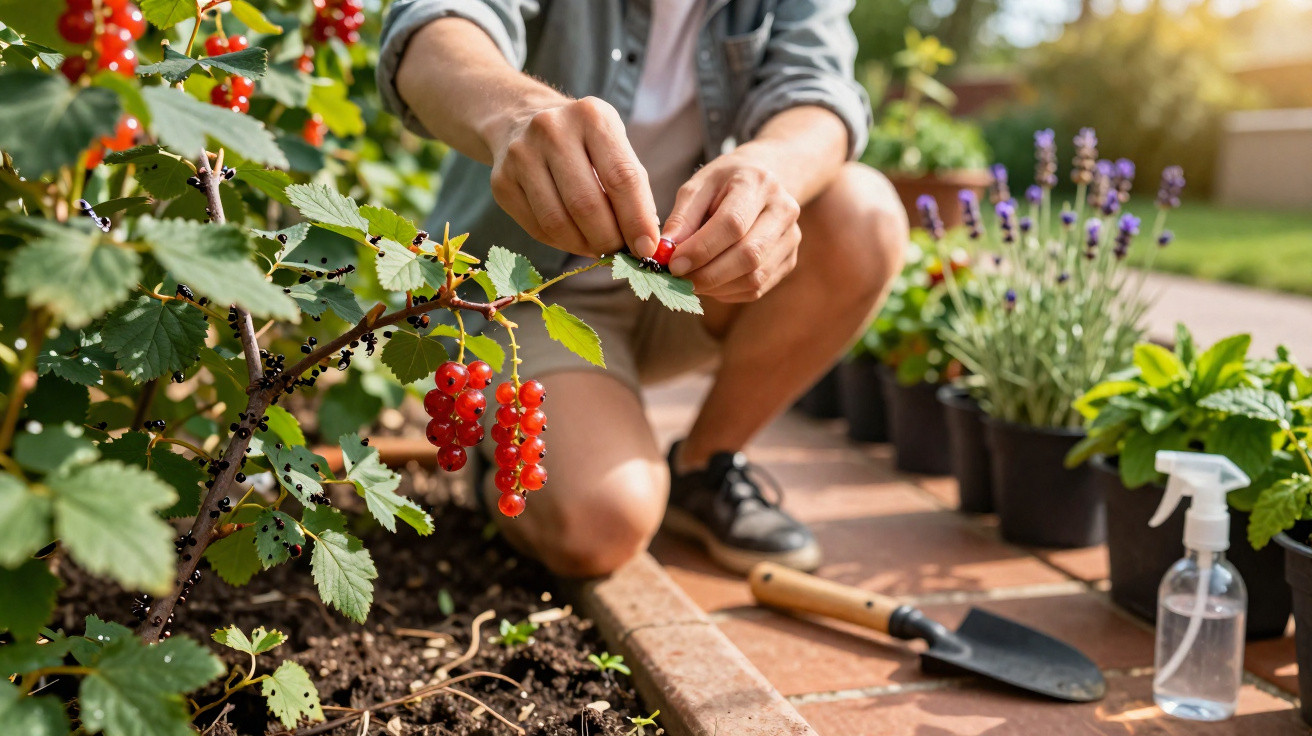
- Redcurrants: Fallen berries and harvest leftovers create patches full of fruit sugar.
- Gooseberries: Ripe, burst fruit strongly attracts ants.
Old fruit remnants, mulch and slightly damp soil create ideal living conditions for ants: shelter, food and enough room for a large nest.
When ants in the garden genuinely become a problem
A few ants in a flowerbed are completely normal and are often even helpful. They clear away dead insects and aerate the soil. Intervention is only worthwhile in certain situations:
- When ants severely undermine the lawn, causing it to sink.
- When underground tunnels make patio slabs or paths unstable.
- When ants enter the house by travelling across the façade or through patio doors.
- When they “farm” aphids so intensively that plants are visibly weakened.
In these cases, tackling only the ants is of little use. If you ignore the available food, you are always treating the symptoms rather than the cause.
Plants that ants clearly avoid
Fortunately, there are also plants that ants dislike. Some fit perfectly in a herb garden or along patio edges - while also being useful in the kitchen.
Certain herbs disrupt ants’ delicate scent trails with their essential oils, confusing their navigation system.
1. Strongly scented herbs as a natural barrier
Strongly aromatic plants are particularly suitable candidates:
- Thyme: Contains compounds that have a distinctly deterrent effect on ants.
- Mint: Its intense fragrance masks the attractants given off by other plants.
- Lavender: Popular with many insects, but generally avoided by ants.
Positioning these herbs strategically at key points - for example, along the patio edge or beside paths - can interrupt ant trails. Planted among roses in a flowerbed, they form a kind of scented protective belt.
2. Wormwood, tansy and more: bitter rather than sweet
Alongside culinary herbs, there are wild and medicinal plants whose scent also keeps ants at a distance. One example is tansy, which has a distinctive smell and repels many insects. Plants of this kind work well at the back of flowerbeds or as a border along fences.
How to manage ants in the garden with plants
With a little planning, you can guide the ant population in your garden rather than trying to eliminate it entirely with chemicals. A mixture of attraction and deterrent zones works particularly well.
- Create an attraction area: Leave a quiet corner some distance from the house with a fruit tree, berries and little disturbance. Ants can be allowed to “work” there.
- Make the area near the house less appealing: Plant strongly scented herbs close to the patio, paths and entrances.
- Control aphids: Check roses and young fruit trees regularly, and act promptly if infestations become severe by spraying with water or encouraging beneficial insects.
- Remove fallen fruit: Tidy beneath fruit trees regularly and do not leave rotting fruit on the ground.
Giving ants an acceptable area where they can find food and shelter often prevents them from seeking new routes into the house in the first place.
Practical tips for ant trails around the house and patio
If ants have already made their way towards the house, a few simple everyday measures can help alongside planting:
- Check and seal gaps and joints around doors, windows and patio seals.
- Clear away food scraps outdoors promptly, and wipe up sticky drink spills straight away.
- Do not store kitchen waste uncovered next to the patio.
- During summer, avoid placing ground-level bird feeders directly beside the house.
Combined with strongly scented herbs around the patio edge, these measures can prevent ants from establishing a permanent “city-centre location” inside the home.
How much do ants really harm my plants?
Many garden owners worry as soon as they spot larger ant mounds. In most cases, however, the insects do not attack plants directly. The real issue is the aphid colonies they encourage. Aphids drain plants of sap, distort leaves and slow growth.
So if you feel that “ants are destroying the roses”, what you are actually seeing is the effect of a combination: numerous aphids, protected and encouraged by ants. As soon as aphid numbers fall, the location becomes far less attractive to ants.
A realistic approach to ants in the garden
No garden will be entirely free of ants - nor would that be desirable. They form part of the natural balance, break down organic material and provide food for other animals. What matters is where they appear and how numerous they become.
Keeping in mind which plants attract ants when buying plants allows you to plan deliberately: position fruit, berries and rose-filled displays a little further from the house, then add strongly scented herbs between them and around the edges. Add a watchful eye for aphids, and there is a good chance the next ant colony will choose the back of the garden rather than marching through your kitchen.





Comments
No comments yet. Be the first to comment!
Leave a Comment