
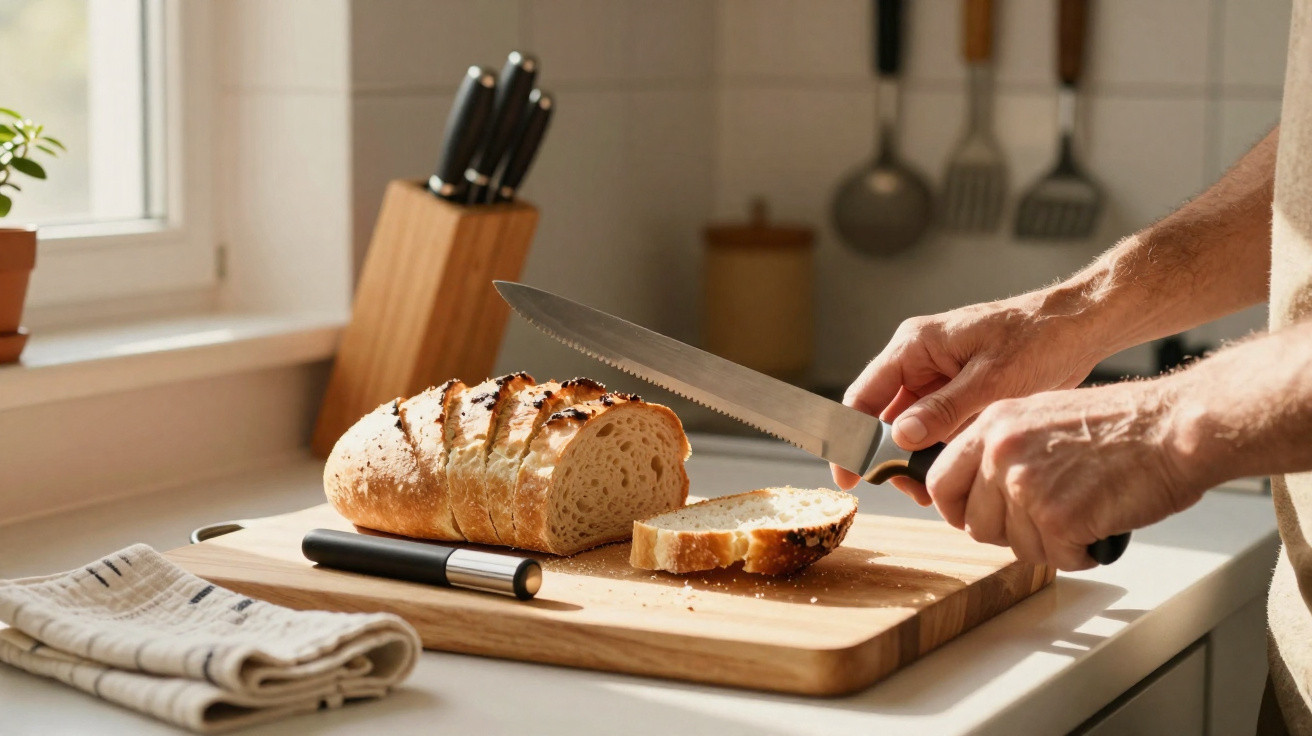
A blunt serrated knife needs different care from that used for a plain-edged blade. Every tooth has its own shape and contributes to cutting, so trying to sharpen it with unsuitable tools may distort the serrations. When the drop in performance is clear, professional servicing is the safest option.
Why does a serrated knife become blunt?
Wear develops through frequent use, contact with hard surfaces and knocks against other cutlery. Over time, the tips of the teeth become rounded and no longer begin a cut as easily.
The blade can also work less effectively if debris builds up in the grooves or if it develops minor distortions. This does not automatically mean that the entire knife is blunt, as some teeth may be more worn than others.
How can you tell whether the serrations need maintenance?
Several signs suggest that the blade is no longer performing as it should. Assess it visually only: do not run your fingers along the edge or carry out tests that could increase the risk of cuts.
- food is crushed rather than sliced;
- the knife slips easily across the surface;
- some teeth look bent or rounded;
- cutting requires more pressure than it did previously;
- there are visible rust spots or chips on the blade.
Why can home sharpening damage the blade?
Each serration has a particular width, depth and angle. Flat stones, sandpaper and improvised objects can wear down the tips, alter the tooth profile or create uneven areas that make cutting even less consistent.
There is also a risk that the tool may slip while maintenance is being attempted. A professional can determine whether the serrations can be restored or whether wear, cracks or corrosion mean that replacement is the more suitable choice.
What should you check when looking for a professional service?
Choose a service with specific experience of serrated blades, as their maintenance differs from that of straight-edged knives. Before handing over the utensil, it is worth checking the following:
- whether the professional works with that particular serration pattern;
- whether the teeth will be retained rather than converted into a plain edge;
- whether any distortions prevent safe restoration;
- whether the servicing cost is worthwhile compared with replacement;
- whether the knife will be returned clean, dry and with blade protection.
How can you extend its lifespan after maintenance?
Once restored, the knife should be kept clean, thoroughly dry and protected from direct contact with other cutlery. Untidy drawers encourage metal-on-metal knocks, while trapped moisture can cause staining and corrosion.
Professional servicing will not turn a severely damaged blade into a new knife, but it can restore performance when the teeth remain intact. If there are cracks, deep rust or broken serrations, replacing the utensil is usually the safest decision.




Comments
No comments yet. Be the first to comment!
Leave a Comment