
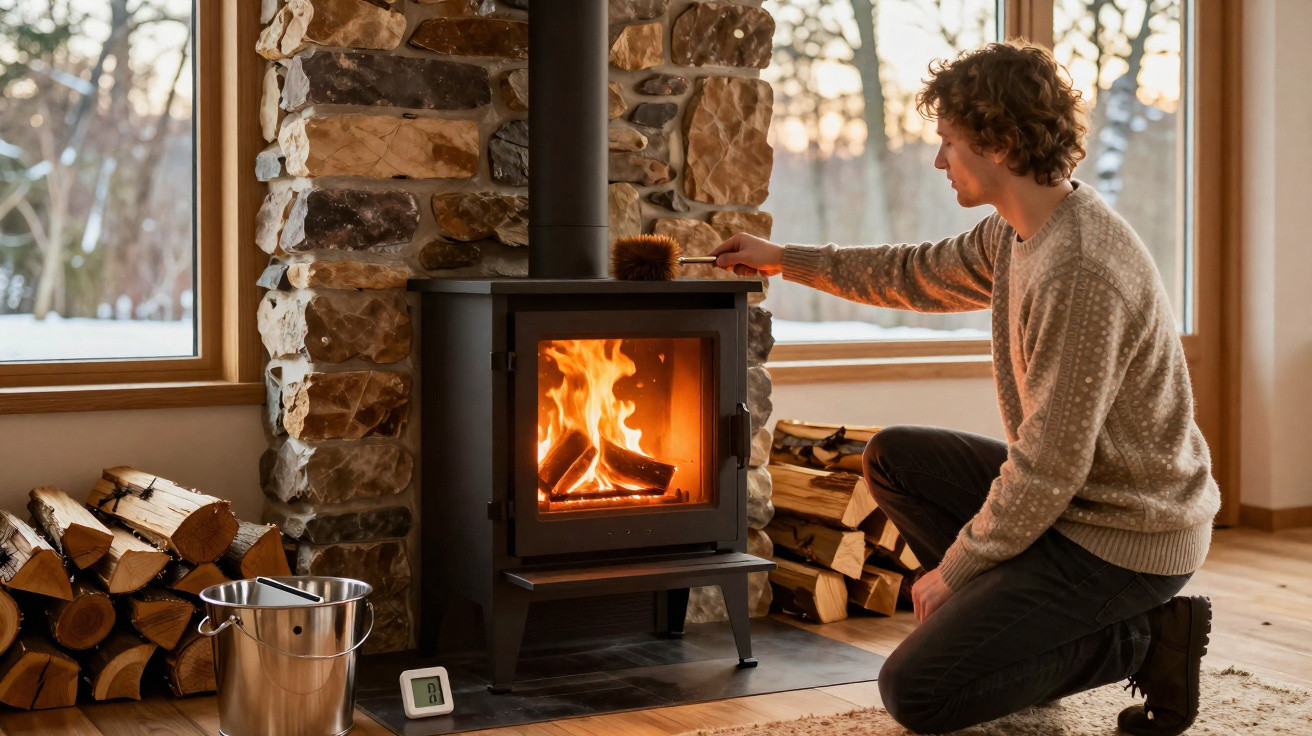
With colder weather setting in and energy bills rising, many people turn to the fireplace or wood-burning stove for some relief.
The issue is that, in many homes, this form of heating could deliver far more warmth through one simple action that hardly anyone takes seriously. It does not mean replacing the appliance or buying “magic” firewood: it means dealing with something hidden from view that controls the whole system’s performance.
The overlooked step that transforms heating
Anyone with a fireplace, wood-burning stove or salamander stove will recognise the situation: the fire looks appealing, the logs burn without any obvious trouble, yet the room takes ages to warm up. The wood disappears quickly, the living room remains cold and it feels as though money is being burned for nothing.
According to wood-heating specialists, the crucial factor is not just the type of wood or the appliance model, but something far less glamorous: cleaning the smoke flue, commonly known as the chimney.
A clean flue can almost double the efficiency of wood heating, cutting wood consumption and increasing thermal comfort.
Over weeks of use, burning wood leaves soot, creosote and other deposits on the flue’s inner walls. This build-up acts rather like an insulating coat: exhaust gases cannot pass as freely, the draught weakens and a large share of the energy is lost as wasted smoke.
Why a clean flue produces more heat
In a wood-burning system, the movement of smoke is the invisible force behind the heating process. If the flue is blocked, hot air struggles to rise, oxygen intake is restricted and combustion becomes incomplete.
The practical outcome is more smoke, less useful heat and more wood used to warm a room that takes too long to become comfortable.
A dirty flue means lost heat and greater risk. A clean flue means a livelier fire, less smoke and a warm home with less wood.
There is also a safety issue: creosote deposits are flammable and can trigger chimney fires, an incident that is common in cold regions.
How to maintain the smoke flue without making it complicated
Local regulations and technical standards often require at least one professional chimney sweep each year, carried out by a qualified company. That visit remains essential, but householders can add to this care throughout the cold season.
A straightforward maintenance routine
- Using a chimney brush or “hedgehog” brush: this tool has stiff bristles and is fitted to rods to scrape the flue’s internal walls. A light clean every two or three months during heavy use can make a real difference.
- Good-quality, well-seasoned firewood: damp wood produces more smoke and soot. Dense woods, such as properly cured eucalyptus or peroba, dried for at least 12 months, leave fewer deposits.
- Cleaning aids: cleaning “bricks” or sachets are available which release compounds as they burn, helping to loosen some soot. They do not replace mechanical cleaning, but they can reduce build-up between brushings.
Signs that your flue needs attention
Everyday use provides clear clues when something is wrong. Some symptoms need immediate attention:
- A strong smell of smoke or soot indoors, even when the fire is low.
- Smoke coming back through the stove glass or the fireplace opening.
- The room taking longer than usual to heat up.
- Rising firewood use with less sensation of warmth.
- Unusual noises in the flue, crackling or “whistling” when the fire is burning strongly.
Ignoring these signs raises the risk of a chimney fire and carbon monoxide poisoning, an odourless gas that can be fatal.
Well-adjusted combustion: half the secret to warmth
Cleaning the flue solves only part of the issue. The other part lies in how the fire is lit and controlled. The way the appliance is loaded directly affects its thermal efficiency.
Small changes that improve efficiency
- Gradual temperature build-up: rather than filling the fire immediately, begin with a few thin pieces of kindling, allow them to catch properly, then add larger logs. This reduces smoke and improves combustion.
- Air control: the air inlets on the stove or fireplace regulate the speed of combustion. Fully closing them starves the fire and creates smoke; leaving them fully open makes the wood burn too quickly.
- Do not overfill the firebox: cramming the space with logs up to the opening reduces airflow, creates cool embers and produces excessive residue.
- Keep ash at a controlled level: a thin layer helps retain the embers, whereas too much ash blocks airflow.
How much can be saved by changing one habit
Simulations by energy-efficiency technicians show that a poorly maintained wood-burning stove can lose up to half of its heating capacity. The same space may need twice as much wood to reach the same temperature.
By keeping the flue clean and combustion properly adjusted, families that rely heavily on wood report consumption reductions of between 20% and 40% per winter, depending on the local climate and the size of the home.
| Scenario | Firewood consumption per winter | Thermal comfort |
|---|---|---|
| Dirty flue, poorly regulated combustion | 3 to 4 loads of firewood per week | Room warms slowly, with many cold spots |
| Clean flue, adjusted combustion | 2 to 3 loads of firewood per week | More even warmth, less indoor smoke |
For those who rely on firewood as their main source of heating, a simple maintenance plan can mean hundreds of Brazilian reais saved in a single season.
How to create a care routine without becoming a slave to the chimney
A practical approach is to treat the flue as you would a car filter: there are set dates and warning signs for taking action, so it becomes part of the household calendar.
- Before winter: carry out a visual inspection, check for cracks, birds’ nests and debris, and arrange professional servicing.
- During peak use: perform a light brushing every two or three months and watch for signs of smoke returning into the room.
- At the end of the season: carry out a more thorough clean, remove accumulated soot and check the condition of seals, doors and glass.
People living in very cold areas who use their stove intensively every day may need to shorten these intervals. Holiday homes used only at weekends generally build up less soot, but they are not risk-free: long periods without use can encourage water ingress and invisible damage to the flue.
Risks and precautions that many people remember too late
Two risks go hand in hand with a poorly maintained flue: chimney fires and carbon monoxide poisoning. The first happens when the creosote layer ignites; flames travel up the flue, may crack the structure and can reach wooden parts of the roof.
The second occurs when smoke cannot escape and returns into the living space. Carbon monoxide has no smell and can cause headaches, dizziness, nausea and, at high concentrations, loss of consciousness.
- Keep a window slightly open in very airtight rooms.
- Avoid sleeping with a very strong fire burning in small rooms.
- Consider fitting carbon monoxide detectors near bedrooms and areas where the stove is used heavily.
When to consider upgrading the entire system
In some older homes, the flue may already be damaged, with cracks and corroded sections. In these cases, cleaning alone is no longer enough. Professionals commonly recommend lining the flue with internal metal pipes or, in extreme cases, partially rebuilding the damaged section.
Taking the opportunity to install a high-efficiency wood-burning stove or a closed fireplace can provide an additional benefit. These modern appliances make better use of heat, offer more precise air control and create less residue. With the flue in good condition, the effect on household comfort is likely to be immediate.
One simple step, several knock-on benefits
By cleaning the flue and improving the way firewood is burned, the householder does more than heat the home more quickly. They also reduce the impact of smoke on neighbours, protect the roof, lower the likelihood of emergencies and extend the appliance’s service life.
For anyone who began looking after their flue “this week” and has already felt the difference, the lesson is usually clear: fire does not work on its own. Without a clear route for smoke to rise, even the best firewood and the best stove in the world will deliver far less than they could.




Comments
No comments yet. Be the first to comment!
Leave a Comment