
Anyone who walks past dented cutlery boxes at a flea market or second-hand shop is overlooking a surprisingly rich source of creativity. With a few basic tools, some patience and a willingness to experiment, old spoons can become hooks, jewellery, plant labels or wind chimes. It also saves money and keeps waste out of the bin.
Why old spoons deserve better than the scrap heap
Many homes have old cutlery sets tucked away in drawers, while flea markets sell them in boxes for just a few pence each. Metal that has already been made does not need to be produced again, helping to conserve resources. That is where this idea begins: discarded spoons become the starting point for one-off projects unavailable from any furniture shop.
“A pile of bent spoons can be turned into a coat rack board, a wind chime or a striking ring in just a few steps – and every piece remains unique.”
For anyone who enjoys making things or wants to fill their home with personal touches, old spoons are a remarkably adaptable material. Whether made from silver, stainless steel or wood, each type of spoon suits different uses.
Choosing the right material: silver, stainless steel or wood?
Before reaching for a saw, take a close look at what you have found. Not every spoon is suitable for every project, and a quick material check can prevent frustration and snapped handles.
Silver spoons: soft, elegant and ideal for jewellery
Silver – especially genuine sterling silver – bends and works easily. Its surface develops a gentle patina over time, giving jewellery added character.
- Suitable for: rings, pendants and delicate decorations
- Advantage: easy to shape and looks high-quality
- Test: if a magnet sticks, it is usually not solid silver.
Stainless steel: hard-wearing for everyday use and furniture
Stainless steel is considerably tougher. It takes more force to bend, but can withstand almost anything once shaped. It is ideal when the finished item needs to be genuinely durable.
- Suitable for: wall hooks, handles and garden features
- Advantage: rust-resistant, highly sturdy and practical for daily use
Wooden spoons: warm, colourful and quick to transform
Wooden spoons are easy to work, sand and paint. They are at their best where colour, patterns and a warm appearance are wanted.
- Suitable for: kitchen décor, children’s rooms and labelled plant markers
- Advantage: no specialist tools required, making them ideal for beginners
Preparing old spoons safely
Before an old spoon becomes an attractive accessory, it needs some preparation. This helps ensure that nothing is loose, sharp or likely to rust.
- Clean: soak it in warm water with washing-up liquid, loosen dirt with a soft brush, rinse thoroughly and allow it to dry completely.
- Smooth: remove sharp edges with a file or sandpaper, particularly after sawing or cutting off the handle.
- Test: bend the handle gently. If it cracks or breaks, the piece is better suited to decorative projects without heavy loads.
For metalwork, a small vice or sturdy edge, a rubber mallet, a hacksaw, a drill with metal drill bits, safety glasses and gloves will usually be enough. Far less equipment is needed when working only with wood.
12 creative ways to turn spoons into statement pieces
Once the tools are ready, an impressive range of projects opens up. There is something for every skill level, from quick makes to more ambitious work.
1. Wall hooks made from bent spoons
Bend spoon handles slightly backwards and screw the spoon bowls onto a wooden board to create hooks for mugs, tea towels, keys or coats. Different patterns and sizes make the board more eye-catching.
2. Serving tray with spoon handles
A plain wooden board becomes a serving tray by using sturdy tablespoons as handles on either side. Bend the handles at right angles and screw them in place from underneath.
3. Bird feeding station
Combine a jar or small pot with a wooden spoon beneath it to catch the feed, creating a simple bird feeder to hang from a balcony or in the garden.
4. Wind chime made from spoon bowls
The curved bowls of metal spoons can be suspended individually and paired with glass beads. Even a light breeze will create a soft tinkling sound in the garden or on the veranda.
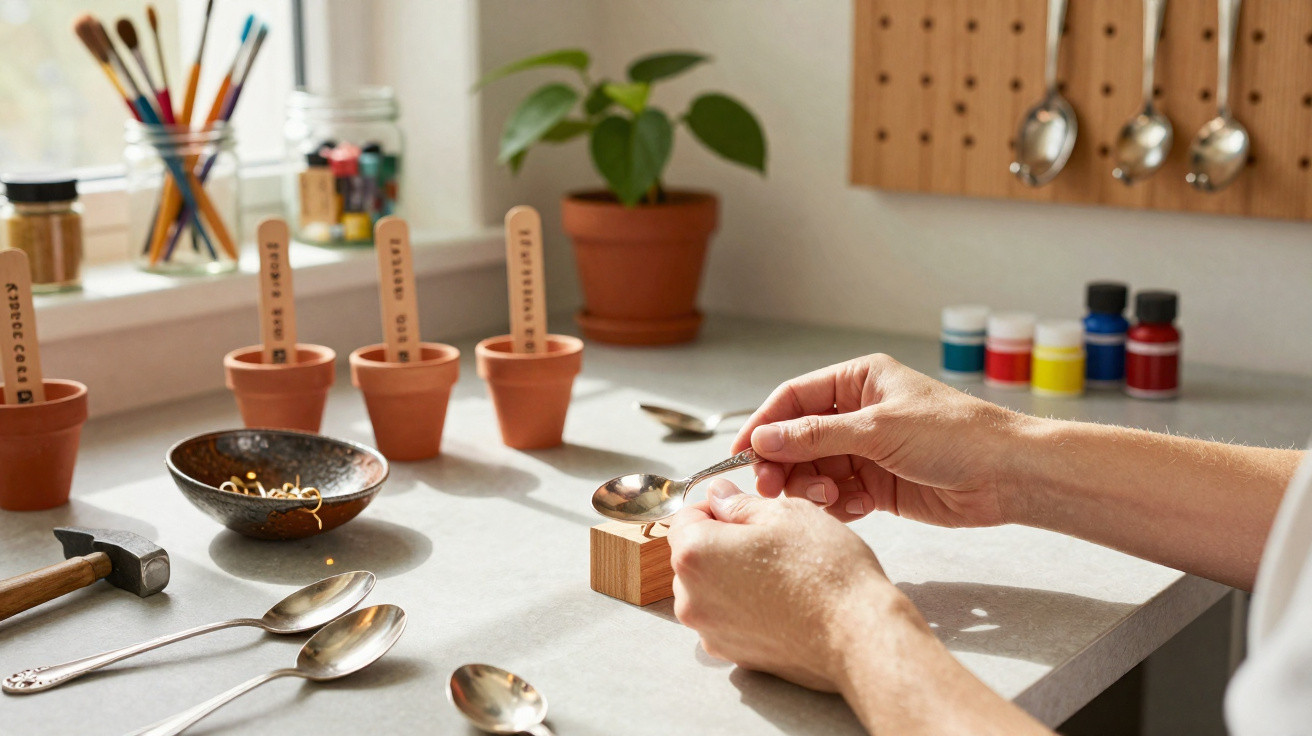
5. Embossed plant labels
Hammer spoon bowls flat and mark them with letter stamps. The result is a lasting name label for herbs and vegetable beds that can easily withstand rain.
6. Painted wooden spoons for the kitchen
Give wooden spoons fresh patterns using acrylic or chalk paint. Dots, stripes or short phrases make a colourful bouquet in a jar that brightens any worktop.
7. Handles with an epoxy-resin look
For a more contemporary style, redesign only the handles. A coat of paint followed by a layer of epoxy resin produces a smooth, glass-like finish. It works particularly well for decorative spoons or as an accent among ordinary cutlery.
8. Pendants from spoon bowls
The bowl of a silver spoon can be reshaped into a small pendant. Inlaid stones, engravings or stamped letters turn it into a personal piece of jewellery.
9. Rings made from spoon handles
Rings fashioned from old silver spoons are especially popular. Shorten the handle, bend it into a circle and smooth the inside. Each ring can use 30 to 50 grams of metal that might otherwise have ended up as scrap.
10. Decorative pulls for lamps and fans
A single ornate spoon handle is perfect as a pull for a ceiling light or ceiling fan. It is practical as well as decorative.
11. Jewellery holders from spoon display racks
Old wall-mounted racks for collectible spoons may seem dated to many people. With sandpaper, fresh paint and a few extra drilled holes, they can become a tidy jewellery stand for necklaces, rings and earrings.
12. Personal place cards
Hammered spoon bowls bearing stamped first names can replace traditional paper place cards at celebrations. Guests can simply take their name tag home afterwards.
How to find the best spoons at flea markets and second-hand shops
Shop with a purpose and you can come home with a whole bag of suitable spoons without spending much.
- Choose mixed sets: assorted boxes are inexpensive and offer plenty of variations for testing.
- Look for ornate handles: ornaments, patterns and crests are especially appealing later on rings and pendants.
- Set aside large spoons: soup and serving spoons are particularly useful for hooks, handles and load-bearing elements.
- Try a quick bend: a brief bending test reveals whether the material is brittle or shapes well.
One thing many people miss is that racks, cutlery boxes and other accompanying pieces can also be given a new purpose. A simple wooden stand for collectible spoons can become a modern hallway organiser with fresh paint and small hooks.
Upcycling old spoons: benefits, risks and useful additions
Working with old spoons does more than save money. Each project extends the life of materials already in existence and reduces demand for newly made goods. Metal spoons in particular can often last for many more years after being transformed.
This kind of crafting is not entirely risk-free. Swarf can fly when sawing, drilling or sanding, and pieces may suddenly break while being bent. Safety glasses and gloves are therefore far more than optional extras. Children should only help with safe tasks such as painting or sorting.
It becomes particularly interesting when spoons are combined with other finds: driftwood, old boards, glass bottles, leftover tiles or unwanted buttons work brilliantly alongside them. These materials can create pallet-wood coat-hook rails with spoon hooks, hallway coat racks or colourful metal-and-glass garden features.
Those getting used to the material should start with straightforward projects such as hooks, plant labels and painted wooden spoons. As confidence grows, more precise work, including rings, pendants and intricate wind chimes, becomes achievable. What appears to be a worthless box of odds and ends can then become an enduring source of inspiration for individual home ideas.



Comments
No comments yet. Be the first to comment!
Leave a Comment