
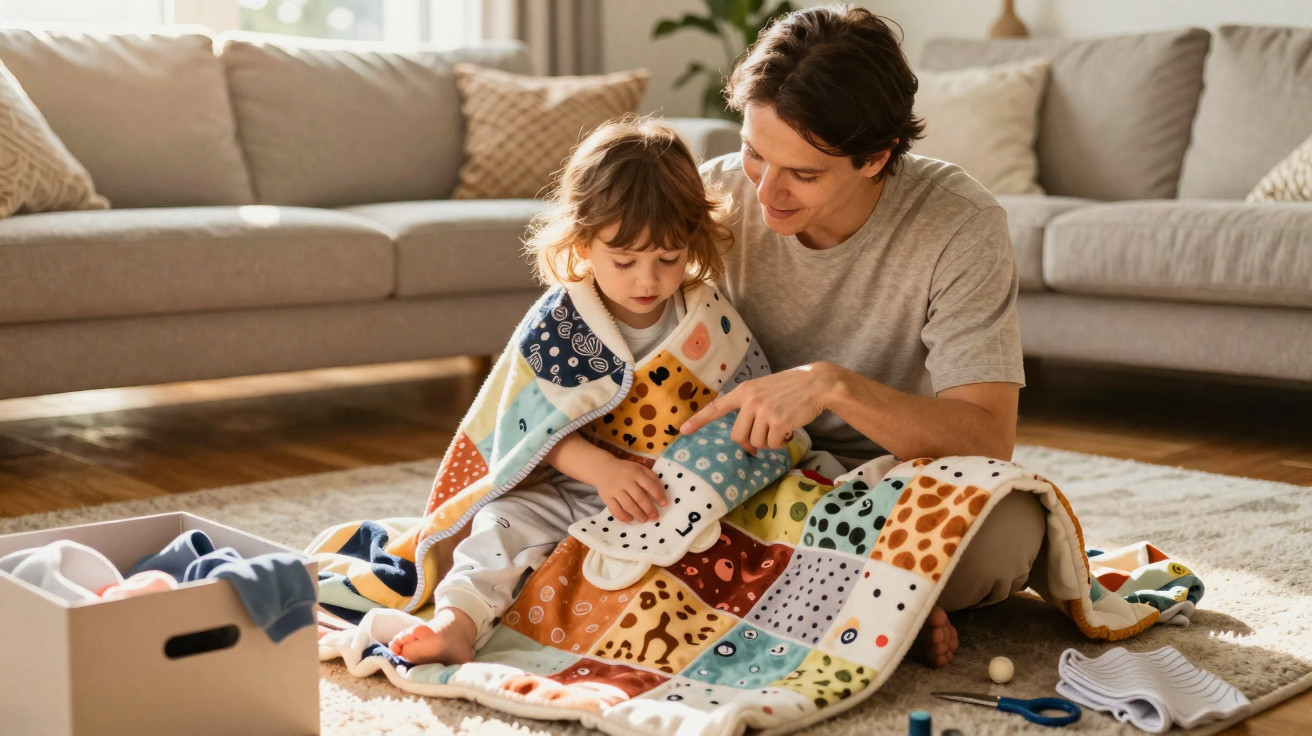
Many parents know the feeling: you keep those first baby clothes because every fibre seems to hold a memory. Yet the garments end up in boxes that are never opened again. One straightforward sewing project can turn this emotional clutter into a tangible keepsake for the sofa, nursery or family bed.
Memories in a box: why baby bodysuits are so hard to part with
During the first year, a child can easily get through five to seven bodysuits a day. Stains, dribble and little mishaps mean constant changes of clothes. By the end of the year, this tiny wardrobe can comfortably fill several removal boxes.
These garments represent the earliest days of family life: the first smile, sleepless nights, visits from grandparents and a first Christmas. There is little financial point in selling them, throwing them away feels wrong, and giving them away is difficult when they carry so much emotional value.
So the clothes are carefully labelled and stored in the loft or cellar. There, they gradually yellow, may even attract moths in the worst case, and are never seen again. An emotional investment, sealed away in brown cardboard.
The key idea is this: the keepsakes remain, but their form changes – from a box in the cellar to a cosy blanket used every day.
From baby bodysuits to a family treasure: the Memory Quilt principle
The trend comes from patchwork and is often called a “Memory Quilt”, or simply a memory blanket. The idea is straightforward: old bodysuits, babygrows, pyjamas and favourite T-shirts are made into fabric squares, then sewn together as a blanket.
The most important garments are brought together in one item that can be used daily: on the sofa, in a child’s bed, in the buggy or in a reading corner. Every section holds a small story: “You slept through your first New Year’s Eve in this,” or “You wore this bodysuit home from hospital.”
Alongside a photo album, baby journal and keepsake box, the blanket becomes a kind of “fabric chronicle” of those first months. As they grow older, children naturally reach for it, run their fingers across the sewn-on motifs and ask questions. It opens up conversations about their own babyhood without anyone having to go up to the loft and search through storage.
Which garments work particularly well
- The first outfit worn after birth
- A bodysuit from a first birthday or Christmas
- A favourite pair of pyjamas from an especially challenging period
- Gifts from people who matter to the child
- Pieces with amusing slogans or distinctive patterns
Many parents begin by sorting broadly: which items were merely practical, and which ones genuinely mean something? Often, the final selection is exactly the clothing you instinctively pick up and smile at.
The jersey challenge: why one trick saves the blanket
Baby bodysuits are almost always made from jersey, a knitted, stretchy fabric. It stretches easily and can slip beneath the sewing machine foot. Without preparation, the whole project may become distorted, with ripples, bumps and uneven edges.
The essential step is stabilising: without reinforcement, a memory project can quickly become a frustrating project.
The answer is a material many people will know from shirt-making: iron-on interfacing. This thin layer is ironed onto the reverse of every cut bodysuit piece. It removes the jersey’s stretch, making the fabric easier to cut accurately and sew neatly.
Step by step: making a memory blanket
- Choose the pieces: A medium-sized blanket needs around 25 to 30 garments.
- Wash and prepare everything: Wash all items without fabric conditioner, dry them, fasten any poppers and cut out major stains if necessary.
- Make a template: A 15 x 15 cm cardboard square works well.
- Iron on the interfacing: Iron fusible interfacing onto the wrong side of the bodysuit fabric, always following the care instructions.
- Cut the squares: Use the template to position the best motifs before cutting them out.
- Sew the rows: Place squares right sides together and stitch them with a seam allowance of around 1 cm.
- Join the rows: Sew the completed strips together to create one large panel.
- Add the backing: Lay a layer of fleece, cotton or Minky fabric behind it and sew all the way around.
One useful tip: popper plackets left over after cutting can be reused. They can secure the blanket to a cot or fasten it to a buggy, helping to stop it from constantly falling onto the ground.
Sew it yourself or have it made: which is the better fit?
Anyone with a sewing machine who is comfortable handling fabric can take on the project themselves. Above all, it requires patience, some quiet time and a willingness to revisit those keepsakes one by one. The emotional impact can be considerable: as you sort and sew, the baby years play out almost like a film in your mind.
For anyone without patchwork experience, several studios offer a making service. They agree the size with the parents, advise on selecting the clothing and return the finished blanket after a few weeks. Typical dimensions range from a small pram or cot throw to a large cosy blanket for a teenager’s bed.
| Blanket size | Best use | Approximate number of garments |
|---|---|---|
| 75 x 75 cm | Cot, pram | approx. 20–30 |
| 90 x 120 cm | Sofa, nursery nap blanket | approx. 35–50 |
| 135 x 180 cm | Single bed, family cuddle blanket | up to 100 or more |
Many workshops have clear requirements: clothes must be freshly washed, substantial holes are discussed beforehand, and small stains can often be creatively incorporated into the pattern. Depending on the season, waiting times are often between four and twelve weeks.
Why children genuinely use their memory blanket
Many children only look through a photo album when an adult actively takes it out. A fabric blanket, by contrast, sits on the sofa or in their room and becomes part of den-building, a reading nook or a source of comfort after a difficult day at school.
Parents report that their child pulls the blanket over themselves when ill, or takes it along for their first overnight stay away from home. The project therefore changes from a nostalgic parental idea into an everyday item that the child simply understands as “theirs”.
The blanket is not a museum piece, but an everyday item that easily copes with crumbs, milk stains and wash cycles.
Tips for making a memory project that lasts
Anyone planning a baby memory blanket should keep a few points in mind:
- Less is more: Use only the pieces that truly matter rather than trying to include every ordinary spare T-shirt.
- Mix the colours: Spread bright and neutral items evenly so that no section turns into a “colour explosion”.
- Choose an easy-care backing: A fabric that tolerates hot washing makes stains less worrying.
- Allow a buffer: If you are having the blanket made, send a few extra pieces in case motifs cannot be positioned perfectly during cutting.
It can also be rewarding to expand the blanket over the years. Some families later add a square from the first nursery T-shirt or a favourite team shirt. In this way, the patchwork grows alongside the child.
More creative ways to reuse baby textiles
Alongside a large blanket, smaller projects can be made from offcuts or particularly delicate pieces. Sleeve sections or unpicked appliqués can become, for example:
- Framed fabric pictures for the nursery
- Cushion covers for the parents’ bed
- Small grasping or crinkle cloths for younger siblings
- A fabric book featuring different textures and patterns
Anyone sewing themselves should remember that baby textiles have often already been through many wash cycles. This is an advantage: the fabric is soft, pre-shrunk and unlikely to run. At the same time, it is worth checking closely for areas that have become very thin. They work well for smaller appliqués, but are less suitable for load-bearing sections of the blanket.
A memory blanket made from baby bodysuits solves a familiar problem for parents: there is no need to choose between “giving everything away” and “keeping everything in boxes”. The many small textile fragments from those first months become one useful object, with every fold and seam telling the story of one very particular beginning.


Comments
No comments yet. Be the first to comment!
Leave a Comment