
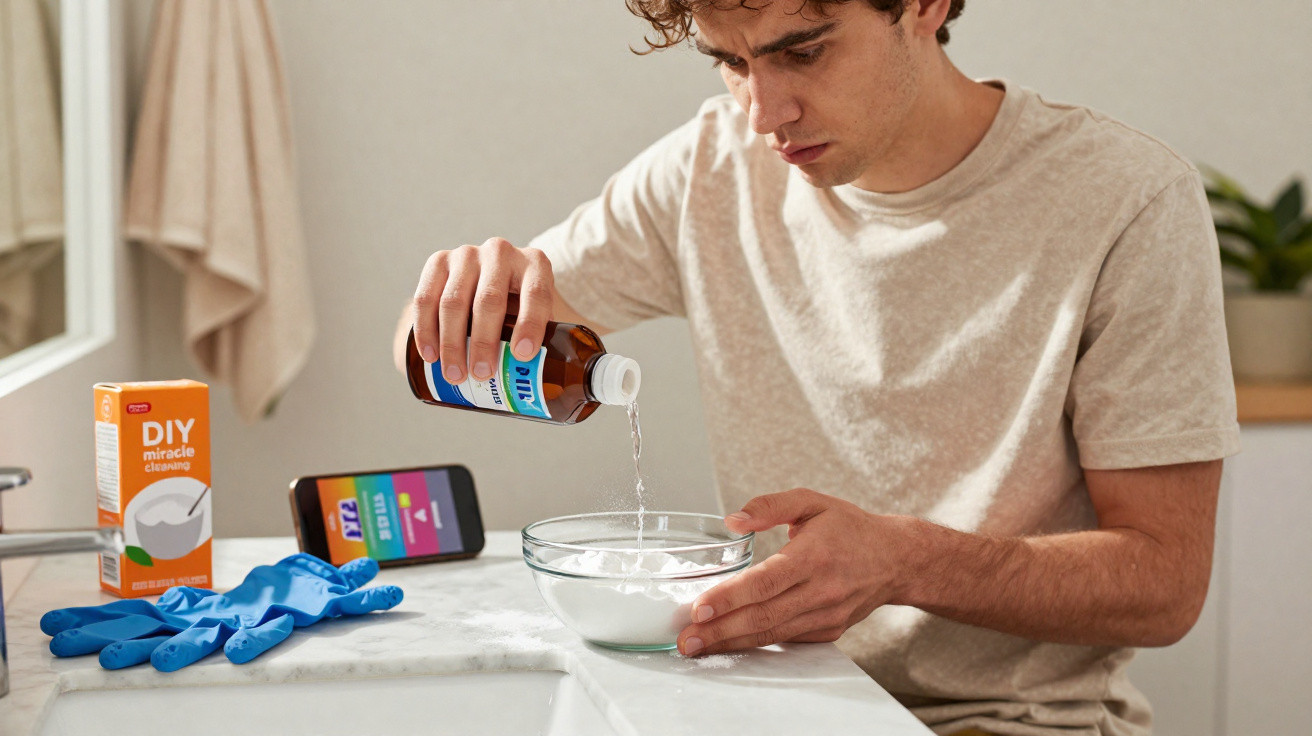
On TikTok and Pinterest, the results seem almost magical. Add a teaspoon of baking soda and a splash of hydrogen peroxide, and suddenly a sink looks brilliantly white, grout appears spotless, teeth seem to shine and a chopping board looks as though it has never encountered raw chicken. The clips are quick, satisfying and strangely hypnotic.
Away from the camera, dermatologists, toxicologists and dentists are wincing. They encounter the burns, inflamed gums, worn enamel and wheezy asthma flare-ups that never become viral in 12-second clips. Beneath the trending music and overhead filming, people are suffering the consequences of “miracle” hacks that have never been tested as proper products.
The science now beginning to catch up with the craze presents a much less glamorous reality.
It is not the story viewers believe they are seeing.
The “miracle duo” that moved from the kitchen cupboard to your body
Visit any chemist and hydrogen peroxide is likely to be sitting unobtrusively on a lower shelf in its brown bottle, appearing harmless enough. A few aisles away, baking soda sits in the food section: an inexpensive, familiar box many people remember seeing in the fridge while growing up. Individually, both can feel safe simply because they are so ordinary.
Online, that sense of everyday familiarity has been weaponised. Influencers combine the pair in ramekins and mason jars, describing the mixture as non-toxic, “chemical-free” and “safer than store-bought.” It fizzes and foams, creating the appearance of a science experiment in the bathroom sink. That is often precisely where the problems start.
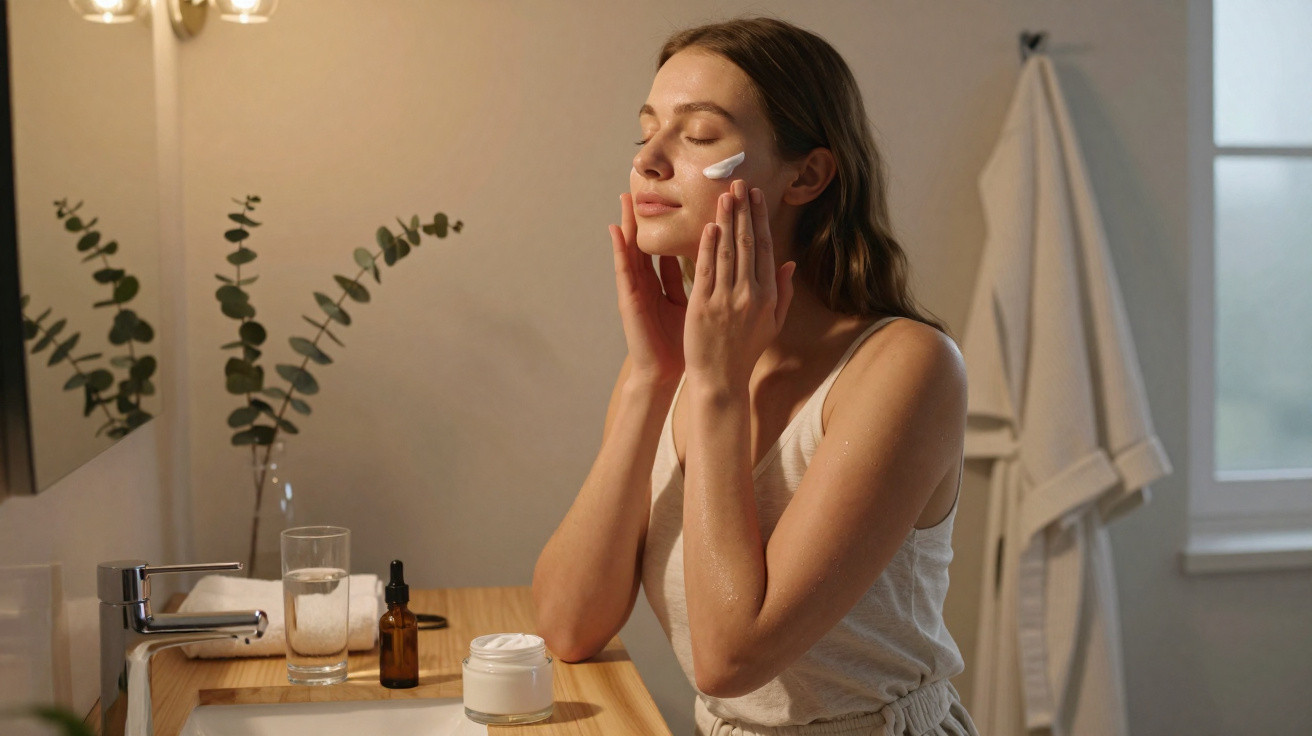
Dermatology clinics report a very different reality from social media. A London-based dermatologist I spoke with described a patient who applied a baking soda–peroxide paste as a weekly “detox mask.” Initially, the woman thought her face felt smoother. Then the stinging began, followed by red areas and flaky skin that no amount of moisturiser could repair.
In the US, dental practices are treating teenagers who scrub their teeth with the same mixture “for that whitening filter effect.” One hygienist described enamel scratches visible under the light: tiny channels through which sensitivity and cavities can easily develop. Cleaning professionals are reporting comparable cases, with clients experiencing sore throats and irritated lungs after using DIY peroxide mixes to scrub bathrooms in small, humid rooms.
Scientists are unsurprised. Baking soda is both alkaline and abrasive, while hydrogen peroxide is an oxidiser that can stress cells and tissue at higher strengths or when used repeatedly. Combined, they can sharply alter the pH of skin or enamel and release extra oxygen. Although that reaction looks impressive, it may inflame delicate surfaces.
Regulated products containing either ingredient undergo stability testing, irritation assessments and concentration controls. The viral bowl mixed in a kitchen has no safety data, no reliable dosage and no meaningful instructions. The gap between “this foams in my sink” and “this is safe on my body” is wider than most people realise.
How to clean and care safely without becoming a home chemist
If you appreciate the affordable, low-waste appeal of pantry cleaning, there is no need to throw everything away. The important thing is to draw a firm boundary: use baking soda for gentle scrubbing on hard surfaces and hydrogen peroxide for focused disinfection, rarely simultaneously and almost never on skin or teeth. Think of them as colleagues who should not share a desk.
To whiten grout or clean chopping boards, apply diluted hydrogen peroxide by itself, spray it on, allow it to work, then rinse and ventilate the room. For baked-on dirt, a simple baking soda and water paste will usually do the job, followed by thorough rinsing. Keeping their roles separate makes cleaning straightforward while reducing the risk.
The rules for your body are stricter still. Dentists advise using peroxide-based whitening products that have been formulated with stabilisers and specific time limits, rather than kitchen experiments. Baking soda toothpaste does exist, but its particle size and pH are carefully managed. A DIY teaspoonful in a bowl is not.
For skin, dermatologists favour fragrance-free cleansers, evidence-based acne treatments and mild exfoliants. The burning “deep clean” sensation from a baking soda–peroxide mask is frequently micro-damage rather than detoxification. Let’s be honest: nobody really does this every single day. They overdo it for a week, panic when their face rebels, then quietly stop without ever telling the algorithm it hurt.
The experts I spoke to were notably sympathetic about why the trend took off. People are exhausted by lengthy ingredient lists and greenwashed packaging. They want control, simplicity and cheaper solutions at a time when everything feels overpriced.
“Baking soda and hydrogen peroxide are not evil,” says Dr. Marta R., a toxicologist who reviews household products for a European regulator. “They’re just being used wildly out of context. The problem is not the ingredient existing. The problem is a recipe gaining millions of views without any of the boring safety checks we demand from companies.”
- Keep each ingredient in its own lane – Use baking soda as a mild scrub on hard surfaces and peroxide, ideally diluted, as a disinfectant or stain remover.
- Keep both away from skin and enamel in DIY “treatments” – particularly for children, people with sensitive skin, or anyone with damaged teeth or gums.
- Ventilate and protect yourself – gloves, open windows and limited contact times help reduce irritation and fumes.
- Trust product labels over online hacks – commercially made products containing these ingredients are assessed for stability, dosage and long-term exposure.
- Pay attention to your body’s early signals – stinging, tightness, coughing or unusual sensitivity mean stop; they are not signs to “push through.”
Between viral hacks and real-life harm: where should the line be drawn?
Most of us recognise the moment: an overly confident cleaning or beauty hack appears in the feed and you wonder, “What if this actually works?” There is a small thrill in using a cheap box of powder and a generic bottle of peroxide to outsmart expensive brands. It can feel clever, even slightly rebellious.
But emerging research into repeated exposure, tissue irritation and improperly used concentrations is like someone gradually switching on the lights at a party. Suddenly, the peeling paint is visible, the mirrors look misty and you notice the cough that has lingered since “deep cleaning” day. The question then becomes: when did the boundary between clever and careless become so unclear?
The experts criticising the baking soda–peroxide trend are not speaking down from an ivory tower. Many were raised with the same home remedies. They understand the reassurance of familiar names and the suspicion that long chemical names can inspire. What frustrates them is seeing the internet turn old ingredients into new Franken-recipes that nobody has tested beyond a 30-second video.
This is where our responsibility as users changes. It is not about becoming fearful of every hack, but about quietly asking one question before we mix and pour: who tested this, on what, and for how long? It is a question that rarely fits into a caption, yet one that could protect a face, a set of teeth or a pair of lungs.
Perhaps the “miracle duo” we really need is less glamorous: curiosity and caution. It is not as clickable as foaming grout or as gratifying as a dramatic before-and-after image, but it is far more sustainable. The next time that satisfying fizz appears in a bowl, the urge to try it may still be there.
You may also feel something else taking shape at the back of your mind: a quiet refusal to make your body the testing laboratory for someone else’s engagement statistics. Repeated across millions of kitchens and bathrooms, that small change could transform trends much faster than any new ingredient ever could.
| Key point | Detail | Value for the reader |
|---|---|---|
| Hidden risks of the “miracle duo” | New research associates repeated baking soda–peroxide use with irritation, enamel wear and respiratory problems. | Provides a reality check before readers copy viral hacks on their bodies or in poorly ventilated areas. |
| Safe, simple alternatives | Separate applications for baking soda and peroxide, alongside guidance on when regulated products are the better choice. | Gives practical options for cleaning and care without sacrificing the affordable, minimalist appeal. |
| How to assess online recipes | Essential questions include: who tested this, for how long, and on which surfaces or tissues? | Helps readers filter unsafe trends and safeguard themselves and their families. |
FAQ:
- Is it safe to brush my teeth with baking soda and hydrogen peroxide? Most dentists advise against regular use. The combination can be excessively abrasive and oxidising, gradually wearing away enamel and irritating gums.
- Can I use baking soda and peroxide on my face as a mask? Dermatologists strongly recommend against it. The sudden pH change and oxidative stress may harm the skin barrier and cause redness or burns.
- Is it okay to clean grout or tiles with the mixture? Infrequent use on hard, non-porous surfaces may not ruin your bathroom, but experts still favour using the ingredients separately with adequate ventilation.
- What concentration of hydrogen peroxide is safer for home use? Most households use 3% peroxide for disinfecting. Stronger concentrations are intended for professional or specialised applications and present a greater risk of burns and irritation.
- Are “natural” or DIY cleaning hacks always safer than store-bought products? Not necessarily. Many commercial products undergo strict safety testing. Unregulated DIY mixtures may be harsher or less stable than they appear in a video.



Comments
No comments yet. Be the first to comment!
Leave a Comment