
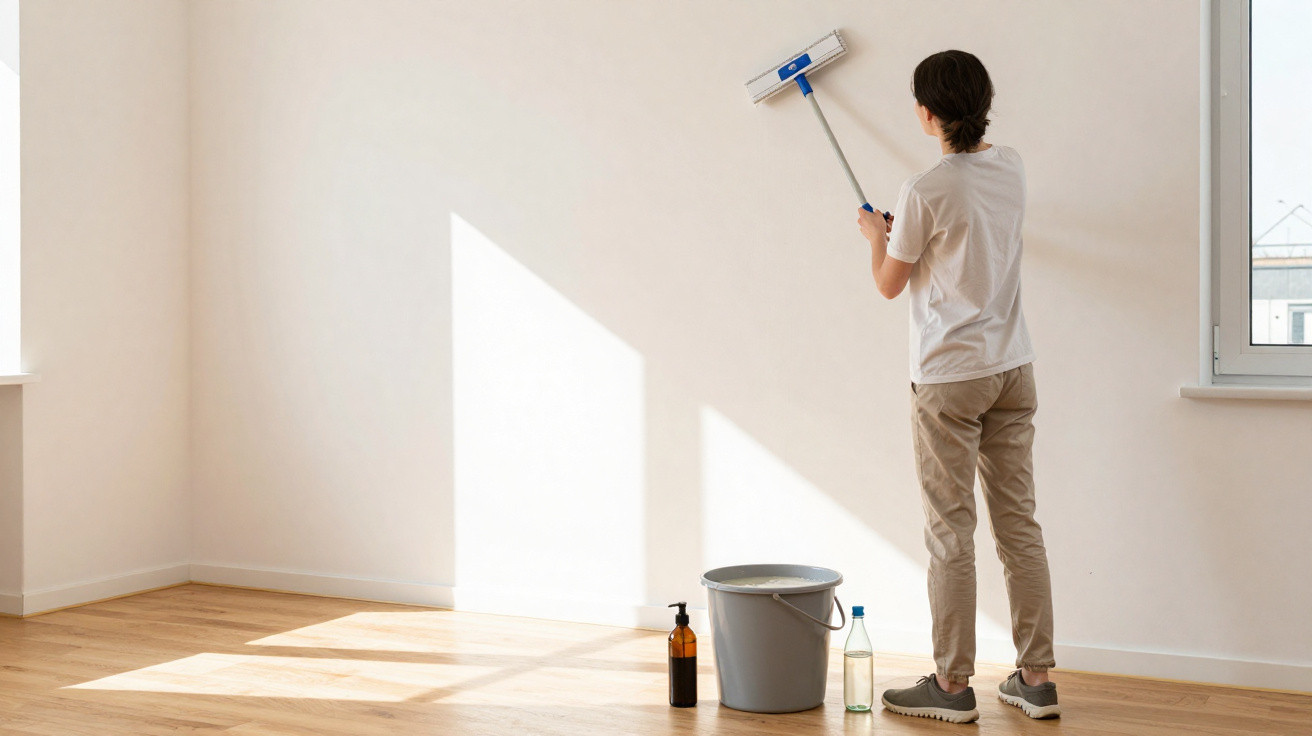
Without expensive specialist cleaners, unstable ladders or hours of strenuous work, more and more people are using a straightforward blend of black soap, white vinegar and lukewarm water to clean entire walls and ceilings in one go. The approach is especially popular in homes where safety and health matter greatly: households with children, older people or those needing care.
Why walls and ceilings have become a priority
Dust does not only settle on shelves and TV cabinets; it also builds up across walls and ceilings. It can remain unnoticed there for years. The result can be poorer air quality, more allergens indoors and a persistent slightly “hazy” feeling, even when the floor has just been mopped.
This can be particularly problematic in homes occupied by older people or anyone with respiratory conditions. Fine dust, mould spores and residues from candles or cooking form tiny layers on these surfaces. Leaving them untreated may lead to more coughing, stinging eyes and an indoor environment that remains under strain.
A clean floor is not enough – only when the walls and ceilings have also been dusted does the air in the room feel noticeably lighter.
For many people, the traditional solution of unfolding a ladder, carrying buckets and using strongly scented chemicals is simply not suitable. Family carers have little time, while older people should not be climbing onto stools at all. This is where the newer method comes in.
The simple black soap, white vinegar and water mix: what it contains and why it works
The basis is an everyday three-part combination:
- Black soap (often sold as liquid soap): lifts grease, dirt and surface deposits without affecting most painted finishes.
- White household vinegar: has a mild descaling action, removes dull grey film and neutralises odours.
- Lukewarm water: dilutes the mixture and helps loosen dirt effectively.
What matters is not only the formula, but also how it is used. Instead of a sponge and cleaning bucket, use a flat floor mop with a telescopic handle, fitted with a thick microfibre cloth. This makes every corner accessible while keeping both feet on the floor.
How the 30-minute method works, step by step
1. Prepare the room
- Pull furniture standing directly against the wall slightly forwards.
- Remove loose decorations from shelves and cover delicate items.
- Open the windows so moisture can disperse quickly.
If possible, begin by fitting a dry microfibre cloth to the mop and lightly going over the walls and ceiling once. This removes a substantial amount of dust beforehand and helps prevent streaks.
2. Mix the cleaning solution
For an average-sized room, the following is generally enough:
- around 5 litres of lukewarm water
- 1–2 tablespoons of liquid black soap
- 1 small glass of white vinegar
Stir everything briefly until the soap has dispersed evenly. The mixture should feel lightly soapy, but it should not foam like washing-up water.
3. Wringing it out properly: the crucial detail
Dip the microfibre cloth into the solution, wet it thoroughly, then wring it out firmly until it is only slightly damp. There should be no drips and no dripping sound.
The method relies on being “almost dry”: enough moisture to lift dirt, but little enough that nothing runs or soaks into the wall.
Attach the cloth to the flat mop, extend the telescopic handle, and you can work from the floor right up to the ceiling.
From bottom to top: why direction matters
A common mistake is to begin at the ceiling. This can cause dirt and moisture to run down the walls, leaving unattractive streaks. This method works differently:
- Wipe walls from bottom to top: use calm, slightly overlapping passes without pressing hard.
- Clean the ceiling last: work parallel to the incoming light, starting roughly from the window side.
- Rinse the cloth during cleaning, wring it out thoroughly again, then continue.
An average living room or bedroom area can be completed in around 30 minutes this way, including the walls and ceiling. If you do not move all the furniture, simply clean the room in sections.
Safety for older people and carers: no climbing required
The main benefit is obvious: nobody needs to climb onto chairs or ladders any longer. For older people in particular, a fall at home can have serious consequences. Harsh chemical cleaners that irritate the eyes or place strain on the airways can stay in the cupboard.
For family carers, this technique offers welcome relief. Thoroughly cleaning a room without having to move the person receiving care elsewhere for hours or arrange for someone to shift furniture makes everyday life much easier. Many people report that the air in the room feels noticeably fresher only minutes after cleaning.
Common mistakes – and how to avoid them
- Too much water: Wet walls can soften paint, loosen wallpaper and create streaks.
- The wrong cleaners: Highly abrasive products or chlorine-based cleaners can damage surfaces and are unnecessary.
- No ventilation: Failing to air the room after cleaning keeps both moisture and loosened dirt indoors.
- Unsuitable cloths: Cotton cloths often smear dirt around, whereas microfibre is much more effective.
If you are unsure, test the mixture first in an unobtrusive spot behind a cupboard or curtain. This will show whether the wall paint reacts sensitively.
Suitable surfaces for the method – and where to take care
The blend of black soap, vinegar and water works well on:
- painted walls with matt or silk finishes
- smooth wallpaper, such as non-woven or woodchip paper
- varnished wooden ceilings
- smooth panel or plastic ceilings
More caution is needed with:
- delicate clay or lime plasters
- very old, cracked wallpaper
- decorative plastering techniques with special effects
In these cases, work even more dryly, use less cleaner or, if in doubt, seek professional advice.
How the method can help people with allergies
Anyone who reacts to house dust, pet hair or mould spores will know the problem: even after vacuuming and damp-mopping the floor, some irritation often remains. The microfibre cloth and lightly damp solution capture very fine particles instead of merely stirring them into the air.
With regular use, around every few months, the dust load in the room is noticeably reduced. This may lessen the need for aggressive air fresheners or fragranced sprays, which can themselves contain irritants.
Everyday tips to keep walls and ceilings clean for longer
To extend the effects of the method, a few simple daily habits can help:
- Air rooms regularly with short, wide-open ventilation rather than leaving windows permanently tilted open.
- Use candles and incense sticks sparingly, as their soot particles settle on walls.
- Use the extractor hood while cooking to prevent greasy film forming on ceilings.
- Plan a “walls and ceiling” cleaning round once or twice a year instead of waiting for years.
For routine upkeep, a quick pass with a barely damp microfibre cloth is often enough to stop new dust layers becoming thick in the first place.
Why so many households are switching to this method now
Rising prices for specialist cleaners, greater awareness of health and the desire for safety in later life are all contributing to the shift. Anyone who has seen a room look visibly brighter and feel easier to breathe in after half an hour often continues with this simple mixture.
There is another advantage: the blend costs only a few pence per use, avoids harsh ingredients and can easily be adjusted to individual needs – slightly less vinegar for sensitive noses, or a little more soap in heavily used rooms such as the kitchen or hallway.
This simple household tip therefore becomes a useful tool that gives many families, family carers and older people a little more control over everyday life – without an unstable ladder or a cloud of chemicals.





Comments
No comments yet. Be the first to comment!
Leave a Comment