
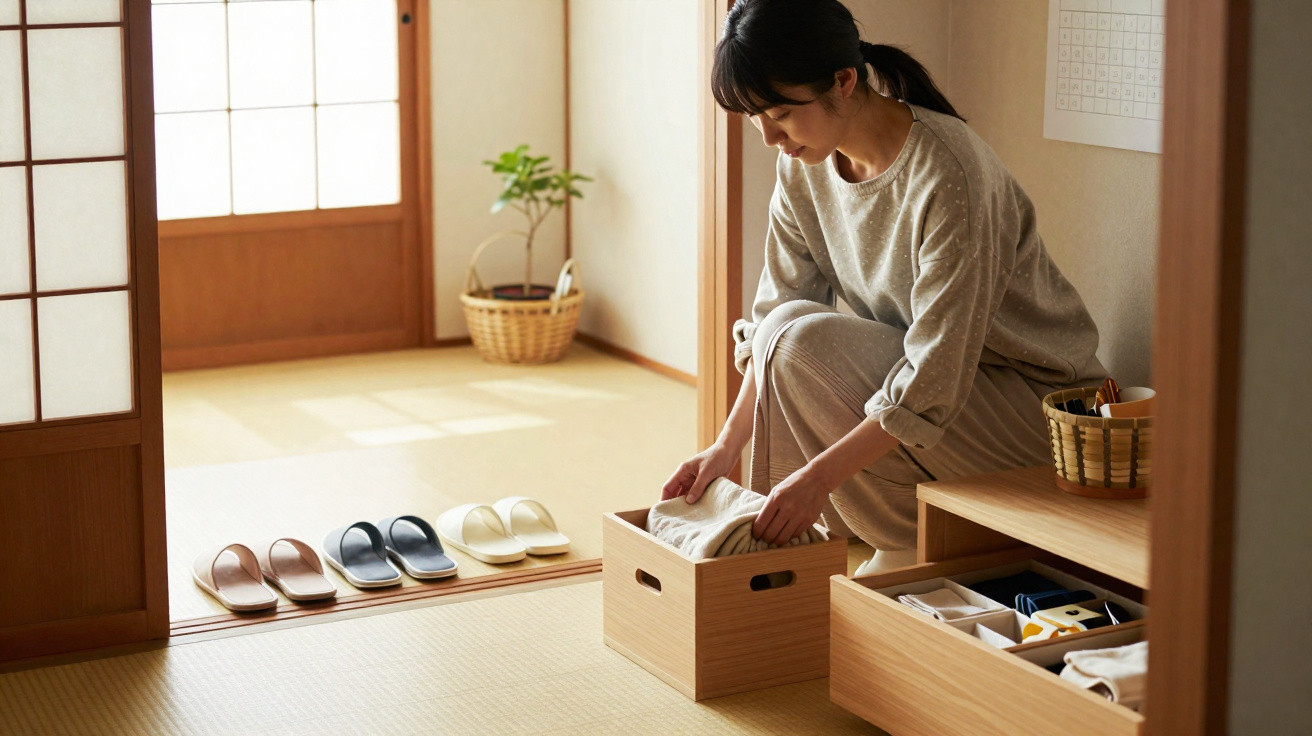
In many Japanese homes, the concept of a ‘big clean’ is less common than it is in other cultures. Small daily habits, practised consistently, stop belongings and clutter from building up, creating a practical living space without relying on weekend cleaning marathons.
How does the Japanese home organisation routine work?
This approach to looking after the home brings together simplicity and discipline, centred on continual small actions. It does not mean owning very few things; rather, it means ensuring that anything brought in, taken out or moved has a clear designated place.
One key principle is to ‘close the loop’ after every activity: once cooking, studying or returning home is finished, everything goes back to its proper spot. This prevents the home from reaching a state of complete chaos, reducing the need for lengthy, tiring cleaning sessions.
Which daily habits keep Japanese homes tidy?
In Japanese households, several small actions become part of the routine until they are almost automatic. Each one takes only a few minutes, yet together they prevent the feeling that the house is always waiting to be sorted out.
Below are straightforward practices that can be used every day and easily adapted to other lifestyles, including small flats and homes with children.
- Taking shoes off at the entrance: this stops dirt from outdoors being carried through the home, reducing the cleaning required.
- Giving every item a ‘home’: keys, bags and documents are kept in fixed, easy-to-reach places.
- Putting things away as soon as they are used: pans, toys and papers are returned promptly, preventing piles from forming.
- Decluttering regularly: papers, packaging and broken items are removed before they fill drawers.
- Doing quick cleans in key areas: kitchen surfaces, the bathroom and the entrance receive daily attention.
How can Japanese home organisation be adapted to any type of home?
This organisational approach can work across different cultures without copying every detail exactly. The aim is to reduce excess, make putting things away easier and spread small jobs throughout the week instead of saving everything for one day.
A practical starting point is to identify where mess appears most often and tackle those areas: an overcrowded entrance, a sink that is always full, a cluttered study table or a bedroom with clothes left around. From there, even minor adjustments can provide visual relief.
How can these Japanese habits be introduced gradually?
Adopting this way of organising does not require drastic changes. It is best to begin with one habit at a time, such as putting away the washing-up after dinner or emptying a backpack when arriving home. In this way, the new routine requires less willpower and becomes established naturally.
Involving everyone in the household makes the process easier and more sustainable: children can put toys into a dedicated box, while adults can look after the entrance or the bathroom worktop. With small daily efforts, the home remains stable, clutter does not accumulate and big cleans stop being a constant obligation.






Comments
No comments yet. Be the first to comment!
Leave a Comment