
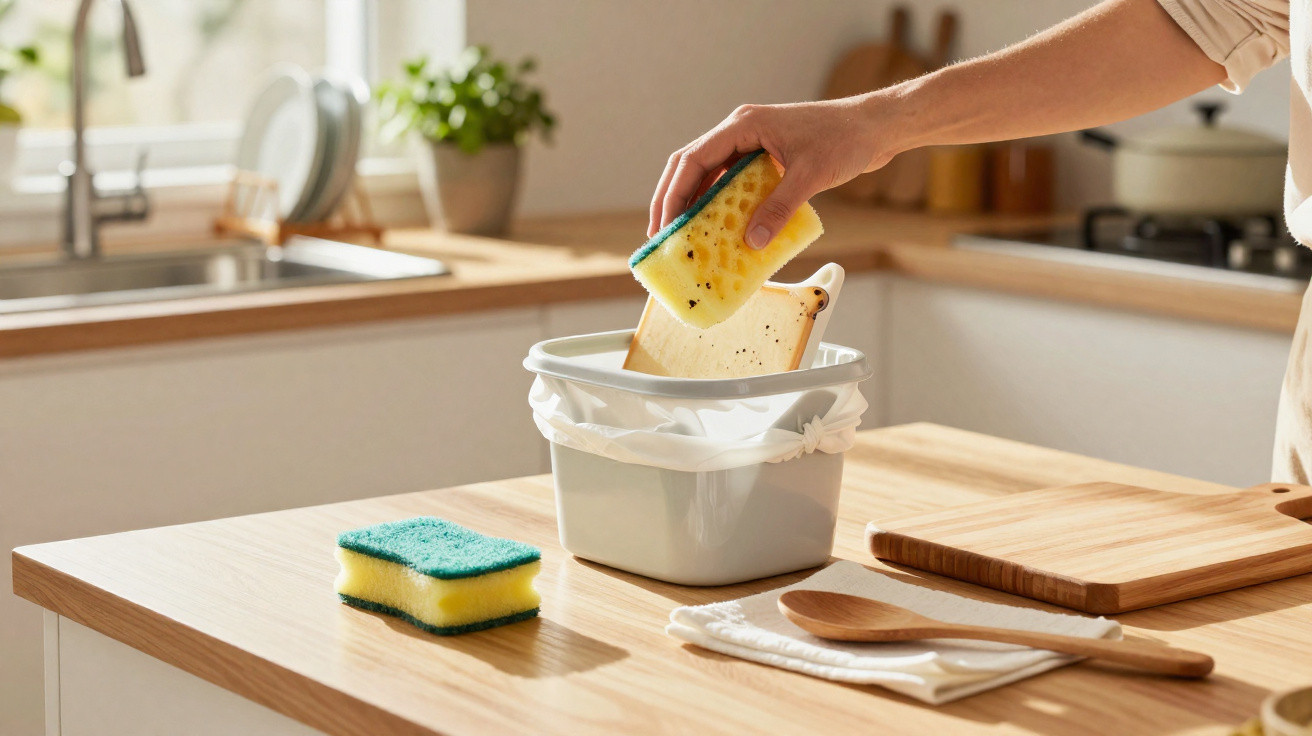
We scour the sink and clean the worktops, but the kitchen tools we reach for without thinking may be quietly crawling with life. Kitchen specialists warn that some trusty utensils are not worth keeping - they should be thrown away today.
The odour was what struck me first: a sweet-and-sour note from a sponge that appeared clean enough as it sat beside the tap like an unobtrusive flatmate. I saw a home cook mixing sauce with a wooden spoon that had a fine crack near its bowl, and felt my stomach turn slightly. The chef smiled, shrugged and carried on. Under the light, the chopping board's cuts formed a topographical record of meals gone by. A microbiologist standing beside me neither panicked nor lectured. Instead, she indicated the everyday tools we handle most and said, “These are the ones.” The monsters are not lurking beneath the sink.
Hidden germ magnets in the kitchen drawer
Sponges and dishcloths are the first items experts flag. They remain damp and warm, covered in food debris - an ideal miniature hotel for bacteria. Next are heavily scored plastic chopping boards and cracked wooden spoons, whose gaps retain moisture. The most alarming offender is not the bin - it is the cheerful sponge sitting in your sink. Can openers also belong on the list, as their narrow blades touch countless tin lids. These repeat offenders are hiding in plain sight.
The concern is supported by evidence. An NSF International study of households found that kitchen sponges and cloths were more contaminated than many bathroom surfaces, with coliform bacteria and even staph present. Researchers examining used sponges also found a thriving microbial city, layered like a high-rise building. One food-safety trainer told me she now regards spice jars as “contact surfaces” after seeing people handle raw chicken, dry their hands on a towel and then open paprika. The transfer is invisible, but constant.
The reason lies in their materials and construction. Cracked porous wood and micro-scratched plastic retain moisture, oil and proteins, creating a feast for microbes. Utensils with narrow joins - silicone spatulas with removable heads, garlic presses, blender seals and the toothed wheel of a can opener - form dark recesses where soap cannot remain long enough to work effectively. Knife blocks gather dust and crumbs far inside their slots, while their design makes thorough cleaning difficult. It is not exaggeration; it is physics and time.
What to replace kitchen tools with - and how to keep them clean
Begin with an unsentimental five-minute check. Discard sponges more than a week old, dishcloths that smell even once dry, and plastic chopping boards that resemble they have been clawed by a cat. Replace non-stick pans if their coating is peeling; flakes have no place in a meal. Exchange cracked wooden spoons and split spatulas for solid silicone versions or properly finished, uncracked wood. For chopping, choose a quality end-grain wooden board or a dense composite board, and keep a second board in rotation for raw proteins. Wash kitchen textiles on a hot cycle, dry them completely, and store brushes bristle-side up so they can air.
Everyone knows the moment when the kitchen feels overwhelming. Being busy is not the problem - leaving wet utensils heaped together, using one cloth for both dishes and worktops, or putting away a can opener without cleaning its blade is. Place can openers on the top rack of the dishwasher, or scrub them in hot, soapy water and rinse the hinge. Separate removable spatula heads and blender seals whenever you prepare anything sticky or fatty. Honestly, few people do this daily. Instead, try a 60-second evening reset: hang, air and replace items in manageable stages.
Adopt the principle of “clean contact, clean outcome.” Use a small container for utensils waiting to be washed, so wet items are not left to sit on the worktop, and put a monthly clear-out in your diary. If an item smells wrong when dry, it is not worth restoring - it is finished.
“If a tool looks tired, your microbes are wide awake. Retire it before it retires your dinner.” - a food safety specialist
- Old sponge (7 days or a lingering odour) - replace now
- Heavily scored plastic chopping board - replace; choose wood/composite for durability
- Cracked wooden spoon or split spatula - replace with solid silicone or undamaged wood
- Can opener with residue in its gear - clean thoroughly or replace
- Blender seal with slime or an odour - take apart, sanitise or buy a new set
- Knife block that releases dust - clean its interior or move knives to a magnetic strip
- Cloudy, scratched plastic food containers - replace with glass or high-quality, stain-resistant plastic
- Non-stick pan with chips or peeling - discard immediately
A cleaner kitchen begins with small habits
A clean kitchen need not be immaculate; it needs to be consistent. Establish an easy routine: colour-code boards, assign towels to separate jobs and give high-touch tools a hot, soapy scrub as soon as you finish with them. That sticky spoon is not merely sticky; it is active. Air is an ally, so allow items to dry between uses. Small changes quickly add up: one new sponge each week, one sanitising wash for cloths, one regular inspection of joins and seals. Divide the responsibility at home - one person cooks while another checks the tools. It is less about anxiety and more about the quiet assurance that tonight's dinner will not create surprises tomorrow.
| Key point | Detail | Why it matters to the reader |
|---|---|---|
| Replace “sponge and rag” weekly | Change sponges every 7 days; hot-wash and fully dry cloths | Quickly reduces the highest-risk reservoirs of germs |
| Retire damaged surfaces | Discard cracked spoons, scored boards and peeling non-stick cookware | Removes hidden areas that retain moisture and bacteria |
| Clean the unseen joins | Take apart spatulas and seals, and wash can opener blades | Reduces cross-contamination that cannot be seen |
FAQ:
- Are wooden chopping boards safer than plastic? Both can be safe if they are undamaged and cleaned promptly. Dense, well-oiled end-grain wood can close over shallow cuts, while scoring is easier to see on plastic. When either surface becomes deeply scarred, discard it and rotate a second board for raw proteins.
- How often should I replace my kitchen sponge? Roughly once each week if you cook daily, or earlier if it smells while dry or remains slimy. Between replacements, wring it completely dry and keep it somewhere with airflow. If you use cloths instead, hot-wash and tumble-dry them after demanding tasks.
- Does vinegar disinfect effectively enough? Vinegar cleans and may reduce certain microbes, but it is not a broad-spectrum disinfectant. For proper sanitising, use heat, a diluted bleach solution on hard non-porous surfaces, or a product labelled as a food-contact sanitiser. Rinse where the label instructs you to do so.
- What is the correct way to clean a can opener and garlic press? Scrub with hot, soapy water, focusing on the blade, gear and hinge. Rinse and then dry fully to avoid rust. Where residue remains in tight seams, use a brush or toothpick, or put the tool in the dishwasher if its model permits this.
- When is a non-stick pan no longer safe? Once the coating is chipped, flaking or deeply scratched, it is time to discard it. Use silicone or wooden utensils afterwards, keep the heat moderate and avoid stacking pans without a soft liner to prolong the next pan's life.



Comments
No comments yet. Be the first to comment!
Leave a Comment