
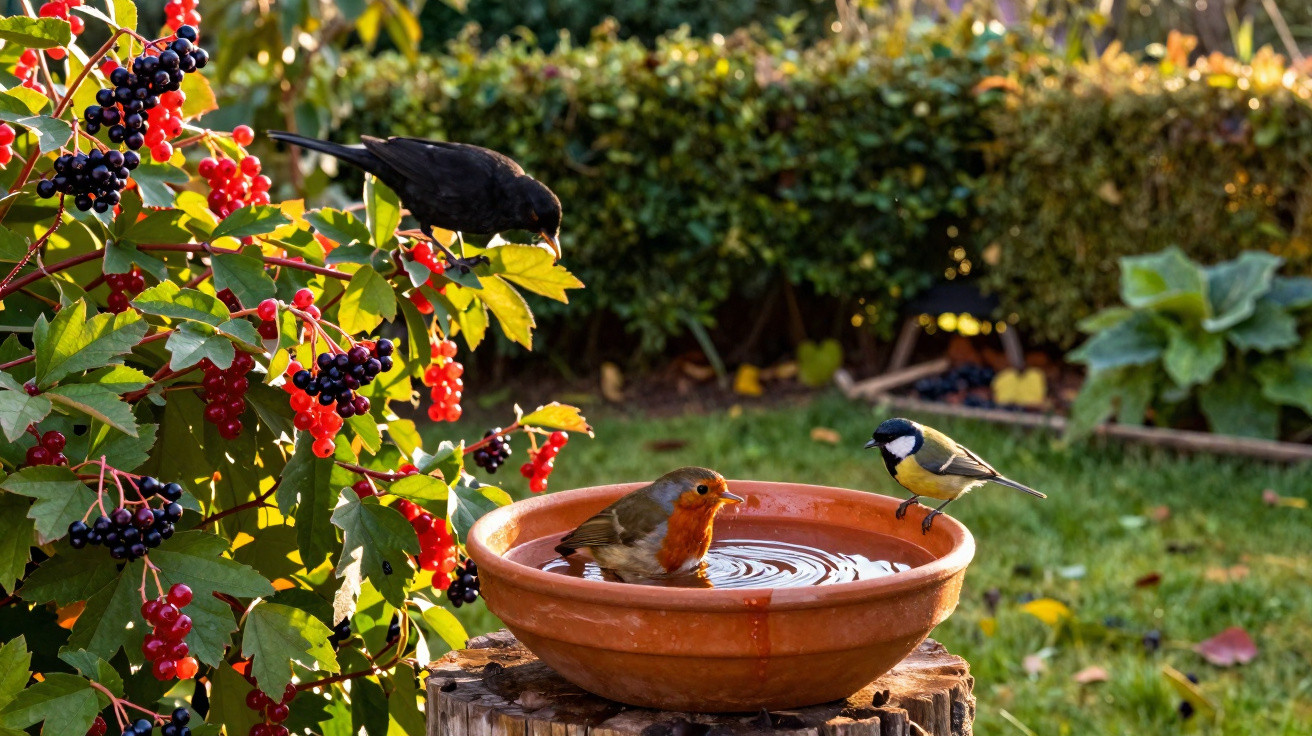
With a few simple changes, your garden can become a genuine sanctuary.
People who enjoy birds in the garden often first think of colourful bird feeders from the garden centre. They are undeniably convenient and can be hung up in moments. Yet what feathered visitors truly need is something no feeding station can fully provide: a safe, living habitat. A few carefully chosen adjustments can create a natural buffet that attracts birds throughout the year – without plastic and without constant refilling.
Why bird feeders alone are rarely enough
Feeding stations can offer short-term support, especially during winter. They are rather like a roadside snack stop: quick and handy, but not a lasting solution. Birds require considerably more than a few seeds in a dispenser.
- natural food supplied directly by shrubs and plants
- secure shelter from cats and birds of prey
- clean water for drinking and bathing
- places for nesting, sleeping and hiding
“Anyone who turns their garden into a thriving biotope gives birds more than food – they give them a real home.”
The answer lies in three straightforward elements: berry-bearing shrubs, dense hedges and a shallow water source. Together, they can turn even an ordinary garden into a small refuge for birds.
Three berry shrubs that turn any garden into a bird buffet
How a “living buffet” can replace artificial feeding stations
Few things draw wild birds as effectively as shrubs laden with fruit and seeds. They provide more than nourishment: branches offer cover, insects add to the menu, and the structure gives birds somewhere to rest. Birds are more comfortable feeding directly among branches than clinging in the open to an exposed feeder.
By planting fruit-bearing woody plants with purpose, you create a store of food that replenishes itself every year. The work involved is modest: plant them once, give them light care afterwards, and let nature handle the rest.
Shrubs loved by blackbirds, tits and robins
A practical approach is to choose three different berry shrubs suited to the size and soil of your garden. This keeps fruit available for many months and gives a range of species something that suits their tastes.
Common favourites among native birds include:
- Bird cherry or wild cherry – popular with blackbirds, thrushes and starlings
- Elder – produces plentiful berries eaten by numerous species
- Rosehip shrubs (such as wild roses) – a winter food source for finches and tits
- Rowan – a classic choice for fieldfares, waxwings and others
- Privet or hawthorn – combine an abundance of berries with dense branches for cover
| Shrub type | Fruiting period | Typical bird visitors |
|---|---|---|
| Elder | Late summer | Blackbird, blackcap, starling |
| Rowan | Autumn | Thrushes, waxwing, hawfinch |
| Rosehip | Late autumn to winter | Finches, tits, sparrows |
A mixture like this creates a buffet extending across several seasons. As a result, birds can find enough food not only in December, but also in late summer and autumn.
A dense hedge corner as a secure stronghold
Why birds prefer untidy corners to a perfectly manicured lawn
Food will only keep birds visiting if they also feel safe. Open ground is hazardous: cats can creep close, while birds of prey have an unobstructed view. A thickly grown hedge, by contrast, acts as a green barrier.
“A wild, impenetrable section of hedge is worth more to birds than any designer hedge trimmed with a ruler.”
Regularly ‘tidying’ a garden removes the last remaining cover for many species. It is more useful to deliberately leave one area a little out of shape. In this spot, branches can intertwine, fallen leaves can remain, and thorny shrubs can serve as a natural protective fence.
Turning a bush into winter accommodation
A sheltered place to sleep is particularly vital on cold nights. A dense mass of hedge reduces the wind, retains a little warmth and creates countless small hiding places. It effectively becomes a dormitory for sparrows, robins and wrens.
Where space allows, create a dedicated “wild corner”:
- plant several shrubs close together, such as blackthorn, hawthorn and privet
- prune only every few years, and never during winter
- leave fallen leaves in place rather than clearing them away
Insects and other small creatures overwinter in this leaf litter, later providing protein-rich food. The hedge therefore forms not only a protective shield, but an extra feeding source as well.
A shallow water dish as a vital mini oasis
Drinking and bathing are both essential for survival
Many amateur gardeners underestimate the importance of water. Birds need it all year round, rather than only during the height of summer. They drink frequently and clean their plumage through brief baths. Clean feathers provide better insulation and support flight.
A simple, shallow dish is often sufficient. What matters is that birds cannot slip or drown. The edge should offer grip and the water level should be low enough for even small species to get back out easily.
Care requiring only a few simple steps
A water source is not a decorative feature to put out once and forget. Dirt, leaves and bird droppings quickly build up. If it is not cleaned, germs and disease may spread.
A brief care routine is enough:
- replace the water every one to two days, or daily in hot weather
- scrub the dish with a brush and avoid chemical cleaners
- top up with lukewarm water in winter and remove frozen water
“With a clean, shallow dish, you provide birds with a service requiring minimal effort that no feeding station can replace.”
When everything comes together: the garden as a small bird kingdom
The combination of food, shelter and water
It is the combination of berry shrubs, dense hiding places and water that makes the real difference. A shrub on its own may attract visitors briefly, while a hedge without food will not remain busy for long. Including all three creates a complete provision for everyday life, the breeding season and winter.
Many gardens change in appearance as a result: there is less immaculate lawn, more structure and more seemingly ‘untidy’ corners. That is precisely what brings the space to life. With each season, new species arrive, stay for longer and may even breed in your own greenery.
Why the garden almost runs itself
Once a stable balance has developed, the amount of work drops noticeably. Shrubs fruit annually, hedges gradually grow back, and changing the water becomes routine. Rather than continually buying and topping up bird food, you can watch a small ecosystem at work.
There is another benefit: more birds usually mean fewer pests. Caterpillars, aphids and other nuisances are more likely to end up in a beak before they strip entire plants bare. This protects your beds without reaching for a bottle of poison.
Practical tips for getting started in your own garden
If you do not want to transform everything at once, begin with small steps:
- Choose a sunny spot and plant your first berry shrub there.
- Prune one garden corner less strictly and designate it as a “bird corner”.
- Fill a shallow terracotta dish with water and position it where it is easy to see but safe from cats.
These three measures alone will change the dynamics of the garden. Over time, you can add further shrubs, allow a second section of hedge to grow, or plant a small border with insect-friendly plants. The more varied the offering, the more stable the bird community becomes.
If there are children in the household, involve them in creating it: let them choose a shrub, change the water and identify bird species. The garden then becomes a living outdoor learning space – and bird feeders naturally fade into the background.






Comments
No comments yet. Be the first to comment!
Leave a Comment