
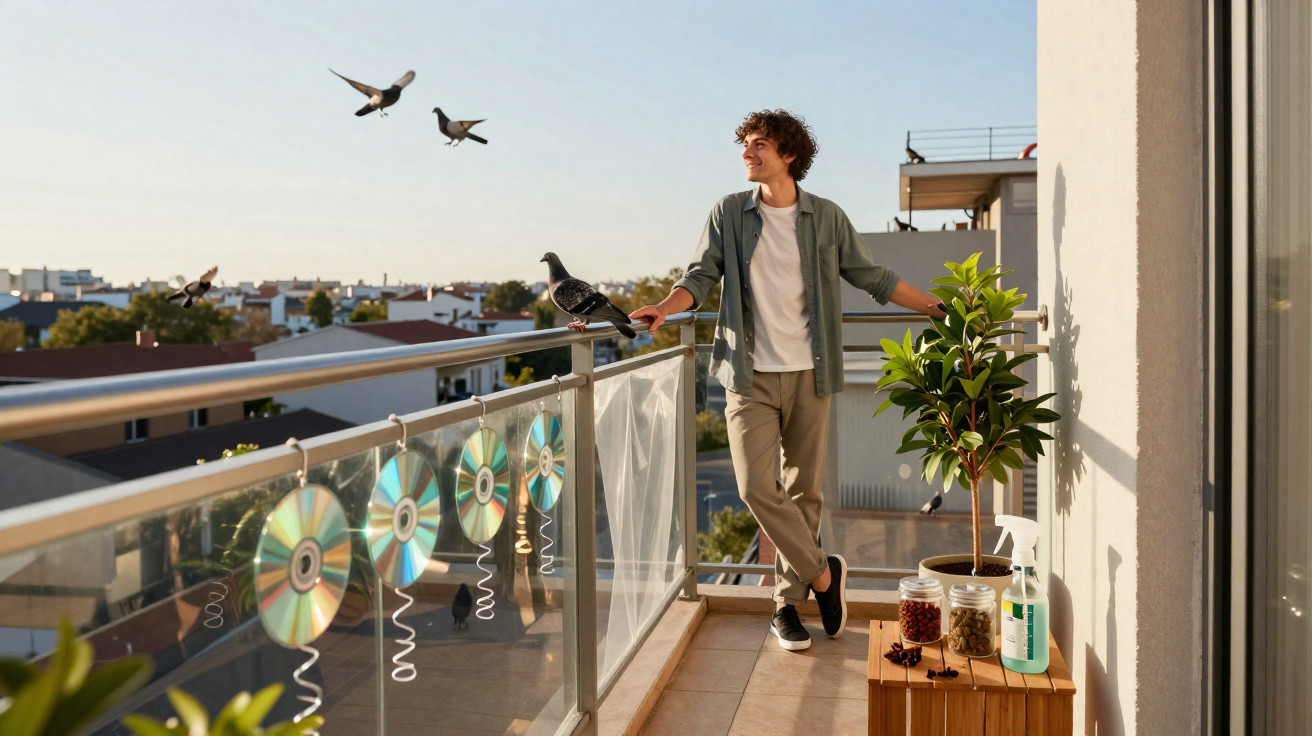
Anyone living in a city will know the problem: you have barely cleaned the balcony before it is covered in droppings again. Pigeons are drawn to railings, window ledges and roof edges – leaving behind not only mess but genuine hygiene concerns. After countless cleaning sessions, one resident discovered a surprisingly simple answer. That is where things become interesting for anyone hoping to reclaim their balcony and terrace.
Why pigeons choose your balcony in particular
Before trying to deter them, it helps to understand the birds’ reasoning. Pigeons are not acting out of malice; they are simply highly practical. They settle wherever seems most convenient to them.
- Food close at hand: Breakfast crumbs, food put out for other birds, or spilled compost containing seeds can all look like a buffet.
- Easy landing spots: Wide window ledges, railings, awning boxes and air-conditioning units provide secure places to perch.
- Sheltered areas: Overhangs beneath roofs, gaps around shutter boxes, balcony ceilings and recesses are ideal nesting locations.
“Anyone who genuinely wants to get rid of pigeons must make their balcony unattractive from the birds’ perspective – not merely keep it clean.”
The terrace that was scrubbed every week
One city resident said that, at first, she cleaned her terrace every week. She removed every trace of droppings, hosed everything down and scrubbed the tiles and railings. Yet the result was always the same: by the following morning, the pigeons were back. As far as they were concerned, the balcony was still ideal: safe, quiet and easy to land on.
The turning point came when she realised that cleaning alone changed nothing for the pigeons. She therefore combined several measures, and the birds suddenly stayed away. Her real “secret weapon” was not an expensive high-tech device, but a combination of smells, uncomfortable surfaces and a little visual disruption.
The pigeon deterrent trick: from clean to uncomfortable
1. Remove food sources completely
The first measure sounds obvious, but it can be very effective: remove anything that resembles food. No bread for sparrows, no leftover seeds, no cat food outside and no open rubbish bags.
- Clear away food scraps immediately, rather than “later”.
- Check window boxes, as many potting mixes contain seeds lying on the surface.
- Keep wheelie bins and rubbish sacks securely closed.
She also moved her bird feeder to a higher, difficult-to-reach spot that pigeons could barely access. Smaller songbirds could still reach it, while pigeons could not.
2. Alter surfaces so pigeons cannot get a secure footing
Pigeons favour broad, stable surfaces. Once these become slippery, pointed or unstable, they quickly look elsewhere.
- Anti-bird spikes: Fitted to window ledges and railings, these prevent pigeons from finding a comfortable perch. Reputable models do not injure birds; they simply stop them from landing.
- Thin tensioned wires: One or two lightly tensioned wires placed directly above a railing are often enough to upset the birds’ balance and make them avoid the location.
- Smooth panels: She placed Perspex panels on particularly popular perches. The slick surface made landing uncomfortable enough for the pigeons to give up.
“A balcony does not have to look like a fortress – thin wires or discreet spikes are often enough to make it unattractive to pigeons.”
Smells pigeons cannot tolerate
Spices and household remedies with a surprising effect
A simple mixture of household products, many of which people already have in a cupboard, was crucial to the experience described:
- Vinegar-and-water spray: Use a spray bottle containing 50% water and 50% clear household vinegar. Apply it several times a week to railings, window ledges and favoured landing areas.
- Sprinkled spices: She lightly scattered cinnamon or pepper in heavily used spots. Birds do not like these substances getting into their nostrils.
- Fragrant plants: She planted mint, rosemary and strongly scented geraniums in window boxes – pleasant for people, but more disruptive for many pigeons.
Important: do not use spices in large quantities, so that the wind does not carry them directly onto neighbouring balconies. A few thin lines are usually sufficient.
Movement and light reflections as an extra deterrent
What unsettles pigeons
Pigeons become nervous when something nearby moves unpredictably or reflects strongly. The resident paired her scent-based approach with several visual disturbances:
- Old CDs or metal strips: Hung from string, they turn in the wind and cast flashes of light. To pigeons, this appears unpredictable.
- Simple windmills: Placed in plant pots, they create movement and faint sounds with every breeze.
- Artificial birds-of-prey decoys: Positioned on a roof edge or in a corner, they signal danger – provided they are moved occasionally so the birds do not become used to them.
| Measure | Effect on pigeons | Effort |
|---|---|---|
| Vinegar spray | Disruptive smell at favourite spots | Low |
| Perspex or wires | Perching surfaces become unstable | Medium |
| Reflective objects | Unease caused by light and movement | Low |
| Nets and spikes | Access is physically blocked | Medium to high |
When nothing else works: structural solutions
Nets, closures and legal limits
For persistent problems, such as those in courtyards or across large roof areas, structural measures may be necessary:
- Nets: These block off entire balcony fronts or courtyard sections. They may not suit everyone visually, but they are highly effective.
- Closed recesses: Gaps beneath roofs, around chimneys or under cladding can be sealed using mesh or specialist covers, preventing nests from being built there.
Those using overly drastic methods risk causing trouble: in many cities, feeding or injuring pigeons is prohibited. Only non-lethal, animal-friendly solutions are permitted. Anyone unsure should check local rules with the council’s environmental health or enforcement department.
Why the combined strategy works so well
The woman whose terrace had required weekly scrubbing reached a clear conclusion: one individual trick rarely changes everything. Only when she combined several small changes – no food, unpleasant smells, insecure landing places and visual disruptions – did the pigeons stay away for good.
“The more uncomfortable a place seems to pigeons, the sooner they will look for another corner – entirely without violence.”
For many tenants and property owners, it is worth making a plan: first identify where the birds land, then make those spots unattractive one by one. Taking photographs before and after the measures can help show whether they are working and whether adjustments are needed.
Practical everyday advice
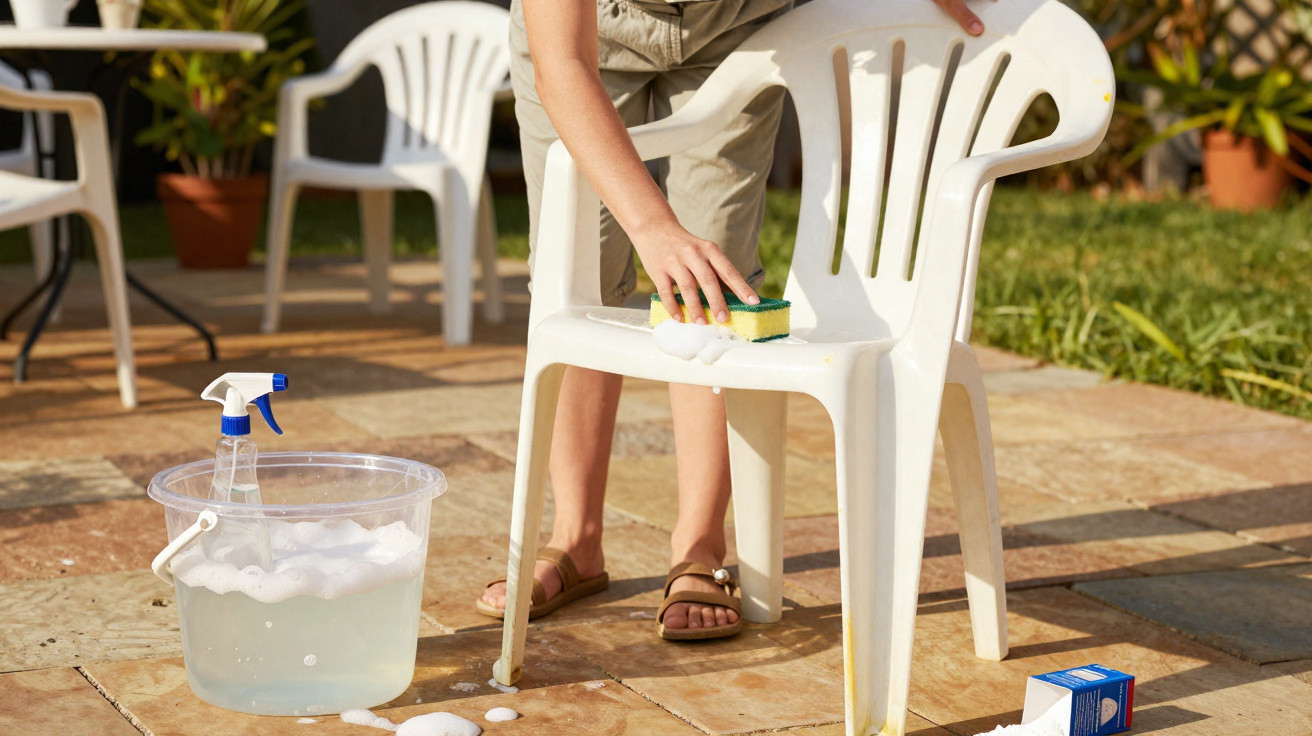
Anyone using a vinegar spray bottle should consider the material involved. With natural stone or sensitive metals, test it first in an inconspicuous area to rule out discolouration. Too much moisture can also damage freshly painted railings.
Neighbours matter too. If someone two houses away regularly feeds pigeons, the birds will be harder to deter. A friendly conversation, supported by information on hygiene and local regulations, often works better than a note in the communal hallway.
Some people also use technical aids such as ultrasonic devices. Experiences vary: some swear by them, while others notice little difference. Anyone testing one should ensure that pets are not affected within the same frequency range.
The aim is not to ban pigeons from the city, but to protect your own home. By redesigning a balcony and terrace thoughtfully, you can reclaim your outdoor space without having to reach for the scrubbing brush every day.


Comments
No comments yet. Be the first to comment!
Leave a Comment