
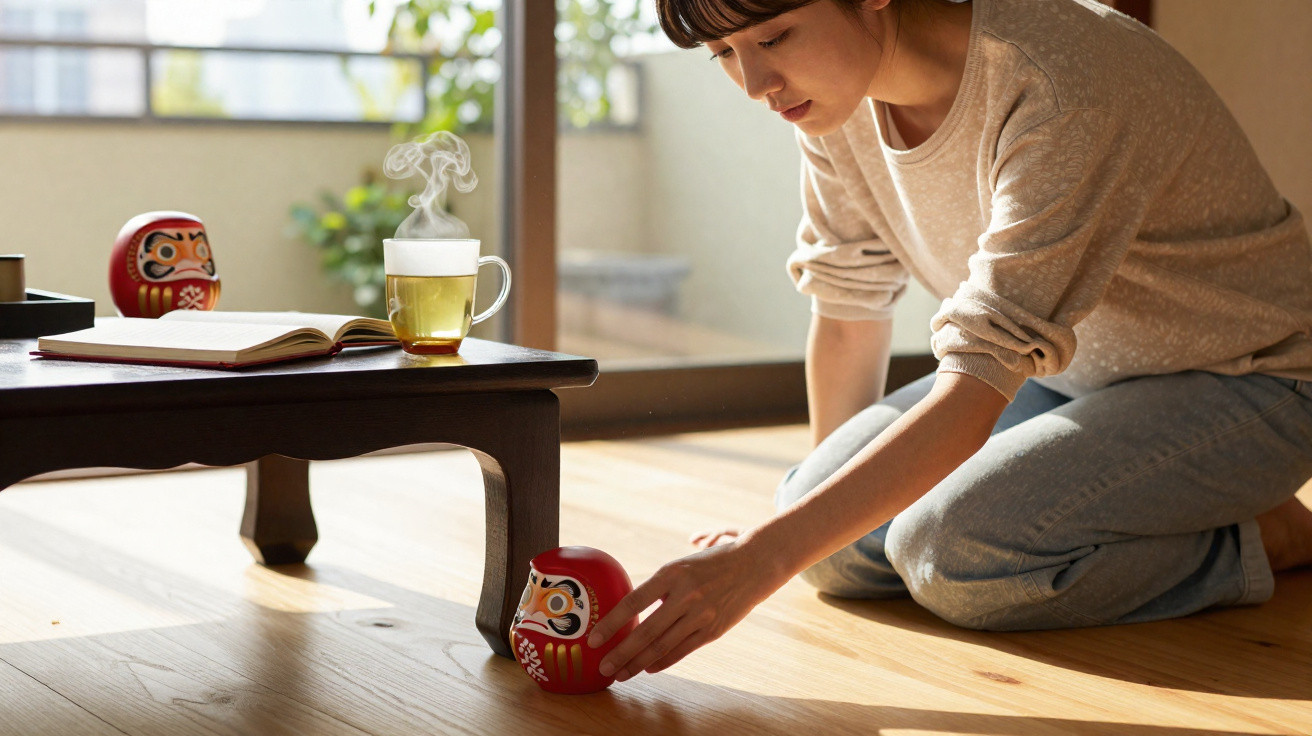
Nana korobi ya oki is a Japanese proverb that captures setbacks and fresh starts in a simple image: “Fall seven times, stand up eight”. It teaches that resilience is not about avoiding mistakes or hardship, but about retaining the willingness to get back up whenever life disrupts your path.
What does “Fall seven times, stand up eight” mean?
This teaching highlights perseverance in the face of failure, loss and unexpected change. A fall does not bring the journey to an end, because every new beginning creates an opportunity to rethink decisions, build new skills and move forwards with greater experience.
- Accept that mistakes are part of learning;
- Do not allow one defeat to become a permanent identity;
- Begin again even when immediate success is not assured;
- Adjust your approach after every attempt;
- Keep taking action one step ahead of discouragement.
Why are there eight times standing up after seven falls?
The numbers do not have to be understood as literal arithmetic. One common reading is that the person was already standing before the first fall: there is an initial upright position, followed by seven occasions on which they must rise again, symbolically creating eight states of steadiness.
Another popular interpretation links the first act of standing to the beginning of life, when a person is born vulnerable and gradually learns to remain upright. There is no single historical explanation for this detail, yet every interpretation retains the same message: the number of new starts should exceed the number of falls.
How can the Japanese proverb be applied to everyday difficulties?
Nana korobi ya oki does not advise endlessly repeating the same action. Getting back up also means examining what caused the fall, changing the method and carrying on with a more considered decision than before.
- Rework a project that did not achieve the expected result;
- Return to studying after receiving a low mark;
- Rebuild a routine following an important change;
- Ask for help when individual effort is not enough;
- Break a major goal into smaller attempts;
- Treat each mistake as information for the next step.
What does the Daruma doll represent in this tradition?
The Daruma doll has a rounded shape and a weighted base that brings it back to an upright position when it is tilted or knocked over. Because of this feature, it has become a Japanese symbol of persistence, goals and recovery in the face of adversity.
Traditionally, many people paint one of the doll’s eyes when setting a goal and complete the second once it has been achieved. The object turns the idea of resilience into a visible reminder: losing your balance can happen, but staying down does not have to be the outcome.
Why does this reflection remain relevant?
The phrase remains meaningful because it does not promise a life without difficulties. Instead, it focuses on the response formed afterwards, recognising that courage and stability are not permanent conditions but abilities practised with every new attempt.
Like other philosophical reflections on thoughts and adversity, the proverb shifts attention from the obstacle to the next response. Nana korobi ya oki teaches that a fall belongs to the past the moment someone chooses to learn, adjust their path and stand up once more.






Comments
No comments yet. Be the first to comment!
Leave a Comment