
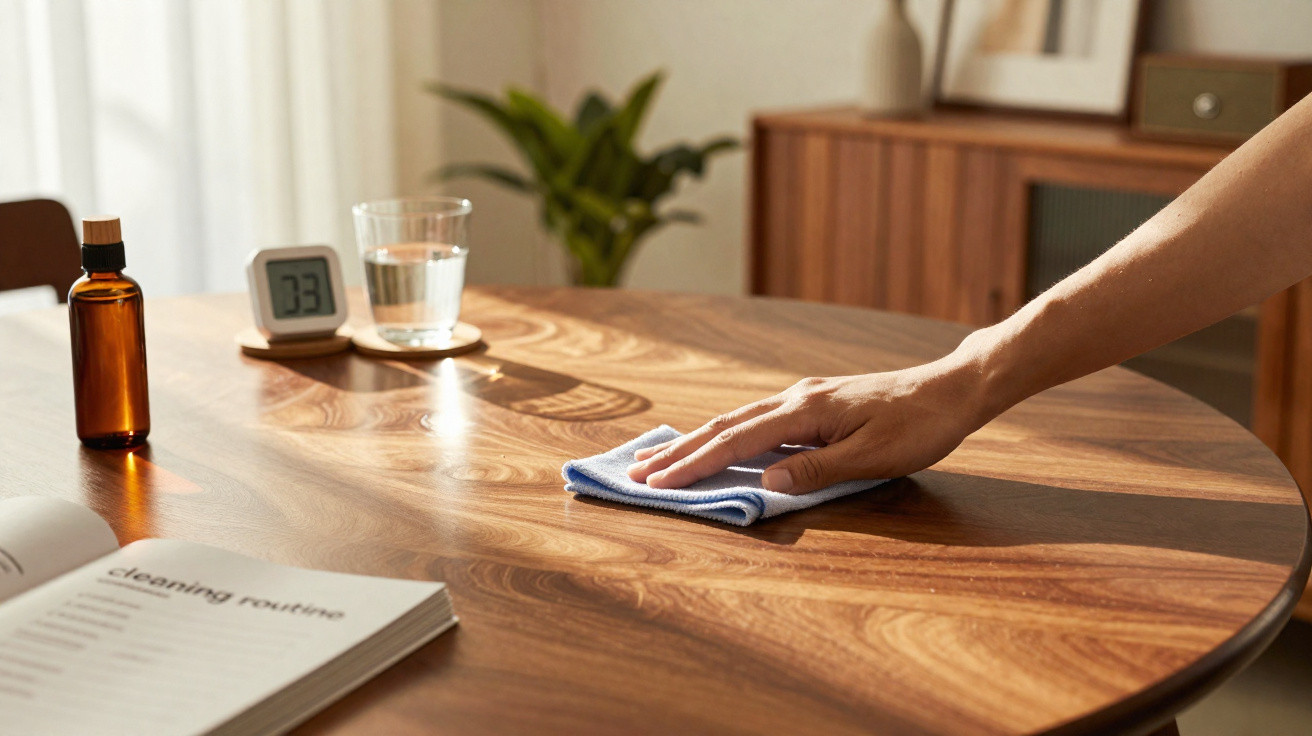
The scene is almost always the same: a wooden piece of furniture that was once the pride of the home, gleaming in a newly arranged room and drawing compliments from everyone.
A few years, house moves and rushed cleaning sessions later, that shine begins to fade quietly. The surface turns dull, with fine scratches visible only when daylight from the window catches it at an angle. You use a cloth, some generic furniture polish or a scented duster, yet the result feels rather underwhelming. Nothing matches that first day. We have all had that moment of looking at a bookcase or table and wondering: “Have I ruined this furniture for good?”. The good news is that shine does not disappear all at once. It can be protected in surprisingly straightforward ways - or quietly destroyed.
Why wooden furniture loses its shine without us noticing
Living with wood at home also means living with time. It does not arrive knocking at the door; it comes through the window as strong sunshine, fine dust and moisture in the air. Each day brings a little more oxidation to the varnish, another small scratch or a juice glass mark that may go unnoticed for weeks. The loss of shine is subtle, almost polite. Yet when it builds up, the contrast can be startling. On an ordinary Saturday, you move the sofa, see the rack’s original colour in the area untouched by sunlight, compare it with the exposed section and feel a strange unease. It was not neglect on one particular day, but a poorly guided routine.
A homeowner in São Paulo said with a nervous laugh that her dining table “aged ten years in two summers”. Her flat receives direct afternoon sun on the tabletop. Every day, she cleaned it with a wet cloth and “neutral” washing-up liquid, without drying it properly. Over time, the surface became stained, slightly rough and deprived of the attractive reflection from the living room pendant light. A cabinetmaker called in urgently identified the issue immediately: too many products, too much water and too much sun. The table was not beyond saving, but only light sanding followed by fresh varnish solved the problem. Preventative maintenance would have cost infinitely less than that emergency repair.
The principle is far less mysterious than it may seem. Varnishes and sealers form a protective layer that is affected by three main enemies: UV radiation, temperature changes and constant friction. Strong detergents, excessive alcohol and rough cloths act as chemical and physical “sandpaper”, gradually removing that protective film. Bare, untreated wood then reacts to absorbed moisture and dirt, losing its even finish and reflective quality. Everyday mistakes add to the problem: placing a hot pan on it, leaving plant pots without saucers or dragging decorative objects across it. The result is not a dramatic disaster, but the accumulation of tiny attacks. The shine that once seemed assured is spent like savings you do not realise you are using.
Simple care that keeps wooden furniture shiny for longer
The first step in maintaining the shine of wooden furniture involves water and a cloth, but they must be used correctly. Avoid soaking-wet cloths, foamy buckets and improvised “homemade” mixtures made in haste. For most furniture, the safest routine is a cloth lightly dampened with water and thoroughly wrung out, followed by a soft, dry cloth for finishing. It is that simple. For deeper cleaning, one drop of neutral washing-up liquid in a large bucket of water is enough. Using less product means less damage to the varnish layer. Afterwards, a dry cotton or microfibre cloth provides a light polishing action that helps retain the wood’s natural reflection.
Let us be honest: nobody does this every day. Life moves quickly, the house gets messy and time is short. That is when risky shortcuts appear. Hand sanitiser applied directly to the tabletop, too much scented disinfectant or all-purpose cleaners with strong solvents marketed as miracle solutions. They smell wonderful, and the immediate result may look impressive, but the damage happens quietly: small whitish patches, a surface that feels overly dry and rapid loss of shine. Rather than blaming yourself, it makes more sense to reset expectations. Cleaning properly once or twice a week is more valuable than applying anything at all every day. Wood responds better to moderate consistency than excess.
“Wood likes calm care, not aggressive cleaning,” says a furniture restorer from Belo Horizonte who is used to restoring pieces that have aged before their time.
- Use a damp, well-wrung cloth followed by a dry cloth, rather than large amounts of water.
- Choose products made specifically for wood or diluted neutral washing-up liquid instead of improvised mixtures.
- Protect tabletops with placemats, coasters and felt pads beneath heavy objects.
- Avoid prolonged direct sunlight: curtains, window film and repositioning the furniture can make a significant difference.
- Reapply a suitable wax or oil lightly a few times each year, rather than every week.
Creating a home environment that protects the shine of wood
Looking after shine is not only about cloths and cleaning products; it also depends on the environment in which the furniture sits. Very humid homes encourage mould and dark marks, gradually undermining the surface. Overly dry spaces can crack both varnish and wood, creating tiny fissures that interrupt an even reflection. A realistic approach is to watch how furniture behaves throughout the year: a door that sticks during rainy weather, a drawer that becomes loose in winter or a sideboard that seems to warp near a window. Rather than seeing this as bad luck, treat it as a sign that the wood is responding to the home’s climate.
Some basic measures work almost like “shine insurance”. Avoid placing wooden furniture tight against walls that are very cold or damp, leave a small gap for air circulation, use dehumidifiers in coastal areas or even place recycled containers of silica gel in enclosed cupboards. People living in very dry towns often notice their wood drying out and losing its vitality. Wood-specific oils, applied sparingly and according to the manufacturer’s guidance, can help nourish the surface while respecting the original finish. Too much oil, however, leaves a greasy coating, attracts dirt and creates the opposite of the intended result.
There is also the visual routine, which people tend to underestimate. When you see the same furniture in the same position every day, your eyes become accustomed to the loss of shine. That is why the change can be so striking only after rearranging a room or changing a light fitting. A useful habit is to “review” furniture every six months with an almost journalistic eye: how are the colour, reflection and feel to the touch? This small household audit helps you decide whether it is time for deeper maintenance, to call a professional or simply adjust your cleaning method. It also invites you to consider how many stories have passed across the surface you are trying to protect.
| Key point | Detail | Value for the reader |
|---|---|---|
| Gentle cleaning routine | Well-wrung damp cloth, diluted neutral washing-up liquid and a dry finishing cloth | Reduces varnish wear and preserves shine for longer without extra effort |
| Daily physical protection | Use of coasters, placemats and felt pads, plus keeping furniture away from heat sources | Prevents marks, scratches and dullness caused by continual heat and friction |
| Environmental control and maintenance | Attention to sun, humidity, dryness and occasional reapplication of wax/oil or varnish | Helps wood age well while keeping its colour and reflection more stable |
FAQ:
Question 1 Can I use alcohol to clean my wooden furniture? In occasional situations, a small amount of diluted alcohol can help remove grease, but frequent use dries out the varnish and speeds up the loss of shine. For everyday cleaning, choose water, well-diluted neutral washing-up liquid or products designed specifically for wood.
Question 2 Is paste wax still worthwhile, or is it outdated? Good-quality paste wax remains useful, provided it is applied only a few times a year and in a thin layer. Using too much creates a sticky film that collects dust and makes furniture look dull. Always test it on a small area first.
Question 3 Does sunlight really damage shine, or is that a furniture-shop myth? It is not a myth. Direct sunlight, particularly during its strongest hours, warps, fades and dries out the finishing layer. The result is uneven shine, with light and dark patches. Curtains, blinds or moving the furniture can already make an enormous difference.
Question 4 How many times a year should I carry out more thorough maintenance? It depends on use and exposure, but for moderately used furniture, a more careful review every six months is usually sufficient. This includes meticulous cleaning, possible application of suitable wax or oil, and checking for marks, scratches and loose varnish.
Question 5 My table has already lost its shine; will sanding alone solve it? In many cases, yes: light sanding carried out by a professional, followed by a new finish, restores much of the shine. However, there are situations in which the wood has absorbed deep stains or too much water, requiring more complex restoration. Taking photographs and showing them to a restorer is the safest step before making any decision.



Comments
No comments yet. Be the first to comment!
Leave a Comment