
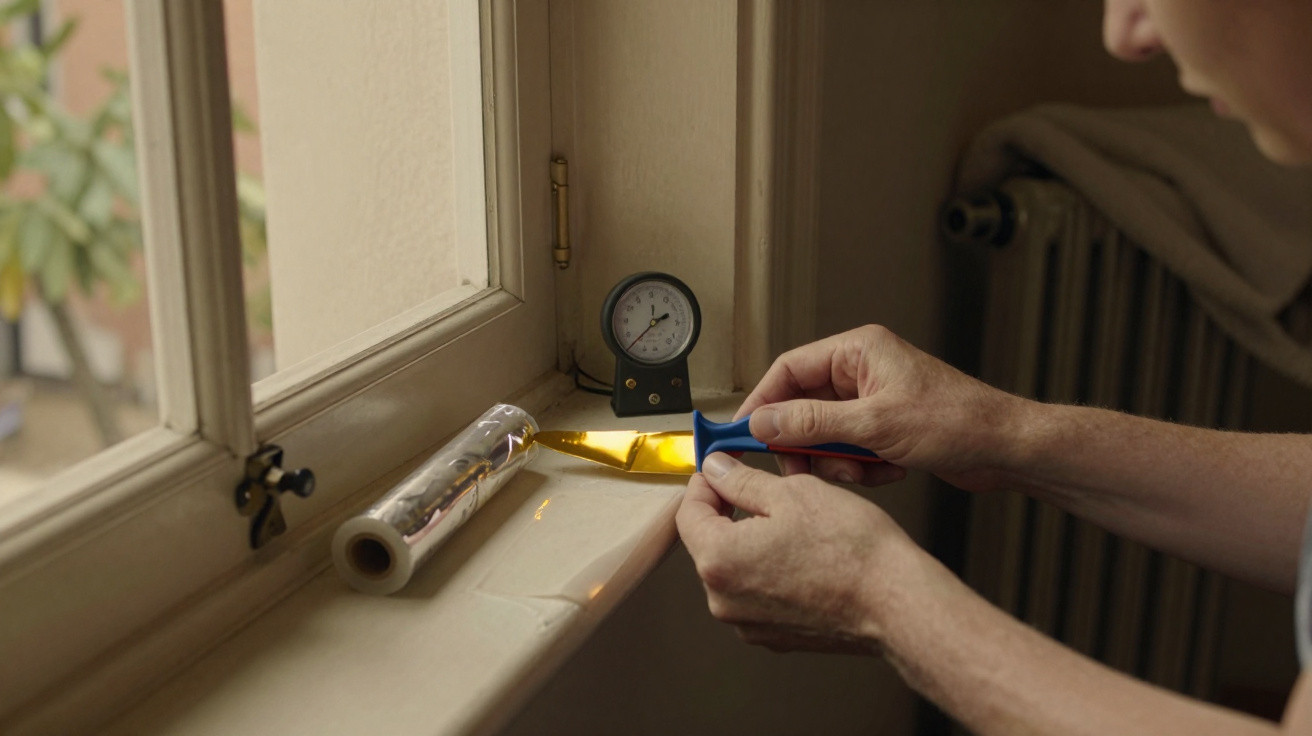
The first time you see it, it can seem like a joke.
A band of gleaming aluminium foil runs around the edge of a bedroom window, reflecting streetlights like an odd piece of DIY artwork. Then it appears again on another house. Then another block. The same silvery trim, the same makeshift finish, and the same unspoken signal: somebody is trying to stay warm this winter.
Images of “foil windows” are spreading across social media. TikTok and Reddit users post before-and-after clips, insisting their homes became warmer overnight. Others dismiss the idea as pointless, unattractive or even unsafe. With energy bills rising and temperatures reaching record lows, the argument has become very real.
So why are people sticking kitchen foil around their windows? And what do engineers make of those shiny borders?
Why aluminium foil is appearing on window frames
On a cold evening in a densely built-up area, the pattern is easy to spot. Older properties, single-glazed windows, radiators that cannot quite cope - and improvised silver strips following the frames. It is part emergency measure, part rushed craft activity. The impression is clear: people are tired of watching warmth - and money - disappear through their windows.
It reflects the situation many households now face. Heating bills keep increasing, proper insulation improvements can feel unaffordable, and landlords may be slow to respond, if they respond at all. People therefore use whatever is in the kitchen drawer and make do. Aluminium foil becomes a quiet act of resistance against draughts and the sense of living in a refrigerator.
Nobody, realistically, chooses to decorate a sitting room with baking foil. But when you are shivering at home, appearance quickly becomes less important.
Last January, a young couple shared photographs of their rented flat on a housing forum. Their windows had single panes, obvious gaps around the frames, and a thermostat that would not rise above 17°C however far they turned it up. They bought a roll of foil, tape and inexpensive double-sided foam strip. By the end of one evening, each edge of the sitting-room window had been lined in silver.
They said the room became roughly 2°C warmer after several days, according to a basic digital thermometer. Was the foil entirely responsible? No. They had also plugged a small gap beneath the sill with an old towel. More important to them was how the room felt: fewer draughts on their necks while sitting at the table, and less of that “cold wall” sensation beside the glass.
In another TikTok video, a user showed thermal-camera footage from before and after applying foil and foam tape. Once the frame was covered, the colourful display showed less “blue” around the edges. The difference was not huge, but it could be seen. For tenants unable to replace windows or fit costly glazing, even a 10–15% improvement can feel significant.
Engineers offer a more qualified explanation. Aluminium foil reflects radiant heat extremely well, but it is also an excellent conductor. Applied incorrectly, it may help cold travel rather than prevent it. Its usefulness depends on its location and installation. At the edges of a window, foil chiefly draws attention to leaks and encourages people to tighten the frame using tape or foam. The reflective material receives the praise, although the air seal does most of the work.
Taken in isolation, foil around a window edge will not transform a draughty flat into a Passive House. Viewed more widely, though, it can be a useful starting point: it makes people notice where warmth is escaping and prompts them to address the issue, even with limited resources. That is the aspect engineers quietly value.
How to use aluminium foil so it helps rather than simply looks odd
If you are considering the “foil edge” approach, begin with something very simple: on a cold, windy day, slowly move your hand around the window frame. Look for faint currents of air against your fingers. Those are the areas to tackle. Heat does not only pass through the glass; it also escapes continuously through tiny gaps around it.
After finding the draughts, quickly clean the relevant sections so the tape adheres properly. Put a soft material into the gap first - foam tape, weatherstripping or, if necessary, folded paper. Then press a strip of foil over that line, allowing it to overlap the frame slightly. The foil becomes both a light barrier and a visible marker showing where the seal has been strengthened.
For the benefit without the full science-fiction appearance, conceal the foil behind a light curtain or a wooden pole. The aim is not to cover the whole pane as though it were a roasting joint. What matters is reducing air movement around the edges.
This is where the practical reality comes in. People watch a five-second social-media tip and expect it to transform their entire energy bill. They may then try it once using crumpled foil and poor tape, decide it has failed and give up. Let’s be honest: nobody really does this every day with a craftsperson’s patience. It works best when regarded not as a miracle solution, but as part of a small winter routine.
Building-envelope engineers often refer to “stacking gains”. In practice, this means pairing foil edges with straightforward measures: drawing heavy curtains at night, sealing beneath the window and moving the sofa away from cold glass so that you feel warmer without changing the thermostat. Anyone expecting foil alone to win the whole battle will be disappointed. Used as one part of a small collection of measures, it may prove pleasantly effective.
Expectations matter as well. For many people, being a couple of degrees more comfortable next to a window is already worthwhile. When an engineer says “it improves the local heat loss by 5–10% at the edge”, it may sound unexciting. When your feet are no longer freezing while you work, it feels substantial. Both statements can be true.
“Foil on its own isn’t magic,” explains building engineer Laura Santos. “What really changes things is stopping air from moving. The foil helps people see where the leaks are and gives them a quick way to tighten those spots. The science is mostly about sealing, not shining.”
To put that principle into practical terms, here is what professionals quietly wish every cold tenant understood:
- Foil is most useful as support, not the main solution - Use it alongside foam or weatherstripping, so it reinforces a seal rather than trying to replace one.
- The frame is more important than the glass - Most window draughts begin at the edges, corners and joints, rather than in the centre of the pane.
- Straightforward checks are better than guessing - A candle, incense stick or even a damp hand can quickly expose small draughts.
- Comfort is local rather than global - Making one part of a room feel less icy can matter more than achieving a perfect average temperature.
- Temporary measures still matter - You do not need a 20-year answer to get through this winter with slightly more comfort and dignity.
What engineers really think about foil windows - and what the trend reveals
Many engineers privately admit that foil around a window frame makes them smile. It is not because they look down on it, but because they recognise the situation. They understand that this is not textbook insulation, while also knowing that people do not live in textbooks. They live with mouldy frames, ageing radiators and worry about the next energy bill.
Technically, its effect is limited but genuine in certain circumstances. Where windows have major leaks, any additional barrier that slows air exchange can help. With single-pane glazing, reflecting some radiant heat back into the room can create a slight difference close to the surface. The figures may be unspectacular, but the feeling of taking action - however modest - can change the experience for the person holding the tape.
Engineers are also increasingly willing to recognise the social dimension. When aluminium foil starts appearing on building façades, it can resemble a quiet map of housing inequality. It is rarely found on newer buildings with triple glazing. It is more often seen in older housing stock, student lets and social housing blocks. In a sense, those bright edges say: “If no one is going to fix this properly for us, we’ll patch it ourselves.”
There is a more encouraging side, too. These improvised solutions can lead to more useful conversations. A neighbour wonders why you covered the window. A visiting friend notices the difference and starts inspecting their own home. Somebody uploads a rough video; an engineer offers gentle corrections and improved techniques; thousands see it and adapt their approach. A small community of energy awareness can grow from a roll of kitchen foil.
When you pass those shimmering strips this winter, then, you may see more than a “weird internet thing”. You may be looking at the tentative first layer of a wider change: people paying closer attention to where their heat goes, how their homes truly perform, and what they can do - today, tonight - to feel a little warmer without spending a fortune.
| Key point | Detail | Why it matters to the reader |
|---|---|---|
| Foil is not a miracle fix | Its main benefit comes when it is combined with foam, tape or weatherstripping on leaky edges. | It helps create realistic expectations and prevents disappointment. |
| Edges matter more than glass | Most heat loss and draughts originate in gaps around the frame, corners and seals. | It shows where limited time and money can deliver the greatest improvement in comfort. |
| Small changes add up | Foil, curtains, draught excluders and furniture placement together can add several degrees of perceived warmth. | It demonstrates that modest, affordable actions can genuinely improve day-to-day comfort. |
Frequently asked questions
- Does aluminium foil on windows really reduce heat loss? By itself, only slightly. When used alongside proper sealing of gaps around the frame, it can marginally reduce heat loss at the edges and make the area near the window more comfortable.
- Is it safe to put foil along window edges? Yes, provided it does not cover vents required for fresh air and does not touch exposed electrical components or heating elements.
- Should I cover the entire window with foil? You can, but natural light will be lost and the room may feel enclosed. Concentrating on the edges and using curtains usually offers a better compromise.
- What works better than foil for heat loss? Proper weatherstripping, thermal curtains, secondary-glazing film and, in the long term, upgrading to double or triple glazing are much more effective than foil on its own.
- Why do engineers seem sceptical about the foil hack? Because the measurable benefits are modest and are often exaggerated online. Even so, many engineers accept that it can offer some help when correctly used alongside other simple measures.






Comments
No comments yet. Be the first to comment!
Leave a Comment