
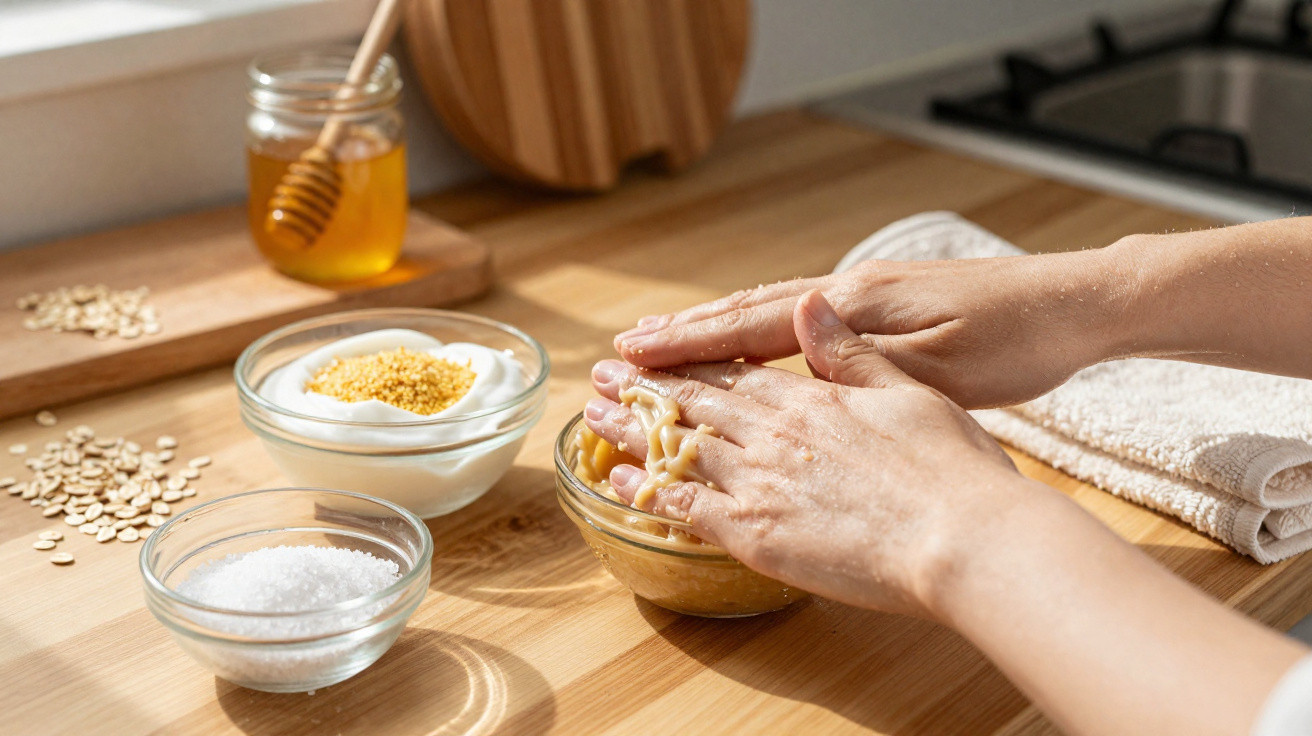
Rough knees, dry elbows, overworked hands and feet that spend hours enclosed in shoes may each need a different type of care. Using straightforward kitchen ingredients, you can make quick mixtures for each area, provided they are prepared only in the amount needed, used immediately and thrown away straight afterwards.
How can oats and honey be used on hands?
For dry hands, combine a small amount of finely ground oats with honey to make a smooth paste. Apply it gently to clean skin without rubbing hard, leave it on for a few minutes, then rinse thoroughly. The oats provide a mild texture, while the honey can make the mixture feel more comfortable on the skin.
This choice can be particularly useful when hands feel rough after frequent exposure to water, detergents or temperature changes. Make only enough for one use, do not keep any leftovers, and avoid applying it to cuts, deep cracks or irritated areas.
Does maize meal and moisturiser work on elbows?
Elbows can become rough through friction, and a small amount of maize meal combined with body moisturiser may provide gentle exfoliation. Massage it in lightly for a short time before rinsing, without using too much pressure, as this may irritate the skin and make the area even more sensitive.
Afterwards, you can apply the moisturiser on its own to enhance the feeling of softness. Prepare the mixture when you intend to use it rather than keeping a ready-made pot in the bathroom. Exfoliating too much does not speed up the result and may lead to redness, so a gentle approach matters more than force.
How can oats help dry knees?
To care for dry knees, mix oats with a little water until you have a damp paste that spreads easily. Apply it to the clean area, use gentle movements and rinse it away. The aim is to smooth the surface without turning the treatment into harsh exfoliation, especially if the skin is already sensitive.
A few measures can make these homemade recipes simpler and safer for everyday use:
- Make only the quantity you will use at that time.
- Apply it only to unbroken skin, with no wounds or severe irritation.
- Do not scrub forcefully with ingredients that have a grainy texture.
- Dispose of any leftover mixture as soon as you have finished the treatment.
Once you have rinsed your knees, pat them dry rather than rubbing and, if you wish, finish with a basic moisturiser. There is no need to store the recipe or use it every day. Pay attention to your skin's reaction and stop using it if burning, itching or persistent redness occurs.
Watch the video shared by the YouTube channel Dr. Rafael Carvalho, which offers tips on using an oat mask to rejuvenate the skin.
What should you do with feet that become very damp?
If your feet remain damp inside shoes for long periods, you can mix a small quantity of cornflour with a little cream and briefly apply it to clean skin. Use a thin layer and do not apply it between the toes, where trapped moisture may encourage irritation and fungal problems.
After the treatment, wash off or remove the mixture thoroughly and dry your feet completely before putting on socks or shoes. Make the preparation only when needed and discard what remains. If there is flaking, severe itching, persistent odour or sores, it is better to seek appropriate assessment rather than continue with homemade recipes.
What is the secret to making these quick mixtures work better?
The key is to match each preparation to the needs of the area while keeping the routine uncomplicated. Hands, elbows, knees and feet experience different degrees of friction, dryness and exposure to moisture, so a recipe that feels comfortable on one part of the body may not suit another.
The next time one of these areas feels rough or uncomfortable, try making only a small portion and monitor how your skin responds. Do not build up ready-made mixtures in containers: prepare, use and discard them. This approach cuts waste and prevents a quick solution from becoming an unnecessary problem.



Comments
No comments yet. Be the first to comment!
Leave a Comment