
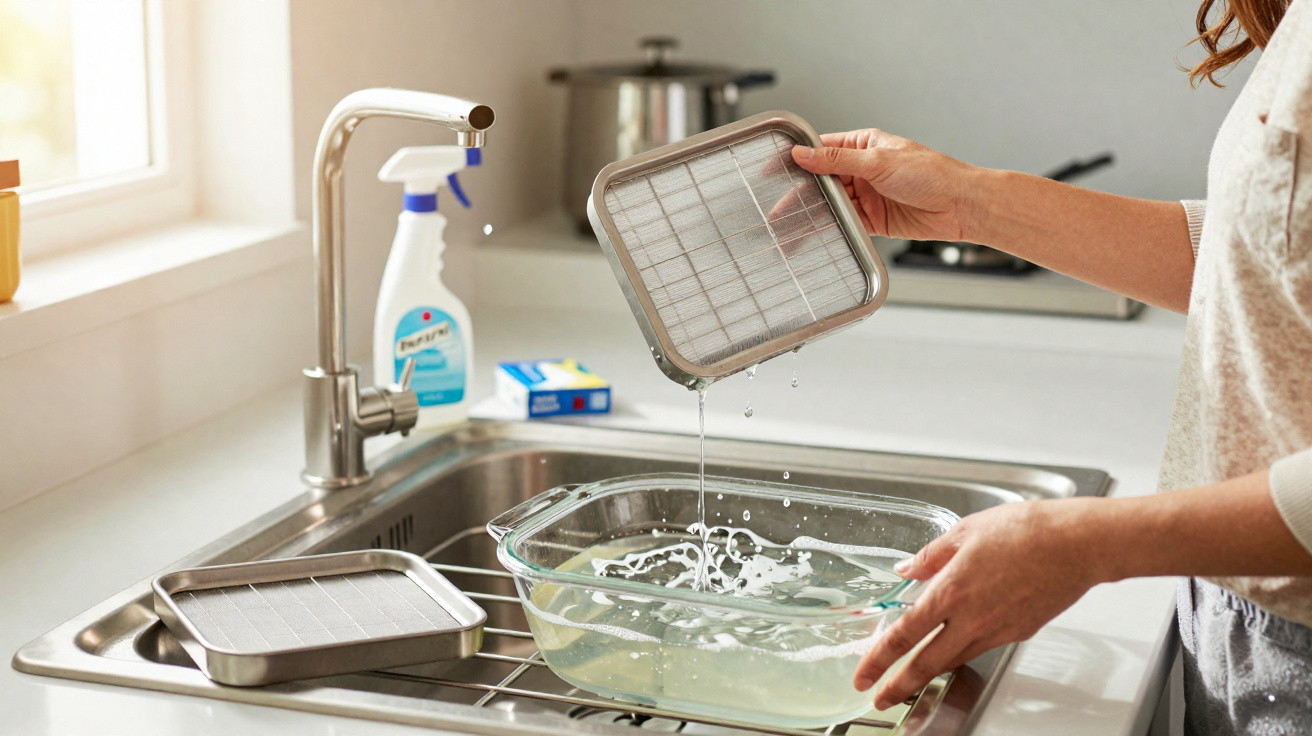
Restore proper airflow with a fast, practical routine that uses cupboard basics rather than hard scrubbing. Ideal for busy weeknights, this approach conserves water and helps the fan work as intended.
Why cleaning a range hood matters
Clean filters allow air to circulate properly. Cooking odours disappear more quickly. Steam and frying grease are drawn out of the kitchen instead of settling on cupboards and paintwork. When the mesh is unobstructed, the motor faces less resistance, which reduces noise and keeps energy consumption under control.
The effects of clogged filters
- Airflow is reduced, leaving smoke hovering around the hob.
- Damp air remains in the kitchen and can encourage mildew on grout and walls.
- The fan becomes noisier as it has to push against greater resistance.
- Grease build-up can create a fire hazard when it is neglected for extended periods.
Let chemistry lift the fat. Skip the scrubbing. Five minutes of action from you, then the soak does the rest.
The 5-minute no-scrub range hood method
This process combines aluminium foil with washing soda (sodium carbonate) to release baked-on grease from metal mesh and baffle filters. Use the gentler alternative below if your hood has stainless-steel details or sensitive coatings.
- Cover the bottom of the sink or a deep tray with aluminium foil. This helps trap heat and makes the basin easier to clean afterwards.
- Add very hot water. It should be steaming rather than boiling, so seals and finishes are protected.
- Mix in washing soda at roughly 2 tablespoons per litre. The water should feel slippery rather than grainy.
- Put the filters into the solution, ensuring they are completely covered. Leave them for 20–30 minutes.
- As they soak, clean the hood canopy with hot water and one drop of mild washing-up liquid.
- Remove the filters, rinse them beneath hot running water and dab them dry using a lint-free cloth.
- Only refit them when they are entirely dry, helping to keep the fan blades clean.
Hands‑on time: roughly five minutes. Soak time: 20–30 minutes. Aggressive scrubbing: not needed.
Why the method is effective
Washing soda raises the alkalinity of the water. This alkalinity loosens the bonds holding fatty deposits together, allowing the hot water to wash them away. Foil keeps heat close to the metal while helping to prevent staining in the sink. The soaking stage does nearly all the work while you get on with something else.
Stainless steel and delicate finishes
Choose baking soda instead if the hood or filter frame is stainless steel, or if the mesh appears delicate. It is a gentler option that still works well.
- Prepare a hot soak using 3 tablespoons of baking soda per litre of water.
- Include a small squeeze of mild washing-up liquid to add surfactant action.
- After rinsing, spray white vinegar onto any stubborn marks, then rinse once more. Do not add vinegar to the alkaline soak, as the two neutralise each other.
Safety, materials and what to avoid
- Use gloves, as alkaline solutions may dry out your skin.
- Keep the kitchen ventilated when handling hot, greasy water.
- Never combine chlorine bleach with oily or acidic substances. It has no place in this task.
- Consult the manual: carbon or charcoal filters cannot be washed and must be replaced as scheduled.
- For bare aluminium filters, keep soaking time limited and avoid highly alkaline solutions, which may darken the metal.
- Keep the hot solution away from naked flames. Any degreasing job requires care.
Quick guide: the right cleaner for each filter
| Filter material | Best cleaner | Typical soak time | Notes |
|---|---|---|---|
| Aluminium mesh | Washing soda in hot water | 20–30 minutes | Rinse thoroughly; avoid overly strong solutions to prevent dulling. |
| Stainless baffle | Baking soda + mild washing-up liquid | 20–40 minutes | Dry by wiping in the direction of the grain. |
| Coated or painted frames | Warm water + mild washing-up liquid | 10–20 minutes | Do not use abrasive products or strong alkali. |
| Carbon cartridge | Replacement only | - | Cannot be washed; confirm the size and model before purchasing. |
When to clean filters and how to tell
If you fry frequently or cook at high temperatures, clean the filters every month. With lighter cooking that mostly involves boiling or baking, every two to three months should be sufficient. Clean them earlier if the mesh feels tacky, the extractor immediately smells greasy, or the fan is louder than normal.
Clean the exterior while the filters soak
Most range hoods can be cleaned using hot water, a splash of white vinegar and a few drops of mild soap. Use a soft microfibre cloth to wipe the surface. For stainless steel, follow the grain to prevent streaking. Dry the hood completely to avoid water marks. Glass panels can be given a second wipe with plain hot water for a clear finish.
Dishwasher option, with caveats
Certain metal filters are “dishwasher safe,” although grease can transfer back onto plates and aluminium may become discoloured. If you choose this option, wash the filter on its own in a hot cycle with degreasing detergent, then run an empty rinse cycle before loading dishes again.
Dealing with stubborn baked-on grease
- Soak the filters again in a newly made hot solution. In this case, heat and time work better than force.
- Clean the mesh with a soft nylon brush rather than steel wool, which can damage the weave.
- An enzyme degreaser may assist with polymerised marks. Rinse well once finished.
- A persistently dark corner may be discolouration of the metal rather than leftover grease.
Skip scouring pads. If you need friction, a soft nylon brush gives control without scratching.
A small routine with quick rewards
A fresh filter stops cooking odours from settling into curtains and other fabrics. It also improves the hood's ability to capture moisture, helping to protect paint and cupboards around the hob. Spending five minutes setting up this soak after a heavy frying session brings the benefit of a quieter fan and a fresher-smelling kitchen.
Extra tips to use straight away
- Add a calendar reminder for after holidays or entertaining, when grease build-up tends to increase.
- Keep a labelled jar for cooled grease skimmed from the sink soak. Put it in the bin rather than pouring it down the drain.
- If you have a recirculating hood, note the month in which charcoal filters were fitted. Most require replacement every three to six months.
- Planning to cook fish or bacon tomorrow? Soak the filters tonight, then refit them in the morning for maximum capture.
This method is designed to be quick and repeatable. You spend a few minutes preparing it, then allow heat and alkalinity to do the job. The outcome is a kitchen with cleaner air, a less burdened fan motor and fresh filters without tiring your wrists.





Comments
No comments yet. Be the first to comment!
Leave a Comment