
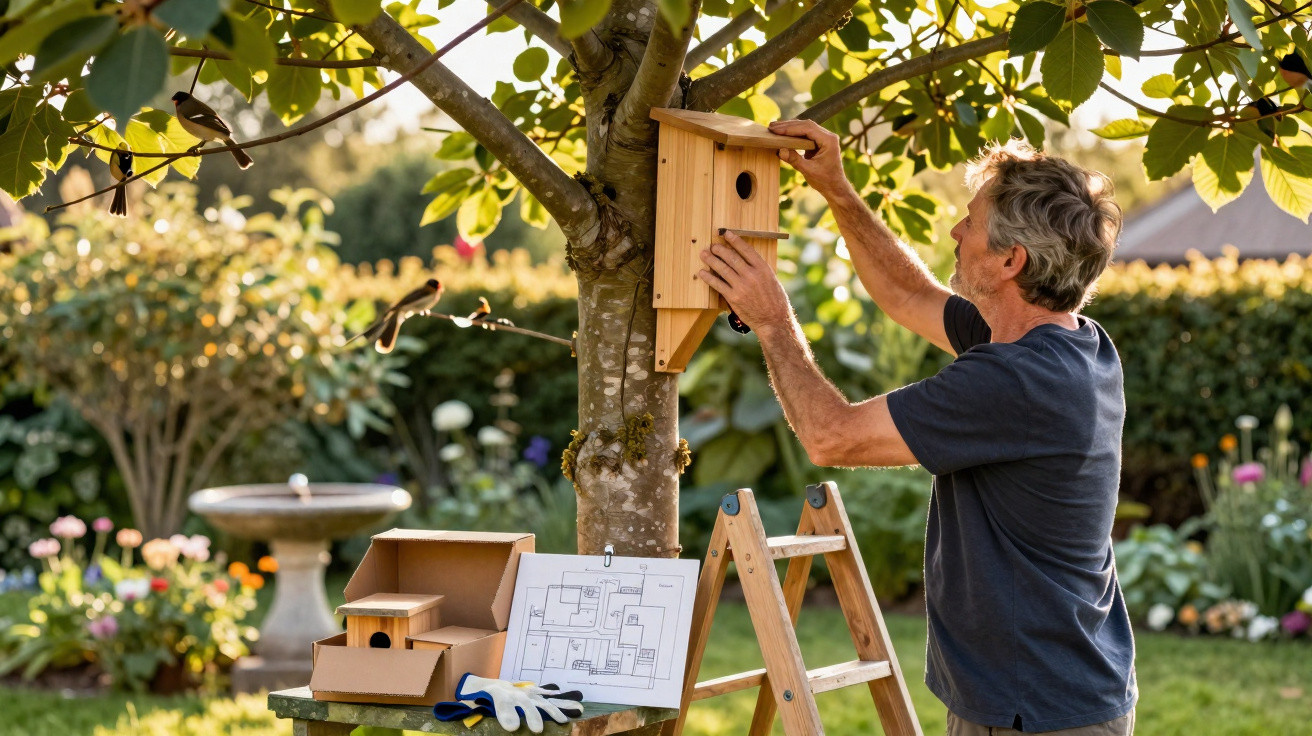
A small decision can make a major difference for anyone with a garden.
Across many towns and villages, the final gaps, crevices and loft spaces where tits, sparrows and swallows once bred are quietly disappearing. Insulated exterior walls, renovated farm buildings and smooth new developments frequently leave no room for these species. A simple nest box in the garden or fixed to a house can replace precisely this missing space – provided it is chosen and installed correctly.
Why garden birds are struggling right now
Spring is the breeding season. At this time, birds need three things close together: a sheltered place to nest, sufficient food for their young, and safe features that let them hide and move about. This combination is now absent from many gardens.
Where fruit trees, hedgerows and barns once stood, there is often now a closely mown lawn in front of an unbroken house wall. It may look neat, but for many bird species it is almost impossible to inhabit. Tits and redstarts, for example, find neither natural cavities nor enough cover there.
“The tidier a garden appears, the harder it is for many bird species to find a suitable place to breed.”
The trend for improved insulation and modern refurbishment makes matters worse, as it removes the small cracks, openings and voids that cavity-nesting birds urgently require. What makes sense from a human perspective – sealed, clean and easy to maintain – means that house and urban birds are shut out.
How nest boxes replace lost breeding sites
Nest boxes can compensate for much of what modern construction has taken away. They provide:
- a protected nesting site away from cats and martens
- shelter from heat, direct sunlight, wind and rain
- a secure structure that remains stable even during stormy weather
- clearly sized entrance holes reserved for particular species
Many familiar urban species rely on nesting in buildings, including sparrows, swifts, house martins and several tit species. Airtight farm buildings, refurbished roofs and smooth façades are causing them to lose these sites on a large scale. Monitoring data show that populations of some such urban birds are declining markedly.
A well-positioned nest box helps to recreate part of their original habitat artificially. This is exactly what makes it so valuable, especially in densely populated areas where every nesting site matters.
Choosing the right nest box
Not every nest box is the same. Different species favour different designs and dimensions. Anyone who simply puts up any available model risks it remaining empty, or being occupied by a species other than the intended one.
Important criteria when buying
- Internal dimensions: These should suit the target species, giving birds enough space without making the box excessively large.
- Entrance-hole diameter: This determines which species can enter at all.
- Material: Woodcrete or thick, untreated timber retains warmth more effectively than thin boards.
- Cleaning hatch: An easily accessible opening makes maintenance after the breeding season simpler.
| Species group | Recommended entrance-hole diameter |
|---|---|
| Blue tit and other small tits | around 26–28 mm |
| Great tit, sparrow | around 32–34 mm |
| Starling | around 45 mm |
| Open-fronted nesters (robin, redstart) | open front |
Anyone who is unsure can seek advice from a local wildlife conservation organisation or bird group. They know which species occur locally and which boxes are appropriate for particular locations.
The right place for a nest box in the garden
Even the best box offers little benefit if it is hung in the wrong place. Birds pay close attention to safety, peace and microclimate. A few basic rules can help.
Height and orientation
- Height: In gardens, usually 2–3 metres above ground level, so cats and children cannot easily reach it.
- Orientation: Ideally facing east or south-east, so the box does not become too hot in the midday sun.
- Protection: Do not place it in full, intense sunshine; instead, position it in light shade, for example on a tree trunk or house wall.
Most species do not feel at ease directly above patios, balconies or heavily used paths. A quieter part of the garden, where people pass only occasionally, is preferable.
Spacing and combinations
Some species prefer to breed in small colonies, whereas others need space. Sparrows, for instance, accept several boxes side by side, while tits are more likely to defend a territory. Those wishing to support a variety of species should spread several boxes across different areas of the property.
“A garden rich in structure, with hedges, shrubs and insect-friendly plants, increases the likelihood that nest boxes will be occupied quickly.”
More than boxes: garden structure makes the difference
Nest boxes alone cannot solve the problem. They work best in a garden that also supplies food and cover. A lawn-only garden with gravel beds and a thuja hedge can seem like a green desert to many birds.
Anyone wanting to adapt their garden to be bird- and tit-friendly can take gradual steps:
- plant one or two native shrubs that produce berries or attract insects
- leave an area of longer grass or wildflowers
- avoid insecticides so that enough food remains available
- leave old wood or dead branches as habitat for insects
Tits in particular feed their young mainly on caterpillars and insect larvae. When these are available nearby, the adults conserve energy and can successfully rear more young.
Common mistakes when putting up nest boxes – and how to avoid them
Many well-intentioned projects fail because of small details. The following mistakes are especially common:
- Cleaning too early: The box should not be opened during the breeding season.
- Unstable hanging: Boxes that sway heavily in the wind are rarely welcomed.
- Insufficient protection from cats: Ladders, bins or projecting walls immediately below make access easier for predators.
- Constant lighting: Bright outdoor lights nearby disturb the birds.
Clearing out the box thoroughly once after the breeding season, for example in late autumn, removes parasites and creates good conditions for the following season. Old nests and coarse debris can then be taken out.
How climate change affects birds
Springs that are considerably warmer than they used to be create further challenges. Heatwaves during the breeding season can overheat nests, particularly in exposed locations. Nest boxes in well-ventilated, shaded places help to reduce temperature peaks.
The timing between the start of breeding and insect availability is shifting too. Some species begin earlier but cannot always find enough food at that point. Gardens with high biodiversity and many different flowering plants are better able to buffer these fluctuations.
What terms such as cavity nesters and building nesters mean
Many affected species are known as cavity nesters. Rather than building a freely suspended nest in a tree, they use natural or artificial hollows. This group includes many tit species, sparrows, starlings and redstarts.
Building nesters, by contrast, are species that have adapted to human-made structures: swifts, various swallows and certain sparrow populations. When roofs, farm buildings and façades are renovated, they can suddenly lose a large proportion of their traditional breeding places. Purpose-made façade boxes or built-in nest boxes can be included specifically in new-build and refurbishment projects.
Practical additions that help birds even more
Anyone who has already put up one or more nest boxes can go a little further:
- provide a shallow bird bath and refill it regularly with fresh water
- create a small sand bath where birds can care for their plumage
- leave fallen leaves in one corner so insects and worms can establish themselves
Feeding stations can help in winter, but food supplied by people plays a smaller role in spring. At that point, what matters above all is that the garden offers enough natural prey for young birds – along with safe nesting places in which they can grow up.
Designing a garden in this way supports more than individual pairs of tits; it helps an entire network of animal species. Insects benefit from native plants, birds benefit from the insects, and the result is a living piece of nature right outside the front door – with the nest box as a visible symbol of it.



Comments
No comments yet. Be the first to comment!
Leave a Comment