
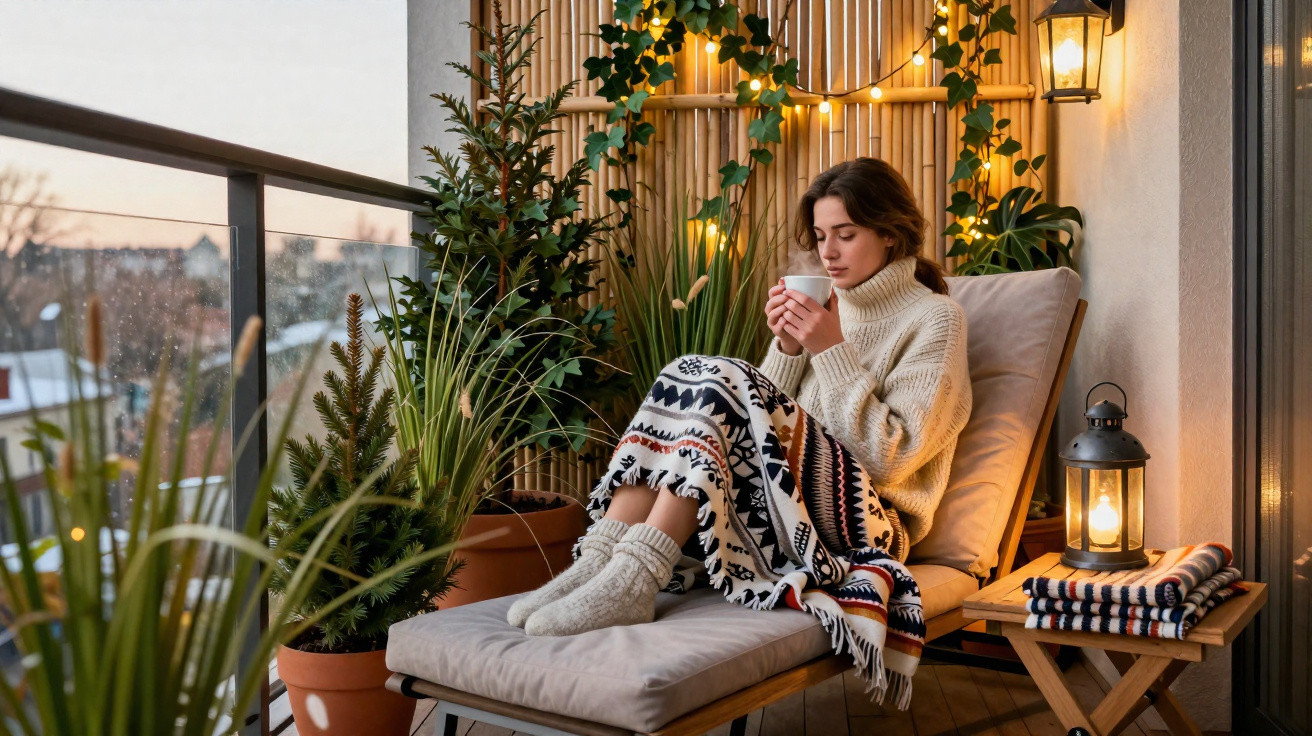
Many city residents feel chilly at the mere thought of using their balcony during the colder months. The space seems wasted, draughty and neglected – somewhere visited only for a cigarette. Yet even a compact concrete balcony can become a kind of winter living room used throughout the year with a few well-considered changes. It does not require a complete overhaul or luxury furnishings – smart planning is what matters most.
Choosing furniture that genuinely lasts outdoors
The most important starting point is the furniture. Many people put an old chair outside, then wonder why nobody wants to sit there for long. For lasting enjoyment, choose pieces that meet three requirements: they should be comfortable, weather-resistant and space-saving.
- Chairs and armchairs with padded seats, ideally with removable cushions
- A wooden bench with thick seat pads, or a DIY pallet balcony sofa with a mattress
- Folding furniture or stackable chairs for particularly small spaces
It is worth looking closely at the materials, too. Synthetic rattan has a warm appearance, copes well with rain and suits a more relaxed style. Teak and acacia are naturally resistant to moisture. Aluminium and coated steel work well in contemporary schemes, rarely rust and are often lighter in weight.
“Anyone who enjoys lying on the sofa indoors needs the same principle outdoors: soft seating, a backrest and room for their legs.”
For extra comfort, consider a hanging chair, a slim hanging sofa or a small hammock-style seat. Always check first whether the ceiling or wall can bear the load; if in doubt, use a freestanding frame instead of drilling into the building structure.
Textiles: the quickest way to turn a concrete block into living space
Without fabrics, any balcony will feel cold and impersonal. Throws, cushions and rugs add warmth, soften noise and can be changed with the seasons.
Especially useful are:
- Plenty of soft cushions in different sizes, preferably with washable covers
- Thick blankets for shoulders and knees; wool or fleece throws are ideal
- An outdoor rug that covers the floor and instantly creates a living-room feel
For the colder season, wool blends, densely woven cotton or velour work well. In summer, opt for calmer, lighter options such as linen, lightweight cotton and loosely woven throws. Anyone who does not want to keep carrying textiles in and out should choose products specifically designed for outdoor use. They tolerate moisture, dry more quickly and are less prone to fading.
Green instead of grey: plants as natural warmth and privacy screens
A bare balcony parapet, grey façade and exposed railings can make any outdoor area feel more like an emergency exit than a living space. Plants change that immediately. As well as introducing colour, they absorb sound and help slow the wind.
Plants suited to year-round use
Those who do not want their balcony to look completely bare in winter should choose evergreen varieties:
- Ivy on a trellis, which also provides natural privacy screening
- Bamboo in containers, ideal for shielding the balcony from neighbours
- Small evergreen shrubs such as Japanese spindle
Herbs, potted tomatoes or seasonal flowering plants can be added among the permanent planting in spring and summer. The key is to arrange pots so there is still room to move around. Raised planters on the railing, hanging containers and shelving free up floor space.
“Plants do not just make the balcony more inviting – they also create a degree of privacy without filling every inch of the space.”
Lighting: turning a draughty corner into an evening lounge
In winter, lighting determines whether you actually step outside after work. Harsh, cool lighting tends to put people off, whereas warm light is inviting.
Suitable options for an atmospheric outdoor space include:
- LED fairy lights along the railing or above the seating area
- Solar lanterns that charge in daylight and switch on automatically in the evening
- Cordless rechargeable outdoor lamps that can be moved wherever needed
- LED candles in glass holders, creating the appearance of an open flame without the fire risk
Choosing a warm colour temperature of around 2700 to 3000 Kelvin brings the atmosphere close to that of a living-room lamp. Cool white light can quickly resemble a building site or car park, so it does little for a cosy balcony.
Storage ideas to stop the balcony becoming a dumping ground
Many balconies face the same issue: they are expected to serve as a drying area, a miniature tool store, bicycle parking and a place to relax all at once. Well-planned storage prevents the space from looking completely overcrowded.
- A storage bench that conceals throws and cushions while also providing seating
- Wall-mounted shelves for plants, candles and small items
- Rattan baskets or metal boxes for barbecue accessories or gardening tools
- Slim folding tables that can simply be folded against the wall when not required
Regular decluttering makes it much easier to keep track of everything. Items that are not used all year round are generally better stored in the cellar than on the balcony. The outdoor area should feel like an additional room, not a storage space.
Protection from wind, cold and prying eyes
Even the best furnishings make little difference if the wind whistles straight through or neighbours can watch every movement. Both problems can be improved with relatively straightforward measures.
Reducing the effects of wind and weather
The following can make the space more comfortable:
- An awning or shade sail to keep off rain and low winter sun
- Wooden or woven screens to break the wind from the side
- Thick outdoor curtains that can be drawn when needed and opened again later
Adding a small approved infrared heater can extend the balcony season considerably. Always follow the landlord’s and building rules, keep it away from textiles and, where uncertain, choose certified appliances.
Stylish privacy screening
Inexpensive plastic screening mats can be fitted to railings quickly, but they often look rather neglected. Combining a half-height screen with plants looks more refined without blocking every view completely. For example, use a narrow row of bamboo alongside a fabric panel or trellis covered with climbing ivy or clematis.
“The better a balcony is shielded from wind and unwanted views, the more it feels like a proper room – and the more it will be used that way.”
Practical extras for the colder months
Anyone genuinely keen to sit outside all year can achieve a great deal with a few small touches. Non-slip outdoor rugs make even cold tiles easier to walk on. A small side table for tea, mulled wine or a laptop means you do not need to keep going back indoors. A hot-water bottle or rechargeable hand warmers can make cosy evenings last longer without sending electricity bills soaring.
A weatherproof storage spot directly by the door is also a sensible addition: a hook rail for thick jackets, a basket for slippers and perhaps even a shelf for lanterns. This creates a natural transition between the living room and the balcony.
What tenants should consider
Anyone renting should check their tenancy agreement before drilling into the façade or balcony parapet. Portable options such as freestanding trellises, clip-together systems or hanging chairs with a frame can avoid discussions with the property manager. Open flames, including fire bowls, are prohibited on many balconies, partly for fire-safety reasons. LED candles or approved enclosed bioethanol fireplaces are safer alternatives.
With the right plan, even a narrow balcony can become an essential extension of the home – a place for barefoot summer breakfasts and for enjoying crisp winter air with a blanket and tea. The deciding factor is not the number of square metres, but a thoughtful combination of comfort, protection, lighting and a little confidence with decoration.





Comments
No comments yet. Be the first to comment!
Leave a Comment