
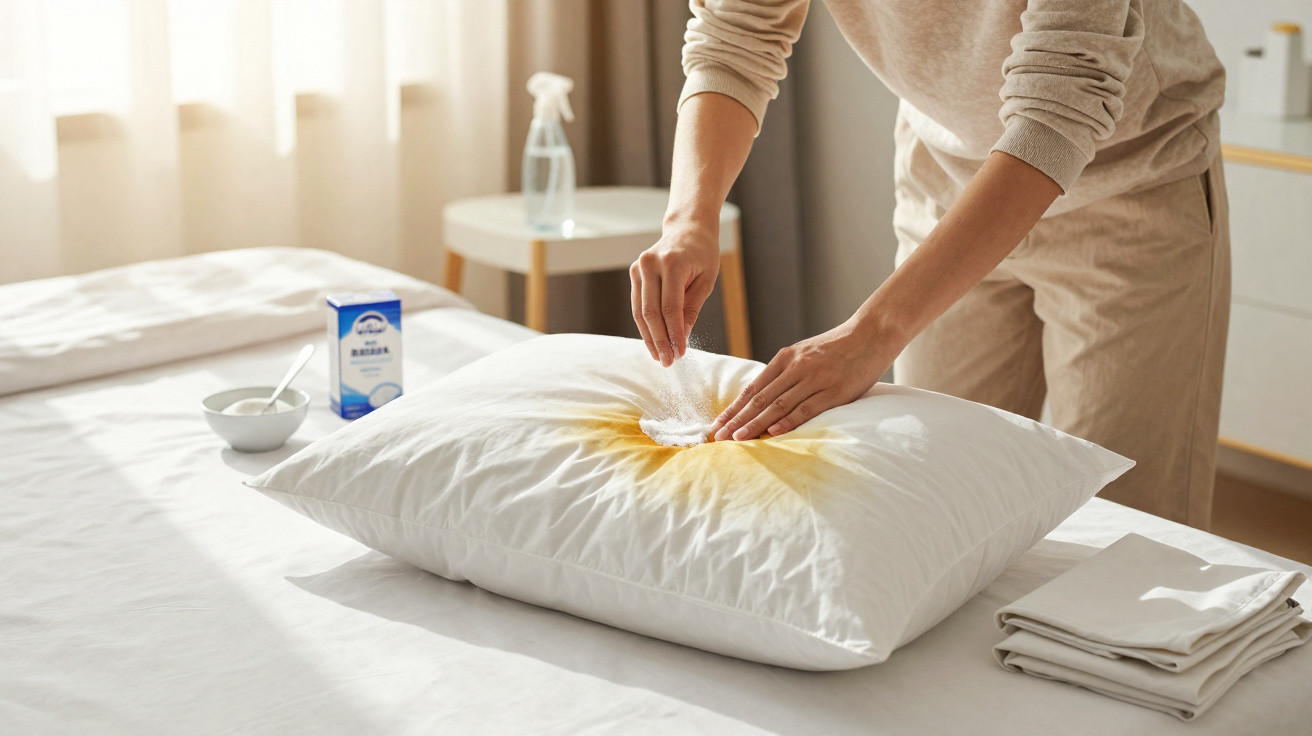
Yellow stains on pillows develop gradually through a combination of sweat, skin oils, moisture, and residue from cosmetics or hair products. Before considering replacing the pillow, a simple paste made from bicarbonate of soda and water may help lift surface dirt, provided the method is suitable for the fabric and filling.
Why do pillows turn yellow over time?
Over many hours of sleep, the fabric takes in small amounts of perspiration and body oils. Face creams, hair products and moisture also reach the surface and, after repeated nights of use, these residues build up and oxidise. This creates yellowed areas, particularly where the head and face rest.
Changing the pillowcase regularly limits this contact, but it cannot entirely stop some moisture from reaching the pillow. Consequently, pillows used for months can become yellow even when the bedding appears consistently clean.
- Sweat released overnight;
- Natural oils from the skin and scalp;
- Residue from creams and hair products;
- Saliva and accumulated moisture;
- Long gaps between pillow cleaning.
How to use bicarbonate of soda on yellow stains
For surface marks, make a paste using similar amounts of bicarbonate of soda and water. Spread the mixture only over the yellowed area and leave it for around 20 to 30 minutes before rinsing it away with water. The pillow can then be washed according to the care instructions on its label.
What should you do when the yellowing is deeply set?
If bicarbonate of soda is not enough, a solution of hydrogen peroxide diluted with the same amount of water can be applied directly to compatible fabrics for a few minutes. First, test it on a concealed area to check for discolouration, and consult the manufacturer’s washing guidance.
Hydrogen peroxide must not be mixed with chlorine bleach or used indiscriminately alongside other cleaning products. Pillows made from foam, latex or specialist materials may also require spot cleaning only, as soaking them or putting them in a washing machine can damage their structure.
- Check the label before wetting the entire pillow;
- Test the product on an inconspicuous area;
- Treat only the yellowed section first;
- Do not combine different cleaning products;
- Rinse thoroughly to remove residue;
- Allow the pillow to dry completely before putting it back on the bed.
Protection between the pillowcase and pillow makes a difference
A washable pillow protector forms an extra barrier between the body and the filling. It catches some of the sweat, oils and cosmetics before they reach the pillow, and it can be washed far more often. It is also advisable to clean the whole pillow once or twice a year, provided its manufacturer permits this type of washing.
How can you stop yellow stains from returning?
Prevention relies more on a regular routine than on an occasional deep clean. Pillowcases should be changed frequently, protectors need regular washing, and the pillow must be free from moisture before bedding is put back on it. Going to bed with very wet hair also increases the amount of water retained in the bedding.
A clean pillow must also dry fully after any wash to prevent moisture becoming trapped in its filling. When sweat and residue are removed before they become ingrained, the fabric takes longer to yellow and cleaning requires less effort than trying to restore stains that have accumulated over years.



Comments
No comments yet. Be the first to comment!
Leave a Comment