
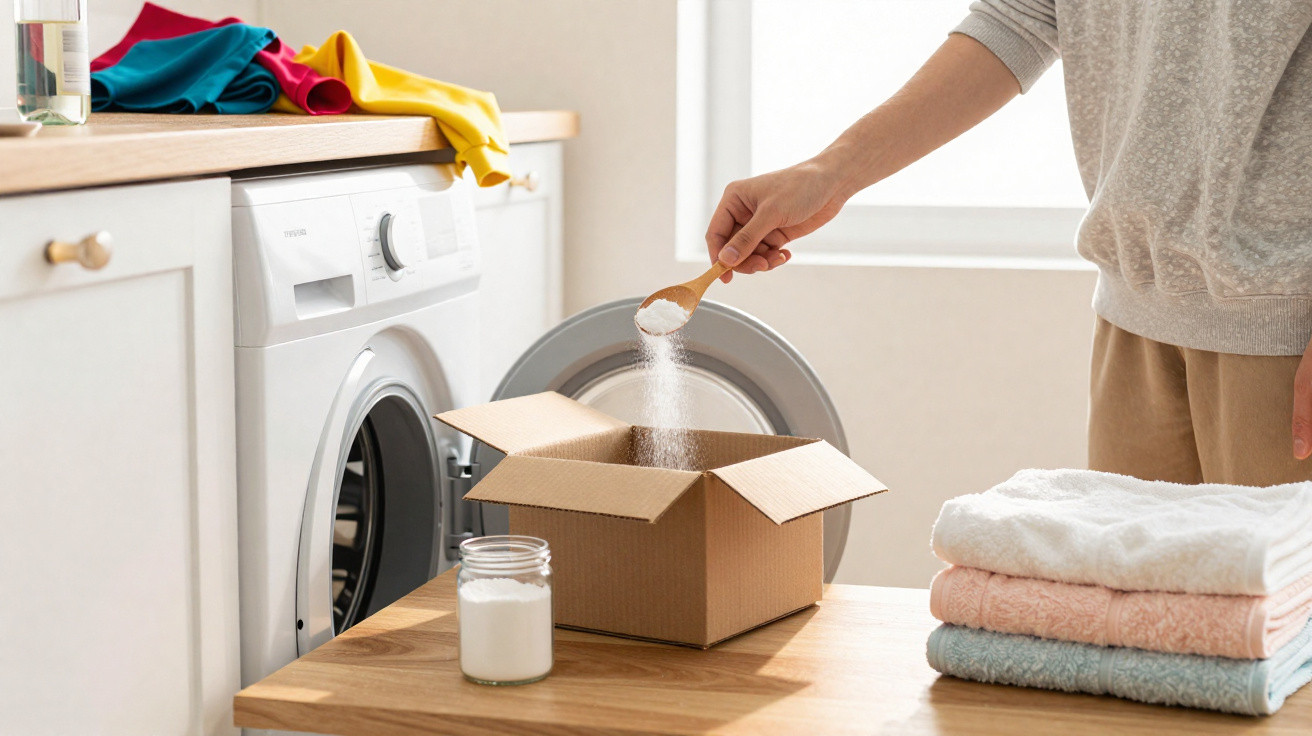
A simple powder can make all the difference.
You fill the machine, select a cycle, add detergent, fabric conditioner and perhaps even laundry fragrance – yet towels still feel scratchy, bed linen smells only moderately fresh, and the drum itself has more of a cellar smell than a clean one. The answer is often not another specialist product, but a familiar kitchen staple: bicarbonate of soda, also known as sodium bicarbonate.
What bicarbonate of soda really does in the washing machine
Bicarbonate of soda is not a substitute for detergent. However, it can help your detergent work more effectively. It makes the water slightly more alkaline, helping many stains and dirt particles to lift more easily, and often allowing you to use less detergent.
“Bicarbonate of soda makes detergent more effective, laundry softer and odours noticeably weaker – without a cloud of fragrance.”
The difference is particularly noticeable with towels and bed linen. Fibres feel less stiff, fabric drapes more softly and does not become scratchy as quickly. This is especially more comfortable against the skin.
Another significant benefit is its effect on odours. Bicarbonate of soda does not simply mask smells with perfume; it chemically reduces them. Sweat odour in sportswear, stale washing left in the laundry basket, or that slightly “cellar-like” smell in old towels are exactly where bicarbonate of soda is most useful.
There are, however, many myths about limescale. Bicarbonate of soda may slightly limit the build-up of deposits, but it is not a conventional descaler. Existing limescale can only be tackled by acidic products, such as vinegar or citric acid. Bicarbonate of soda is clearly a helpful addition, not a miracle solution.
How to dose bicarbonate of soda correctly in the washing machine
The key rule is that bicarbonate of soda is a booster, not a complete laundry detergent. Continue to use your normal detergent, although you can often reduce the amount slightly.
Everyday washing: softer and fresher without overdoing it
- Load: around 5 kg of laundry
- Amount of bicarbonate of soda: 1 heaped tablespoon (approx. 25 g)
- Temperature: cycles between 30 and 60°C
Put this tablespoon either straight into the drum or in the detergent drawer. You can then often reduce the detergent dose slightly without compromising the washing result.
Strong-smelling sportswear: two-stage support
For technical tops, sweat-soaked jogging bottoms or towels from the gym, use a two-step approach:
- Add 1 tablespoon of bicarbonate of soda to the main wash, either in the drum or detergent drawer.
- Add another tablespoon to the fabric conditioner compartment so that it is released during the final rinse.
This tackles odours both during washing and while rinsing. In larger machines holding 7–8 kg, you can use up to 2 tablespoons in total when the drum is well filled.
“More than two tablespoons does not benefit the laundry – it only increases the risk of alkaline residue remaining on the fibres.”
Where to put bicarbonate of soda in the machine
Where you add bicarbonate of soda depends on the result you want:
- Directly in the drum: useful for strong odours and stubborn dirt, as the powder acts directly on the clothes.
- In the detergent drawer: a sensible option for long or Eco cycles, because the bicarbonate of soda dissolves more gradually.
- In the fabric conditioner compartment: only if you deliberately avoid fabric conditioner and want laundry that is as neutral and lightly scented as possible.
The final option is particularly beneficial for people with sensitive skin: less perfume and fewer fabric conditioner residues, while bicarbonate of soda provides gentle odour neutralisation.
A care treatment for your washing machine: bicarbonate of soda as a cleaning aid
The powder benefits not only your laundry, but the appliance itself as well. If the machine smells stale or you notice an unpleasant, stagnant smell as soon as you open the door, it is worth running a care cycle every four to eight weeks:
- Put 100–150 grams of bicarbonate of soda directly into the empty drum.
- Run a long cycle at a high temperature.
- Leave the door ajar after washing so that the interior and rubber seals can dry.
For the detergent drawer and rubber seal, a mixture of lukewarm water and a little bicarbonate of soda is enough. Apply it with a cloth, allow it to work briefly, wipe over again and rinse. This does not replace descaling, but it helps with odours and deposits caused by detergent residues.
Bicarbonate of soda and vinegar: only effective as a team when kept apart
Social media is full of advice suggesting that you should put bicarbonate of soda in the drum and pour vinegar into the machine for miracle laundry. This approach can work, provided the two substances do not directly meet.
The reason is simple: bicarbonate of soda is alkaline, while vinegar is acidic. If you mix them in one container or the same compartment, they react, foam briefly and neutralise one another. What remains is essentially an unremarkable salt solution.
“Bicarbonate of soda and vinegar should not end up in the same place at the same time; they need to work one after the other – first alkaline, then acidic.”
In practice, this means:
- During the main wash: use 1–2 tablespoons of bicarbonate of soda with the detergent for cleaning and odour control.
- During the final rinse: add 100–200 ml of clear vinegar, or preferably a 15–20% citric acid solution, to the fabric conditioner compartment.
The second step has a mild descaling effect and replaces conventional fabric conditioner. Towels often feel softer afterwards, without that heavy layer of artificial fragrance.
Where bicarbonate of soda should not be used
Useful as bicarbonate of soda is for everyday laundry, it is only suitable to a limited extent – or not at all – for certain fabrics. Delicate fibres can react sensitively to alkaline solutions over time.
- Do not use bicarbonate of soda on: wool, silk or very delicate fabrics.
- Take care with: high-tech sportswear with special coatings or membranes.
Regular contact with bicarbonate of soda can affect the protective surface of these textiles. Check the care label: if it refers to specialist detergents or particular membranes, it is better not to use bicarbonate of soda routinely.
Sensitive skin may benefit from bicarbonate of soda because it can allow you to avoid fabric conditioner and strongly fragranced laundry perfumes. But if you use too much powder and the machine does not rinse effectively, residues may remain and cause irritation. If you experience itching or dry skin where clothing fits tightly, try using less bicarbonate of soda, choose a cycle with an extra rinse and avoid fabric conditioner completely for a while.
Everyday questions about bicarbonate of soda
Can bicarbonate of soda replace detergent entirely?
No, not for normally or heavily soiled washing. Bicarbonate of soda does not remove grease and complex dirt to the same extent as a proper detergent. A wash using only bicarbonate of soda may be enough for cleaning cloths or very lightly soiled items, but not for underwear, bed linen or everyday clothes.
Can bicarbonate of soda damage the machine?
Not at the stated dose of one to two tablespoons per wash. On the contrary, it provides a small amount of maintenance support, especially against odours. It only becomes problematic if you use far too much powder and deposits build up.
Is bicarbonate of soda from the supermarket enough?
Yes, provided the packet says “sodium hydrogen carbonate” or “sodium bicarbonate” and it is a pure product. Specialist laundry products are often no different – just packaged at a considerably higher price.
Why bicarbonate of soda is so popular right now
Many households are looking for ways to cut costs and put fewer chemicals into the washing machine. Bicarbonate of soda fits that approach perfectly: it is inexpensive, versatile and has been a kitchen mainstay for decades. It was long regarded as an insider tip in the bathroom, and is now gradually making its way into the laundry room.
People who start washing with bicarbonate of soda usually notice that their routine changes easily: less fabric conditioner, greater attention to sensible dosing, and the occasional maintenance cycle for the machine itself. This can mean less trapped odour, fewer mixed products and laundry that often feels more natural – not heavily perfumed, but pleasantly clean.
Ultimately, the advantage is practical: there is no need to add a seventh specialist product to the cupboard. A household classic from the pantry can leave your laundry, washing machine and nose happier, as long as you use it purposefully and in moderation.




Comments
No comments yet. Be the first to comment!
Leave a Comment