
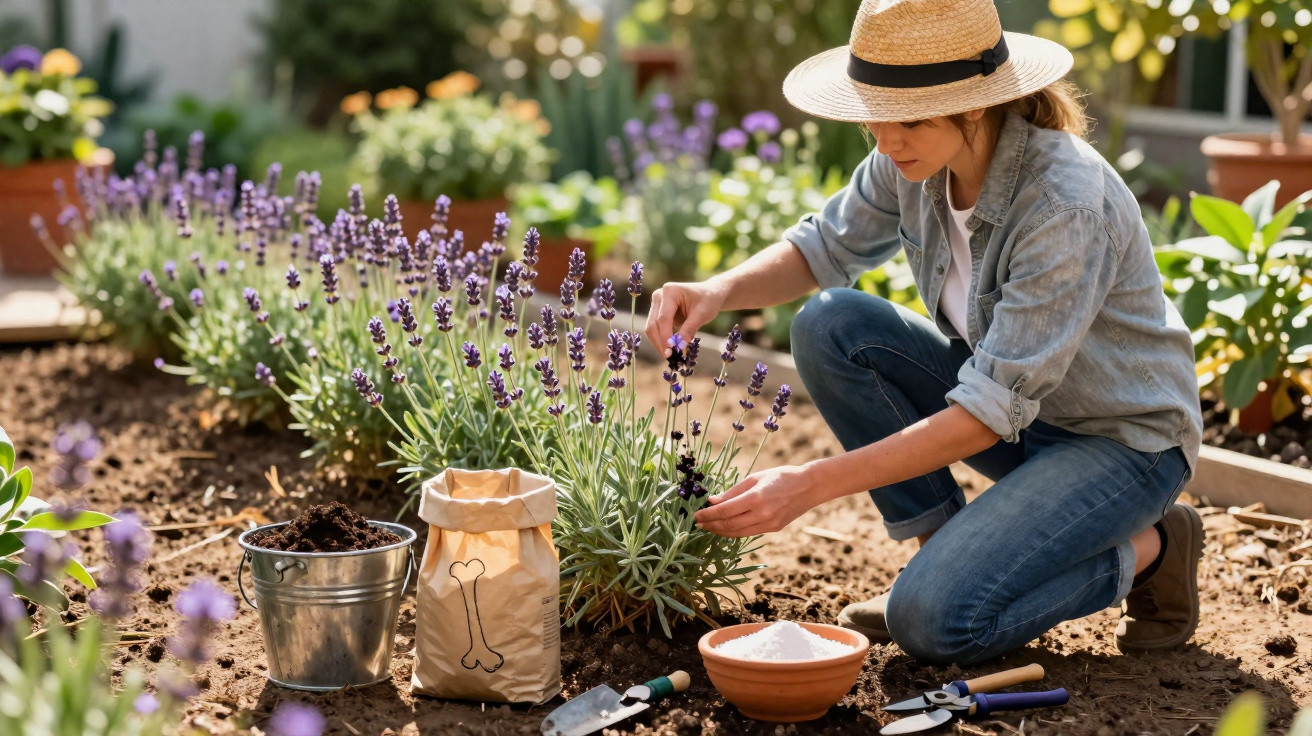
Many gardens produce only a few sparse lavender spikes in July, even though this plant can put on a purple firework display in summer.
The difference is made not in the heat of summer, but in the soil months earlier. Give lavender the right three natural ingredients in spring and, by high summer, it can deliver considerably more flowers, a stronger fragrance and hardier plants – without chemicals or continual feeding.
Why lavender tolerates little fertiliser – but still needs some
Lavender originates from poor, stony Mediterranean landscapes. It grows there in lean, lime-rich soils that dry out quickly. These are precisely the conditions it also prefers in gardens across the United Kingdom.
For this reason, many amateur gardeners make an unwitting mistake: they treat lavender as they would roses or hydrangeas. They add plenty of fertiliser, fresh compost and a thick mulch, then wonder why the plants develop soft shoots, lots of foliage and disappointingly few flowers.
“Lavender wants to live sparingly – but one targeted, gentle boost in spring can dramatically improve flowering.”
Gardening professionals stress that overfed lavender becomes more susceptible to problems, turns woody unevenly and flowers less freely. A single, very restrained feed in spring is enough when the soil and position are suitable: sunny, free-draining and on the dry side.
The simple three-part recipe: compost, bone meal and lime
The secret is a natural blend that performs three jobs at once: it provides gentle nourishment, encourages strong roots and creates the right pH level. Just three readily available ingredients are needed:
- Well-rotted compost – supplies organic matter, improves soil structure and releases nutrients gradually.
- Bone meal – is high in phosphorus and calcium, helping root development and flower formation.
- Garden lime or dolomitic lime – makes the soil more calcareous, which lavender strongly favours.
Combine all three ingredients in equal quantities to make a loose, crumbly fertiliser mix. One small bucket will usually be enough for several plants.
“Equal amounts of compost, bone meal and lime provide a quiet turbo boost for your lavender – without spoiling it.”
How to work the mixture into the soil correctly
Application is less about millimetre-perfect precision and more about using the right method:
- Gently loosen the soil around the plant without exposing its roots.
- Spread the mixture in a ring around the root zone rather than pressing it directly against the stem.
- Lightly work it in with a hand rake or small cultivator, only a few centimetres deep.
- Water lightly afterwards so the nutrients can seep down into the rooting area.
Watering after feeding acts like a lift: it carries the nutrients down to the level where the roots can take them up. However, do not allow permanent waterlogging to develop – lavender remains a plant that loves dry conditions.
Spring timing: the short window for maximum lavender flowering
Getting the timing right is crucial. In the United Kingdom, the suitable period is roughly from mid-March to the end of April, depending on the region and weather. The worst frosts should have passed, but the plant should not yet be in full new growth.
Feed later and you are more likely to encourage leafy growth rather than an abundance of flowers. Apply it too early and heavy rain may wash the nutrients away, while severe frost can stress the roots.
| Region | Recommended feeding period |
|---|---|
| North / upland areas | Late March to mid-April |
| Sheltered southern areas / mild locations | Early to late March |
| Highlands / higher locations | Late March to late April |
How much fertiliser does one plant really need?
The required quantities are surprisingly modest. As a broad guide:
- Young plants in borders: around one small handful of the mixture.
- Older, large lavender bushes: two loose handfuls are sufficient.
- Container-grown plants: no more than half a handful, as everything is more concentrated in a pot.
If in doubt, use slightly less. Too many nutrients harm lavender far more quickly than too few.
The biggest lavender mistakes – and how to avoid them
In many gardens, the real issue is not a lack of fertiliser but well-intentioned care. The following practices particularly restrict July flowering:
- Nitrogen-rich general fertiliser: promotes leafy growth and soft, leggy shoots, while flowers remain sparse.
- Fresh farmyard manure or very young compost: too strong and nutrient-rich, and encourages fungal diseases.
- A thick mulch of bark or grass clippings: keeps the soil too damp and cool, causing the roots to suffer.
- Heavy clay soil without drainage: roots suffocate, plants decline or fail to survive the winter.
“Lavender needs more sun and air than food – fertiliser is only a small but decisive addition.”
If your garden has clay-heavy soil, mix in sand or fine grit and plant lavender slightly raised. This allows rainwater to drain away more quickly.
More flowers through pruning, position and well-chosen companions
The nutrient blend alone will not turn badly positioned lavender into a flowering star. Three further factors noticeably strengthen the result.
Regular pruning keeps the plant youthful
After the main summer flowering period, many gardeners only half-heartedly remove the faded flower spikes. A better approach is to cut back firmly by around one third of the shoot length, without cutting into old woody growth. This keeps lavender compact and rounded, and encourages denser growth the following year.
The right location determines fragrance and colour
The more sunshine it receives, the denser the flowering. Aim for at least six hours of direct sunlight each day. South- or west-facing spots, the tops of walls, slopes and dry front gardens are ideal. The soil warms rapidly in these positions, which lavender enjoys.
Which plants pair well with lavender
Lavender grows well alongside companions that also enjoy poor, sunny sites. Suitable choices include:
- Rosemary, thyme and sage
- Grasses such as fountain grass
- Drought-tolerant summer flowers, such as cosmos
Roses are a classic partner for lavender, but they require more water and richer soil. When combining the two, keep the lavender area deliberately leaner and feed the rose area more generously.
What bone meal and lime actually do
Many amateur gardeners hesitate because these terms are unfamiliar. A brief look at them makes the choice easier.
Bone meal is made from finely ground animal bones and has been used in horticulture for decades. It releases nutrients very slowly, so the risk of overfeeding remains low. For strictly vegan gardeners, some manufacturers offer plant-based alternatives with a similar phosphorus content.
Lime raises the soil pH. Lavender prefers slightly alkaline conditions, meaning a pH of around 7 to 8. In many parts of the United Kingdom, garden soil tends towards acidity, especially where there are many conifers or bark mulch is used continuously. A moderate amount of lime in the mix counterbalances this.
If you are unsure, use a simple pH testing kit from a garden centre to check your soil. Strongly acidic areas can be made suitable for lavender over time with grit, sand and a targeted application of lime.
Make your lavender a July focal point
Anyone who deliberately reaches for a bucket of compost, bone meal and lime once in spring, then remains restrained for the rest of the season, has a good chance of enjoying dense purple cushions of flowers in summer. The effort is modest, while the effect in July is all the more noticeable – in appearance, fragrance and the hum of bees around the shrubs.





Comments
No comments yet. Be the first to comment!
Leave a Comment