
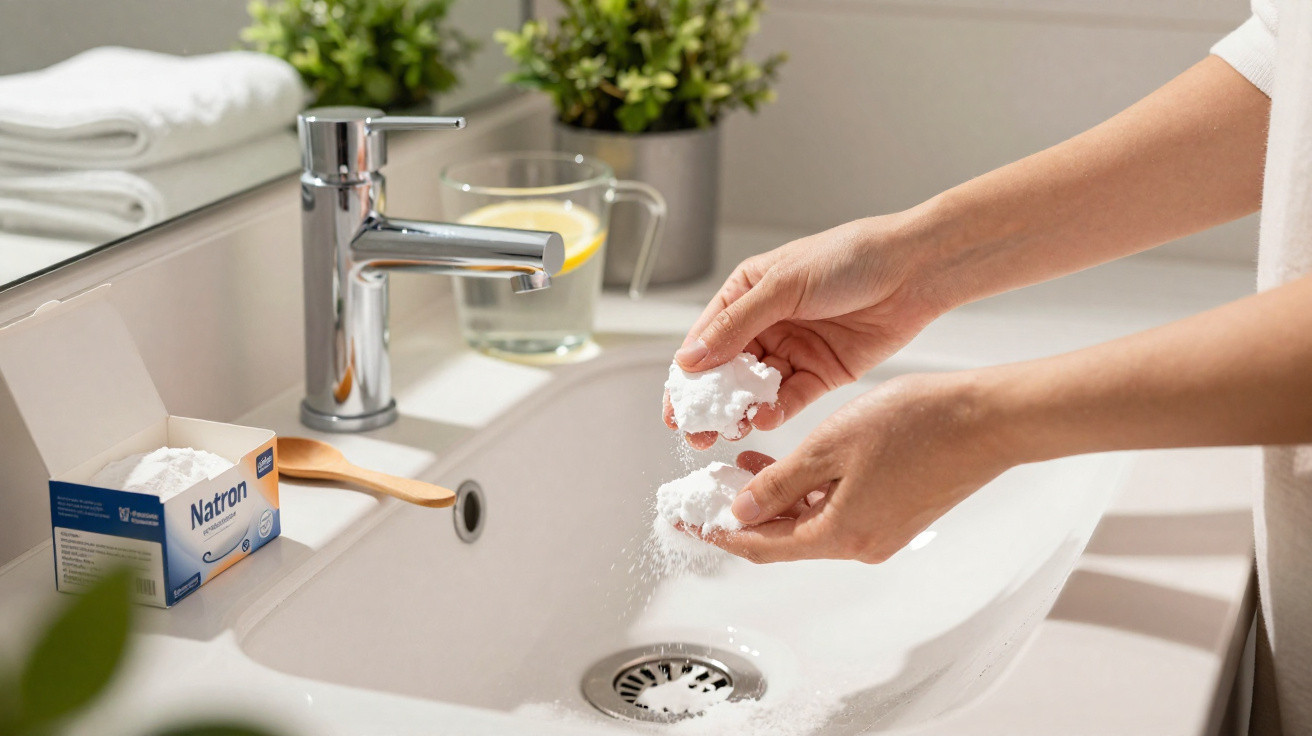
A bad smell from the bathroom drain can develop even if the rest of the room is clean. Soap residue, hair, body oils and organic matter may build up in parts of the drainage system, contributing to unpleasant odours. As part of preventative maintenance, bicarbonate of soda can be used for straightforward cleaning, but it should not be regarded as a remedy for blockages or structural faults.
Why can the bathroom drain start to smell bad?
While showering, small amounts of soap, shampoo, hair and other debris pass down the drain. Some of this material can stick to the internal surfaces of the system or collect in areas where water does not flow as freely.
The drain also has components designed to prevent odours from the sewer system from coming back into the room. If there is too little water in the trap, or there is a fault with this barrier, the smell may become more noticeable in the bathroom.
How can bicarbonate of soda be used for bathroom drain maintenance?
Bicarbonate of soda can be included in a household cleaning routine because it can help with cleaning and neutralising certain odours. During basic maintenance, a small amount may be added to the drain and followed with water, depending on the method selected.
The purpose is to support surface cleaning and odour control, rather than break down a deep blockage. Do not treat this method as a guaranteed way to unblock pipework, particularly if the water is already draining poorly.
What should you do before putting anything into the drain?
Remove any hair and visible debris caught in the drain cover or accessible part of the drain. This physical cleaning is often more valuable for maintenance than simply pouring products into the pipework.
You should also check for standing water or whether drainage is slower than usual. A drain that starts draining slowly may indicate a build-up of debris that needs investigating before the issue becomes worse.
Does bicarbonate of soda unblock a blocked drain?
It is not accurate to view bicarbonate of soda as a universal solution for blockages. Obstructions may result from hair, objects, accumulated debris or issues with the pipework itself, and each situation requires a different approach.
If water is not draining normally, repeatedly using homemade mixtures may not address the underlying cause. For persistent blockages, it is best to use suitable methods or contact a professional.





Comments
No comments yet. Be the first to comment!
Leave a Comment