
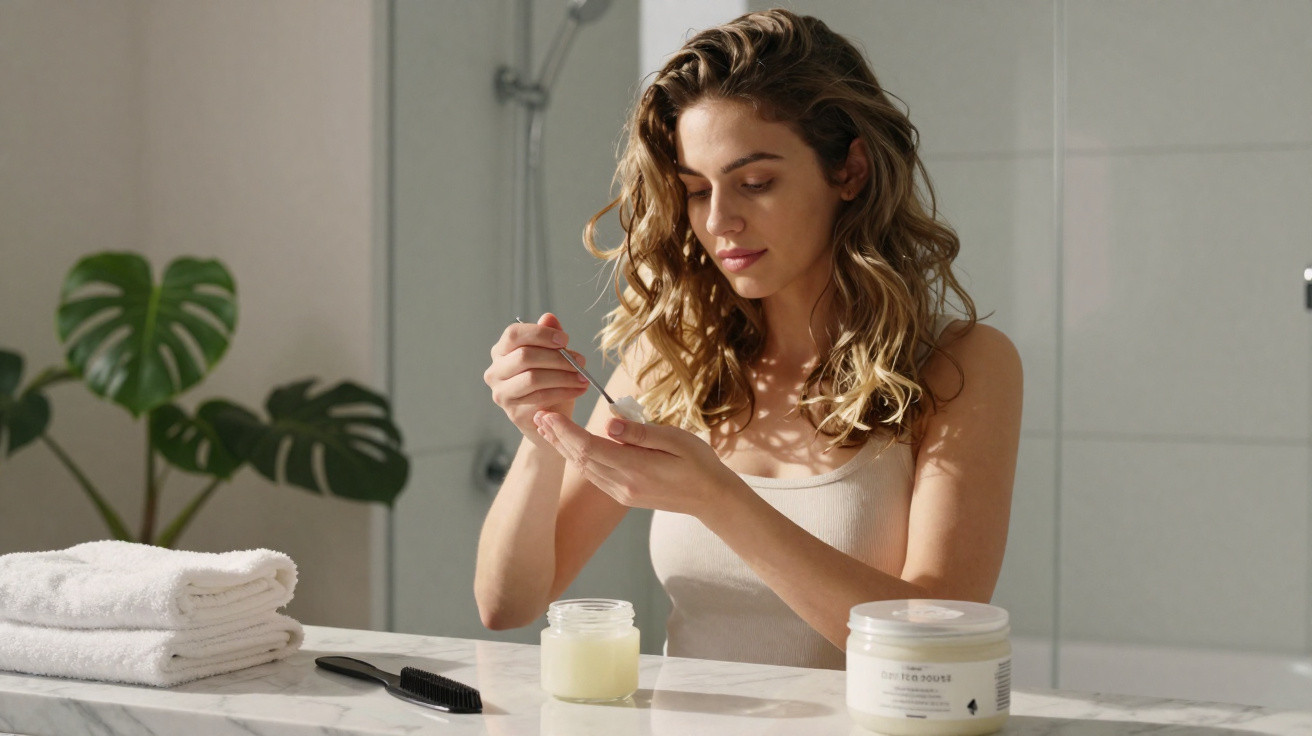
Applying coconut oil to your hair before you even open the shampoo may seem like the opposite of a proper wash, yet there is sound reasoning behind this approach. Known as pre-poo, it adds a protective step before cleansing and may help drier strands retain more softness in the shower, potentially reducing the need to overdo the hair mask afterwards.
What does coconut oil do before shampoo?
Shampooing removes oil, sweat and built-up residue, but some hair can feel rough or dry once the process is complete. When used beforehand, coconut oil acts as a protective layer, especially through the lengths and at the ends, which are the areas most often affected by frequent washing.
Interest in coconut oil is also linked to its affinity with the hair fibre. Rather than simply coating the hair in a heavy mixture, pre-poo is intended to lessen the effect of cleansing on more vulnerable strands. The aim is not to make hair oily, but to prevent washing from stripping away more than it needs to.
How can you use pre-poo without weighing hair down?
The amount used matters. Instead of saturating your hair, warm a small amount between your hands and apply it only to the areas most prone to dryness. It is generally best to avoid the scalp, particularly if it is already naturally quite oily.
- Before getting into the shower, apply a small amount of coconut oil to the lengths and ends.
- Distribute it thoroughly to prevent overly coated patches that are difficult to rinse out.
- Leave it on for a few minutes while you prepare the rest of your haircare routine.
- Shampoo as usual and notice whether your hair feels less rough once it has been washed.
After washing, your hair’s own response can help you fine-tune the method. If the strands still feel heavy, you have probably used more oil than necessary. If they are soft and light, the pre-poo may have done its job without requiring several extra steps.
Why can pre-poo help you use less hair mask?
The principle is straightforward: if hair reaches the end of the wash feeling less dry, it may need less product to restore softness and make detangling easier. This does not mean that coconut oil fully replaces a hair mask, but it may reduce the need to use large amounts of one with every wash.
For anyone who applies a mask until the hair feels completely coated, the difference may show up in how quickly the product is used. Protecting hair before shampooing makes it possible to try smaller amounts afterwards. As a result, a more expensive hair mask may last longer without necessarily leaving hair looking less cared for.
Watch the video shared by the YouTube channel Abner Matias, which explains whether pre-washing with oil really works.
Which hair types need caution with coconut oil?
Not every type of hair responds in the same way. Very fine hair, naturally oily hair, or hair that becomes weighed down easily may not respond well to generous applications. In these cases, using a minimal amount or keeping pre-poo only for the ends may be a more comfortable option.
There is also no need to turn the method into a fixed rule. If your hair starts to feel heavy, dull or difficult to wash, reduce how often you use it and assess the result. Styling products, creams and other oils used in the same routine also affect the final feel and can lead to build-up.
Is it worth trying before spending more on treatment?
Pre-poo with coconut oil shows that an effective routine does not always depend on adding more products. In some cases, protecting hair before cleansing can be more helpful than attempting to correct all dryness afterwards with generous layers of hair mask, conditioner and styling products.
If your hair mask is running out quickly and your ends remain rough after every wash, consider reassessing the step before shampoo. A small adjustment to the amount of oil may reveal how much product your hair truly needs and help make your routine more economical without giving up care.






Comments
No comments yet. Be the first to comment!
Leave a Comment