
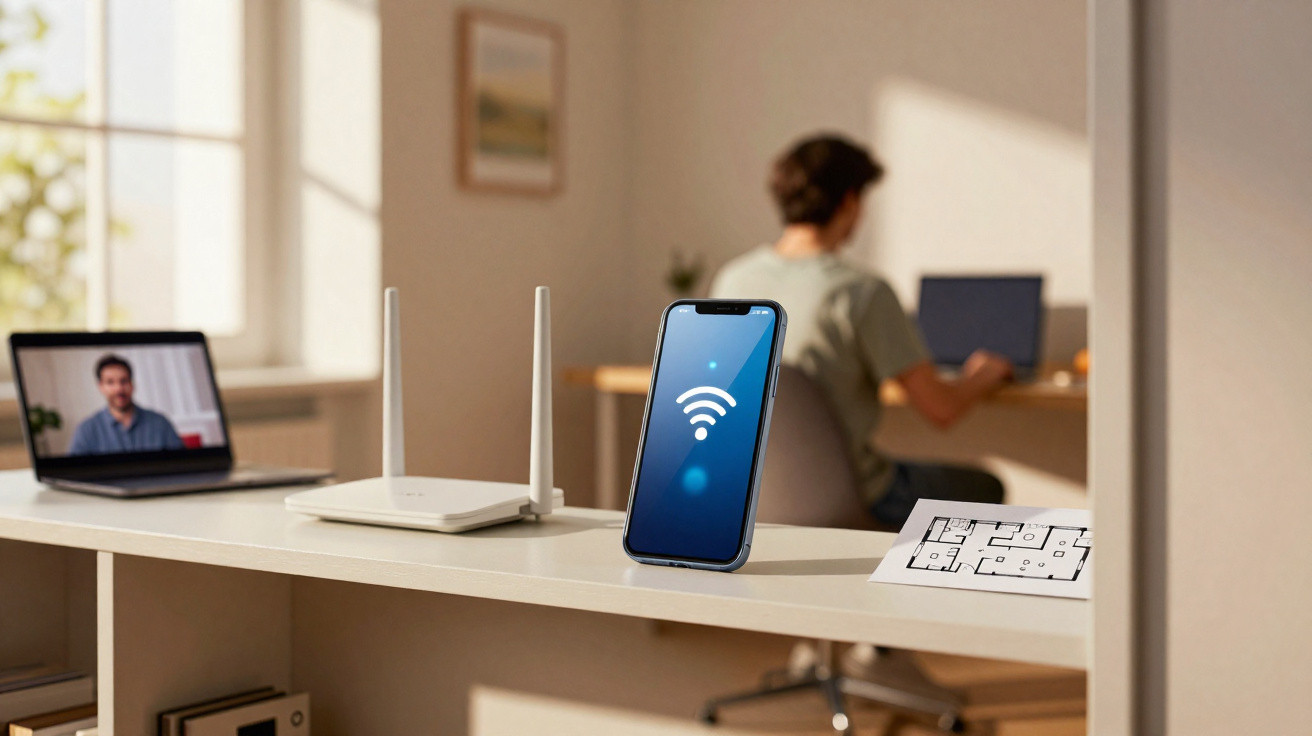
An old Android phone can take on a second role when the router’s signal does not reach every room properly. On compatible devices, the handset can receive the existing Wi-Fi network and share it again, acting as an intermediate point between the router and an area with poor coverage. This method may extend the network’s reach, but it does not increase your subscribed speed, and not every smartphone can repeat Wi-Fi natively.
How can a phone work as a Wi-Fi repeater?
The concept is much like that of a standard repeater. The phone connects to the main network, then creates a second wireless connection for other devices. A laptop or television with a weak direct signal from the router can therefore connect to the phone placed between the router and the poorly covered area.
Some Android models can share a Wi-Fi connection directly through the hotspot feature. On phones without this option, apps can create an intermediate network, although certain apps require extra setup, such as proxy settings, on connected devices.
- Connect the old phone to the main Wi-Fi network;
- Look for Access point, Hotspot or Connection sharing;
- Check that the phone keeps Wi-Fi enabled when the hotspot is switched on;
- Set a name and password for the new network;
- Connect the device with poor signal to that new network.
Where should you place the phone for better coverage?
A phone used as a repeater should not be positioned where the Wi-Fi signal has already disappeared. It must still receive a reasonably strong signal from the router in order to retransmit a usable connection. In practice, an intermediate location, such as a hallway between the living room and a bedroom with weak coverage, often delivers better results.
Why does this method not increase your internet speed?
A repeater does not generate additional bandwidth. If your broadband plan provides a certain speed, the phone simply redistributes the connection already available. Receiving and retransmitting data through the same device can also result in lower speeds, higher latency and less stability than a direct connection to the router.
For that reason, this option is more useful when coverage is the issue, rather than when the internet is already slow next to the router.
- Weak signal in a bedroom may improve with an intermediate device;
- Slow internet near the router is likely caused by something else;
- Thick walls and long distances will still affect the signal;
- Old phones may have slower Wi-Fi than modern equipment;
- A mesh system or dedicated repeater is generally more stable for permanent use.
What should you do if Android turns off Wi-Fi when the hotspot is enabled?
This behaviour suggests that the device is probably set up to share mobile data only. The ability to keep both the Wi-Fi connection and hotspot active at the same time depends on the manufacturer, Android version and hardware. In these cases, sharing apps may provide an alternative, but only well-known tools should be installed. Check the permissions requested and remember that some methods rely on proxy configuration.
- Try Android’s built-in feature first;
- Confirm that the phone remains connected to the main Wi-Fi network;
- Do not accidentally enable mobile data if you only want to repeat your home network;
- Use a strong password for the secondary network;
- Keep the system and apps updated whenever support is available.
A forgotten phone in a drawer can solve a Wi-Fi dead spot
For a bedroom, home office or television positioned just beyond the router’s comfortable range, repurposing an old smartphone can be a straightforward option before buying more equipment. Positioning is crucial: the phone must be placed where it still receives a good connection while also being closer to the area that needs coverage. As it will remain switched on for many hours, you should also monitor heat and battery condition, especially on very old devices.
This approach does not replace a dedicated repeater or mesh network where several rooms lack coverage, there are many connected devices or high speeds are required. Its value lies elsewhere: it turns an unused device into a temporary bridge that carries Wi-Fi a few metres further. If the phone supports sharing its own wireless connection, only a few settings may be needed to make the device useful and improve coverage in a troublesome part of the home.





Comments
No comments yet. Be the first to comment!
Leave a Comment