
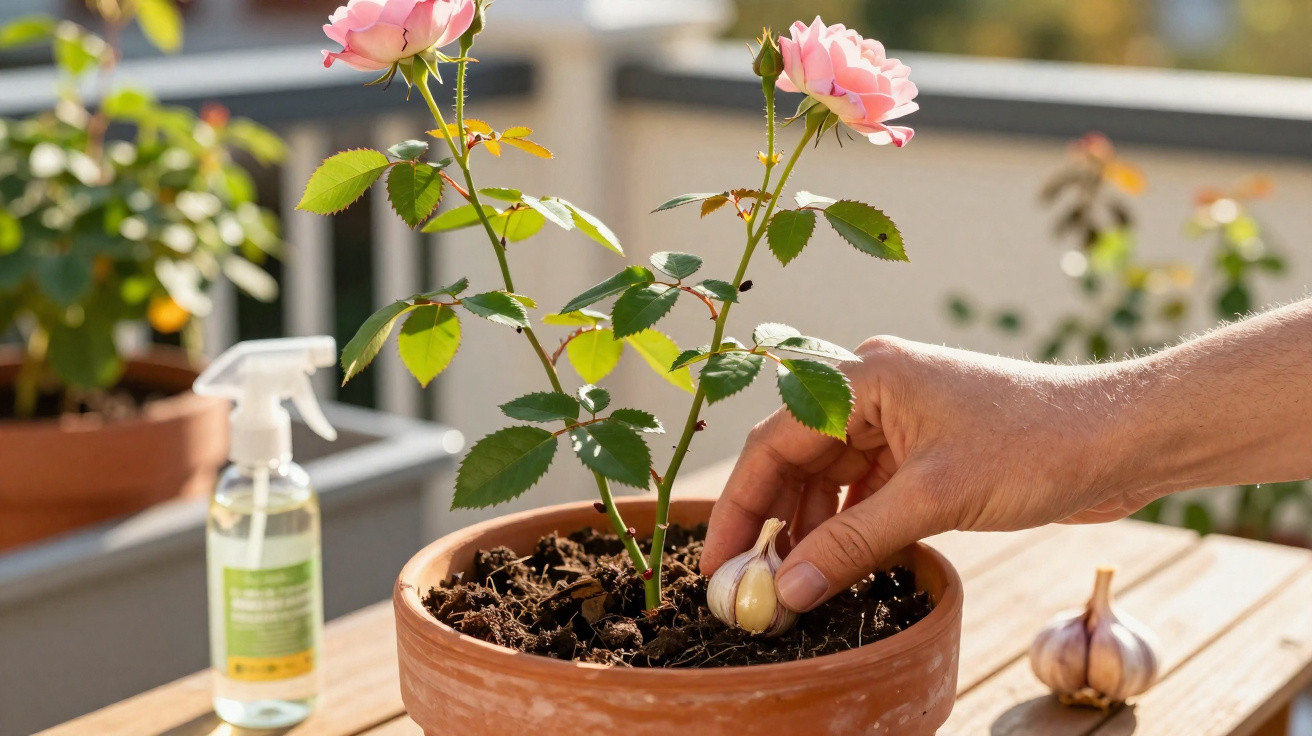
Burying garlic cloves in a rose pot is a gardening method used in an attempt to deter aphids and lessen the pressure from certain micro-organisms. Garlic contains sulphur compounds, including allicin, which are linked to repellent and antimicrobial effects. In practice, however, a buried clove usually delivers limited results and should only be regarded as part of the plant’s overall care.
What is the purpose of putting garlic in a rose pot?
Garlic releases sulphur-based substances when its tissues are damaged, as well as while it breaks down in the soil. These compounds are responsible for the plant’s distinctive strong smell and may affect the behaviour of some insects. For a rose, the aim is to make conditions less appealing, particularly for aphids, which commonly gather on fresh shoots and flower buds.
This does not create a lasting protective barrier. A whole clove placed in the soil releases its compounds gradually and at levels that are difficult to regulate, so it should not replace regular checks of leaves and new growth.
- It may help deter certain insects;
- It releases sulphur compounds into the growing medium;
- It can support other aphid-control methods;
- It will not, by itself, remove an established infestation.
Why do aphids appear so often on roses?
Aphids are especially attracted to young plant tissue, which they pierce to feed on sap. New shoots, soft stems and rose buds provide precisely this type of food, meaning colonies can develop quickly during active growth periods. Curled leaves, distorted new growth and a sticky substance on the plant are among the most frequent signs that these insects are present.
Can garlic compounds also help against fungal diseases?
Compounds found in garlic have shown activity against a range of micro-organisms under controlled conditions. This helps explain the traditional use of garlic preparations in gardening. On roses, however, diseases such as powdery mildew, rust and black spot are influenced by factors including humidity, air circulation, temperature and the presence of the pathogen. They will not disappear simply because a few cloves have been added to the growing medium.
The key priority remains reducing the conditions that encourage disease. Watering the soil without leaving the foliage constantly damp, removing severely affected sections and allowing adequate airflow generally produces more predictable results than relying on garlic alone.
- Avoid keeping the foliage wet for extended periods;
- Remove heavily affected leaves and plant debris from the pot;
- Ensure good air circulation around the rose;
- Watch for spots, white powdery growth and changes to the leaves;
- Combine preventative measures instead of using only one home method.
Why does garlic spray usually work better?
For a garlic spray, the cloves are crushed or mashed, breaking their cells and releasing the compounds responsible for the intense smell. When the mixture is applied directly to areas where insects are concentrated, contact is far greater than with a whole clove buried in the pot. Even so, its action is temporary, and overly concentrated applications can damage sensitive leaves.
- Crushed garlic releases its compounds more quickly;
- Application reaches leaves and new growth directly;
- The repellent effect is usually more immediate;
- It is sensible to test it on a few leaves before spraying the whole plant.
Is burying garlic in a rose pot worthwhile?
Burying a few cloves can be a useful supplementary step, provided they do not take up too much room in the growing medium and are not seen as a permanent solution. If large numbers of aphids appear, dislodging them with a jet of water, manually removing badly affected parts and using targeted control will usually give quicker results than waiting for compounds to be released from buried garlic.
To keep a rose healthy, the best outcome comes from combining careful observation of new shoots, suitable watering, good ventilation, removal of diseased leaves and pest control as soon as problems emerge. Garlic can form part of this care, particularly in preparations applied directly to the plant, but it is an aid rather than a replacement for the basic measures that keep flowers, leaves and stems in good condition.






Comments
No comments yet. Be the first to comment!
Leave a Comment