
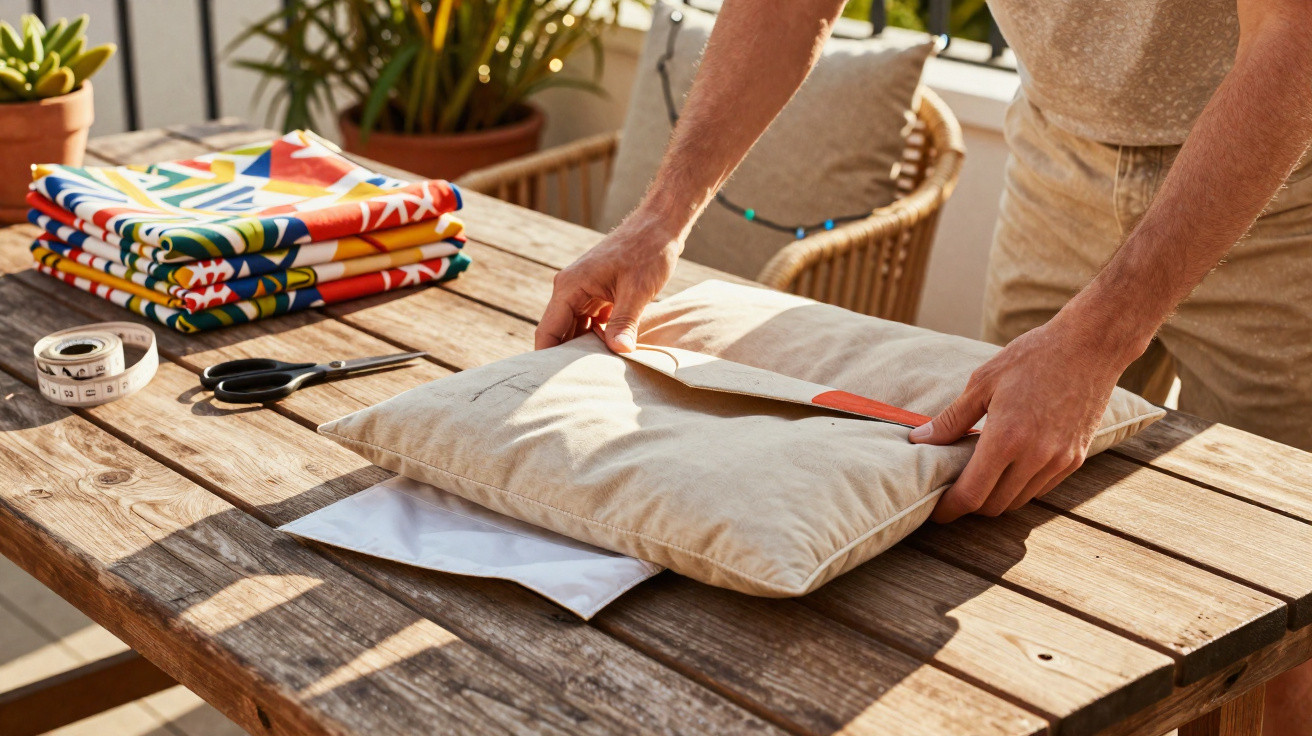
With one simple sewing trick, they can be rescued surprisingly easily.
After summer, many homeowners and balcony enthusiasts automatically reach for new cushions. The fabric looks tired, the seams are worn and the overall appearance seems shabby. Yet inside there is often a completely sound foam pad that could easily last for years. Choosing a needle instead of throwing it away saves real money, cuts waste and gives the outdoor area a fresh new look at the same time.
Why old terrace cushions are worth more than they look
After a few seasons outdoors, the picture is usually the same: sun cream marks, bird droppings, pollen residue and sun-faded streaks. Many people immediately assume that the entire seat cushion needs replacing. That is exactly where unnecessary waste begins.
“In most cases, only the cover is worn out – the foam filling stays in remarkably good shape for a long time.”
Anyone who checks the cover regularly will soon notice that the filling still springs back, is not crumbly, smells normal and has retained its shape. Throwing it away would therefore mean sending perfectly usable material straight to landfill. With garden furniture and cushions becoming more expensive, it is worth considering alternatives.
There is also an environmental benefit. Modern waste management and circular economy principles focus precisely on this: using products for as long as possible, repairing them and redesigning them. Textile upcycling – the creative reuse of existing fabrics and fillings – plays a key role here. Sewing new covers rather than discarding complete cushions fits perfectly with this approach.
The “envelope cover” trick: sturdy, simple and zip-free
At the heart of the method is a particular cover pattern: an envelope cover, similar to a hotel-style pillowcase. There is no zip, no buttons and no complicated fastening.
The advantages are clear:
- no components that can rust or break outdoors
- tension is distributed across straightforward side seams
- the cover can be removed and put back on quickly in everyday use
- it is suitable for sewing beginners because only straight seams are required
The idea is simple: a rectangular piece of fabric is folded so that the ends overlap, creating a wide envelope opening on the back of the cushion. This overlap keeps the filling securely enclosed, even though there is no visible opening on the front.
How to calculate fabric for your terrace cushion cover
For the cover to fit neatly later, you only need a few basic measurements. Take a tape measure and measure the cushion, or the foam pad itself.
Basic formula for cutting the fabric
- Fabric width = cushion width + approximately 3 cm seam allowance
- Fabric length = 2 × cushion length + approximately 20 cm for the envelope overlap
The extra length ensures that the fabric edges overlap generously at the back. Nothing will gape open, even when someone sits on the cushion with their full weight.
“As a rule of thumb, allow roughly 20 per cent more fabric length than the cushion length – this comfortably covers the envelope overlap.”
Practical example for a standard cushion
Take a typical 60 x 60 cm terrace cushion:
| Measurement | Cushion | Fabric cut |
|---|---|---|
| Width | 60 cm | approximately 63 cm |
| Length | 60 cm | approximately 140 cm |
This rectangle becomes your new cover. All that remains is folding and sewing.
Step by step: sew an envelope cover in under an hour
This sewing project can be completed using a basic domestic sewing machine. If preferred, it can even be sewn by hand, although that will take a little longer.
1. Prepare the edges
Start by finishing the two short sides of the fabric:
- fold each edge in by around 1.5 cm
- fold it in once more so the raw edge is concealed
- stitch close to the edge to create neat, durable hems
2. Fold the fabric into the “envelope”
Place the fabric on a table with the right side facing up. Fold the two short, already finished edges in towards the centre so that they overlap. Aim for an overlap of around 15 cm.
The outer edges should now equal the finished cushion length – 60 cm again in this example. It is worth checking this briefly with a tape measure.
3. Sew the sides closed
Secure everything with a few pins or fabric clips, then sew one straight seam on each side:
- seam allowance from the edge: around 1.5 cm
- backstitch well at the beginning and end of each seam to prevent it from coming undone
Then turn the cover right side out. The overlap on what will become the back creates the characteristic envelope opening. Push in the foam cushion and it is ready.
How much money can be saved with self-sewn covers
Anyone with several terrace cushions will quickly see how the costs add up. New outdoor cushions typically cost between €30 and €80 each in shops, depending on size and quality, while high-end models can cost considerably more.
“Using fabric by the metre and doing the sewing yourself can save an average of €40 to €80 per cushion.”
A practical example: a terrace seating area made from pallets, fitted with thick foam pads. The original covers have been ruined by sunlight and cat claws, while the fillings remain completely sound. New covers can be sewn in an afternoon using robust outdoor fabric bought by the metre from a DIY shop or fabric retailer. Rather than buying a whole new set of cushions, only the fabric needs to be paid for – often reducing the full cushion refresh to a fraction of the original purchase price.
Which fabric really withstands rain, sun and barbecues?
Choosing the right fabric is crucial for durability. Lightweight cotton may look attractive, but it quickly gives up outdoors. For long-term use, choose specially coated or tightly woven outdoor textiles.
- select fabric with the highest possible density and a noticeably firm feel
- choose UV protection where possible, so colours do not fade immediately
- opt for easy-care surfaces that can be wiped clean
- avoid unsuitable materials such as thin curtains or old sheets
Because the envelope cover has no zip, there are fewer weak points where fabric can tear. The main strain falls on the side and hem seams, which should be reinforced with strong thread.
Clever extra: add an invisible moisture barrier
Anyone using terrace cushions on wooden pallets, stone benches or concrete flooring will know the issue: moisture rises from underneath into the cushions. The result is damp padding and foam filling that ages faster or develops a musty smell.
“A simple built-in barrier layer protects the foam from rising damp – without having to buy new materials.”
A practical solution is to sew an old water-repellent material into the underside of the new cover, such as:
- a worn-out wax-coated tablecloth
- the upper section of an old shower curtain
- offcuts from a lorry tarpaulin or shade sail
Sew this piece into the side of the cover that will face the pallet or ground. The top remains soft and comfortable, while the underside works like a shield against moisture. Such a barrier layer extends the life of the filling and helps prevent mould.
How beginners can get started sewing cushion covers
Anyone who has never used a sewing machine can begin with smaller cushions and build confidence gradually. Cushions measuring 40 x 40 cm provide quick results and make it easier to understand the envelope-cover principle.
Useful tips for beginners:
- first sew a trial version from an old bedsheet
- wash fabric before cutting it so it does not shrink later
- use a stronger sewing-machine needle for thick fabrics
- sew long seams with a slightly longer stitch length, for example 3–3.5 mm, to prevent puckering
Once you have mastered the technique, it is useful for more than just terrace cushions. Bench pads in a conservatory, dog cushions, floor cushions in a child’s bedroom and seat pads for campers can all benefit from the same cover design.
Getting more use from fabric offcuts and old textiles
Another advantage of this method is that it works exceptionally well with materials already available at home. Old curtains, thick tablecloths and unwanted bedding made from sturdy fabric can all be turned into new cushion covers. This avoids extra purchases while also reducing household textile waste.
Those who enjoy changing the look can sew two or three sets of covers at once. The design can then be switched to suit the season or occasion: muted shades for everyday use, bold colours for parties and natural patterns for spring. The foam inserts always remain the same – and that is exactly what makes this approach so resource-efficient.
Comments
No comments yet. Be the first to comment!
Leave a Comment