
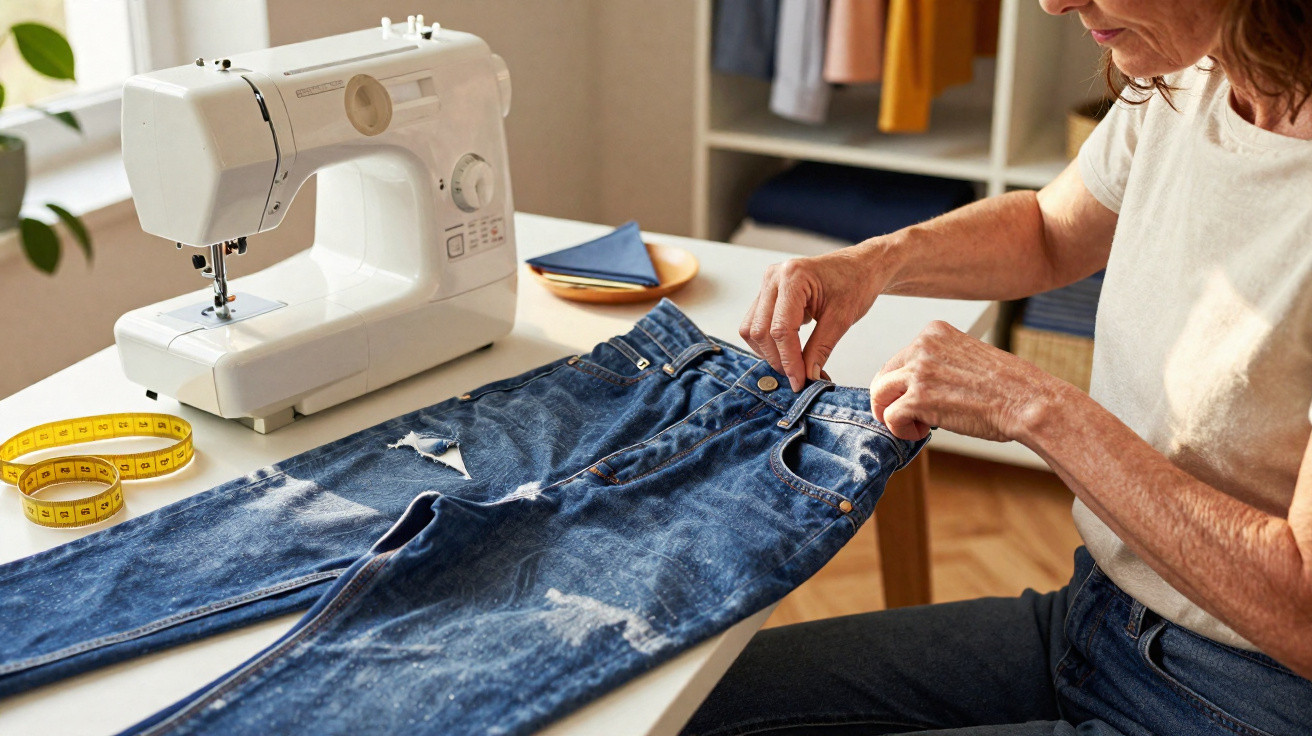
A small sewing alteration can save them.
It is a familiar situation: a few extra kilos, a hot wash cycle, or simply a body that has changed over the years – and suddenly your favourite trousers no longer fasten properly. Rather than heading out to shop in frustration or piling up trousers that ‘almost fit’, you can often enlarge the waistband surprisingly easily with one targeted alteration.
Why trousers suddenly feel tight – even if you have barely gained weight
Trousers are generally made with very little give at the waist. The waistband is usually constructed from a firm strip of woven fabric, which hardly stretches regardless of changes to your stomach or hips.
Everyday life can make the issue more noticeable. Your stomach often becomes slightly more bloated as the day goes on. Sitting at a desk, a substantial lunch, menstrual-cycle fluctuations, or hormonal changes during perimenopause and menopause can all intensify this effect. The trousers fit in the morning but feel restrictive by evening.
At the same time, awareness of sustainability is growing. France’s environmental agency, ADEME, has long highlighted that keeping garments in use for longer is a highly effective way to cut textile waste. So, before throwing clothing away and buying replacements, it is worth considering straightforward upcycling ideas.
“Adjusting a trouser waistband precisely brings greater comfort – while saving money, resources and stress.”
The waistband is the key: extra room without spoiling the shape
Much can be altered in a pair of trousers, but the most effective small change is at the point under greatest tension: the waistband. This is where pressure builds whenever your stomach needs a little more room. The button and zip then begin to pull, gape or distort.
The practical answer is to add an elastic section at one point in the waistband instead of remaking the entire garment. You can place it at a side seam or at the centre-back seam, where the adjustment will barely be visible later. The rest of the cut, particularly the hip line and the way the legs hang, remains unchanged.
“A small elastic insert in the waistband redistributes the tension, creating a flexible comfort zone that is barely noticeable from the outside.”
What a ‘soufflet’ is – and why it works so well
In sewing terminology, this is often called a ‘soufflet’, or gusset. It is a small piece of fabric, usually triangular, inserted into an opened seam. Here, a stretchy soufflet allows the waistband to give without tearing or forming unattractive bulges.
- Shape: Two small triangles or one V-shaped piece
- Material: Stretch fabric or flat elastic
- Position: The side seam or centre-back seam of the trousers
- Effect: More ease at the waistband, adding up to around 5 cm to the circumference
The 30-minute trouser waistband trick: sew in up to 5 cm of extra room
Anyone comfortable with a needle and thread can often complete this alteration in half an hour. A sewing machine makes the work quicker, but the technique can also be done with hand stitching.
Step 1: Prepare the trousers and open the seam
Turn the trousers inside out so that you can clearly see the inside seams. Then choose the seam you want to alter, most commonly either:
- the left and/or right side seams; or
- the centre-back seam at the back waistband.
Using a seam ripper or small scissors, unpick the chosen seam over a length of roughly 4 to 5 cm. Crucially, separate the waistband along its seam too, so that you create a V-shaped opening.
Step 2: Cut the elastic triangles
Next, you need a piece of firm yet stretchy fabric, or wide elastic at least about 3 cm wide. Cut two triangles from it, with the base sitting at the waistband and the point facing down towards the hip.
The width of the base determines how much additional room you create. If you are unsure, begin with slightly smaller triangles and adjust them later.
Step 3: Insert, try on and adjust
Pin each triangle into the opened seam. The wide edge should sit flush with the waistband edge, while the point disappears into the trouser fabric. This V-shaped construction creates a small wedge that pushes the seam apart.
Carefully try the trousers on, even while they are still full of pins. This lets you check whether the waistband feels comfortable or whether you need a little more room. If necessary, move the pins or cut a larger triangle.
Step 4: Sew it securely while retaining stretch
Once you are happy with the fit, stitch the triangles in place. A zigzag stitch is suitable when using a sewing machine, as it secures the edges while maintaining elasticity. If you are sewing by hand, use close, slightly slanted stitches, taking care not to pull the material too tightly.
Depending on the size of the inserts, this can add up to approximately 5 cm to the waist circumference without significantly changing the waistband’s appearance.
For fabric purists: extra room without elastic
Some people prefer not to wear synthetic materials or experience itching from them. A comparable result can be achieved without elastic by using fabric cut on the bias, also known as a bias cut.
| Option | Material | Characteristic | Suitable for? |
|---|---|---|---|
| Elastic soufflet | Flat elastic, jersey or stretch fabric | Highly stretchy and very flexible | Maximum comfort; trousers that pull tightly across the stomach |
| Bias soufflet | Woven fabric cut diagonally across the grain | Slight give and better shape retention | People avoiding elastic, and classic fabric trousers |
For example, use an old trouser leg in a similar colour, cut triangles from it at a 45-degree angle to the grain, and insert them in exactly the same way as the elastic pieces. Fabric gives slightly when cut on the bias, creating a natural reserve of stretch.
The classic case: favourite jeans and the years after menopause
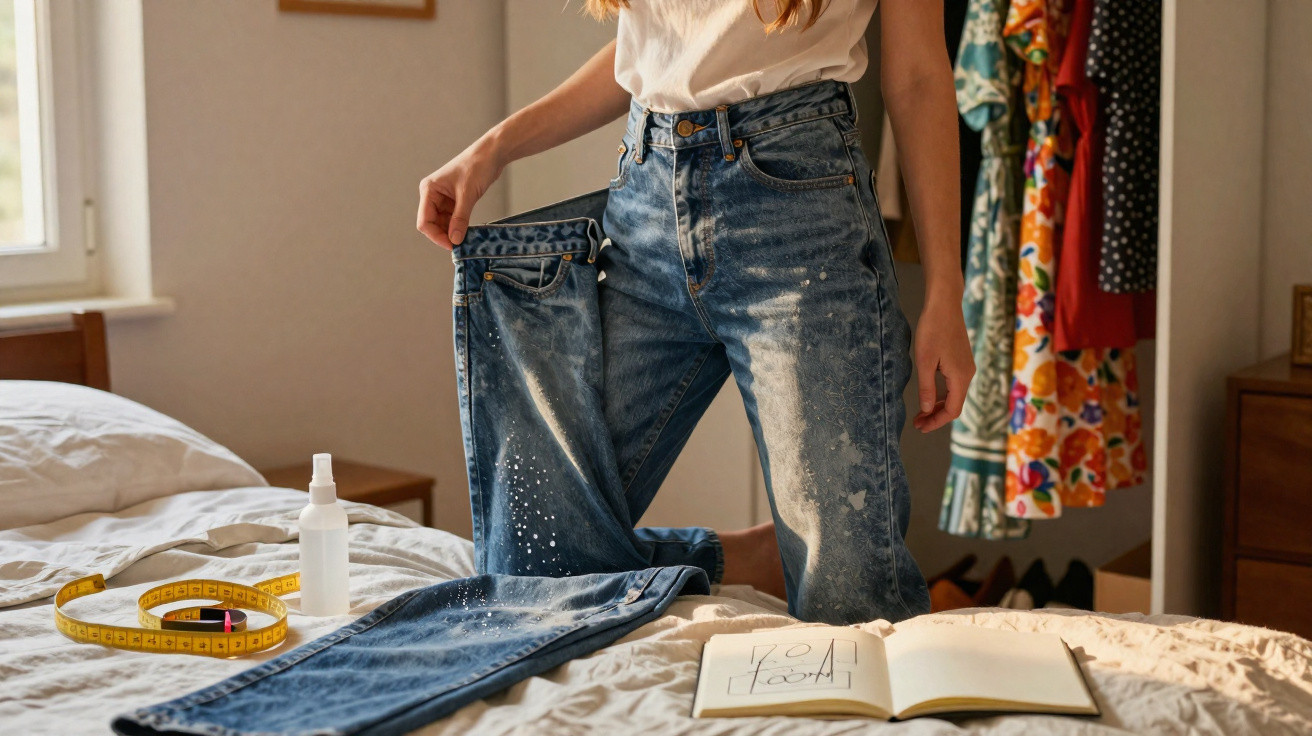
One common scenario in alteration shops is the ‘forever favourite pair of jeans’: a reliable garment for decades, until menopause changes the body. The waist becomes softer, the stomach rounder, while the jeans stubbornly remain just as narrow.
In this situation, two small inserts at the left and right sides of the waistband, neatly worked into the side seams, are often sufficient. They will not show beneath a T-shirt or jumper. Nothing digs in while sitting, the button stays fastened, and the familiar item need not be removed from the wardrobe.
“Especially during life stages involving hormonal changes, an adjustable waistband restores a measure of autonomy over your own wardrobe.”
When the trick is worthwhile – and when it is not
Enlarging a waistband does not work equally well on every style of trousers. A few rules of thumb can help you decide.
- Very stiff waistbands with many seams: These are less suitable, as the inserts can become noticeable quickly.
- Trousers with a high stretch content: These often benefit particularly well because the waistband complements the existing give.
- Formal suit trousers: Take care, as visible alterations can disrupt the overall look. Choose very discreet, narrow inserts, or ask a professional alteration service.
- Trousers that are far too small: If more than 5–6 cm is missing, this technique reaches its limits. Reconstructing the entire waistband is then the better option.
Tips for lasting comfort and durability
To ensure that the alteration lasts through many washes rather than only a few weeks, pay attention to the details:
- Use good-quality elastic that will not lose its stretch quickly.
- Finish raw edges to prevent fraying, particularly with denim.
- Test the stretch before stitching everything permanently in place.
- Mark the alteration date on the inside, so you can keep track if you want to make further adjustments later.
What this trick has to do with sustainability and body image
Altering trousers rather than discarding them does more than reduce textile waste. Every pair of saved jeans means less water used in production, fewer chemicals and fewer transport miles. The impact adds up, especially when you rescue several items from your wardrobe in this way.
An adjustable waistband also eases the pressure created by constantly focusing on size. Bodies change throughout life. Clothing that adapts and gives sends a clear message: the problem is not the body, but the rigid number on the label.
Anyone who tries this sewing trick once often starts thinking beyond it. Moving buttons, slightly altering the leg width, or making skirt waistbands more elastic can suddenly become appealing options. Consumers become makers who see clothing as something that can be altered – extending their relationship with every individual garment.

Comments
No comments yet. Be the first to comment!
Leave a Comment