
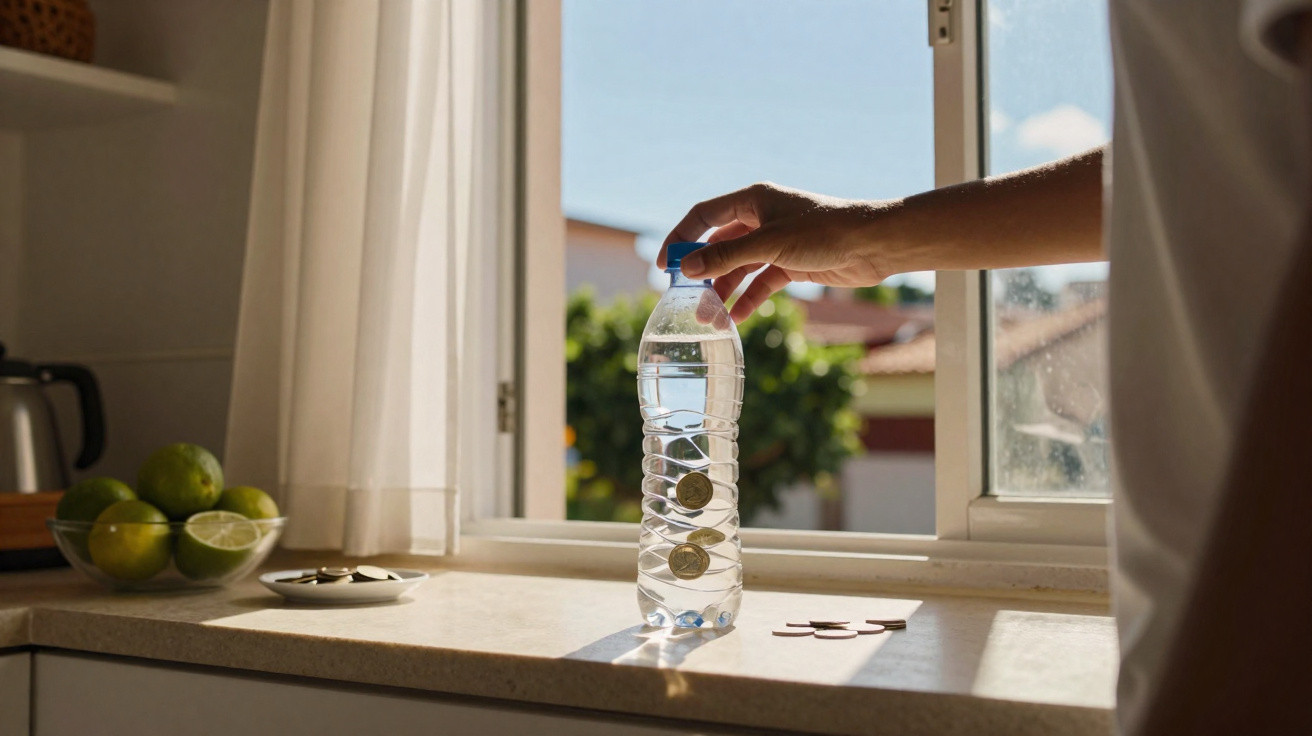
Putting a water bottle in the window is a widely used household trick, mainly intended to keep flies and other insects away from open areas of the home. The theory is that water in the bottle reflects light, producing flashes that may disturb or confuse insects, although the result is not guaranteed and generally depends on the setting.
What is the purpose of putting a water bottle in the window?
This home remedy is most often used to limit flies around windows, patios, kitchens and dining spaces. When exposed to natural light, a transparent bottle filled with water acts like a makeshift reflector.
In particularly bright places, the reflections may create visual movement that deters certain insects temporarily. However, this approach is no replacement for regular cleaning, insect screens, proper rubbish disposal and careful management of food scraps.
Does this trick actually work?
It works for some people, but it is not a foolproof answer. Its effectiveness is affected by the window’s position, light strength, insect species, the amount of exposed food and ventilation in the area.
- Direct sunlight: increases the reflections inside the bottle.
- Transparent bottle: allows light to pass through more effectively.
- Clean water: prevents unpleasant smells and dirt from building up.
- High position: lowers the chance of falls and accidents.
- The effect is usually weaker in dark areas or places without direct light.
How should you position the water bottle correctly?
Use a clean, transparent plastic or glass bottle filled with water. It should be secured in a stable position at the window, where it cannot fall, and kept away from sockets, electrical appliances and places where children or pets could knock it over.
- Fill it almost to the top: this increases the reflective surface.
- Tighten the cap securely: this prevents leaks and keeps dirt out.
- Place it where light falls: the method relies on reflection.
- Change the water: replace it whenever it becomes cloudy.
- Avoid leaving loose glass bottles on narrow window ledges.
Where did this popular habit come from?
The practice became common in rural areas, open kitchens, markets and homes with highly exposed windows. In many places, the best-known version involves clear plastic bags filled with water, hung near doors and windows.
The popular explanation is that light refracting through the water interferes with flies’ vision. Although there is no absolute agreement on how effective it is, the method has endured because it is inexpensive, straightforward and requires no chemicals.
When is it worth using this method?
It can be worth trying as an additional measure on sunny windows, patios, utility areas and well-ventilated kitchens. Where there are large numbers of flies, though, the priority should be removing attractants such as uncovered rubbish, overripe fruit, unwashed dishes and exposed food remains.
A water bottle may be useful in minor situations, but it should be treated as a supporting measure rather than the main solution. Combined with frequent cleaning, window screens and properly covered food, the trick is safer and more likely to work in everyday life.


Comments
No comments yet. Be the first to comment!
Leave a Comment