
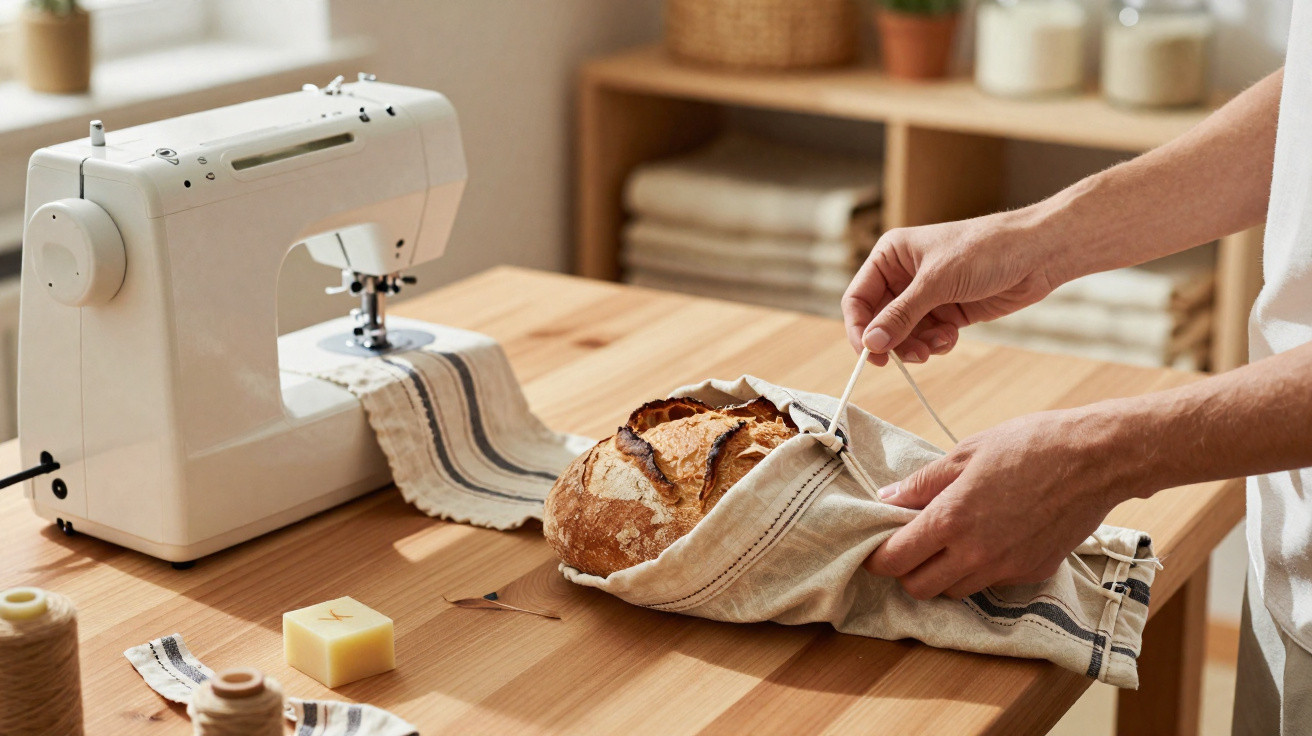
Many people are quick to throw out their old striped tea towels, yet these humble textiles have real upcycling potential. With just a few stitches, an unremarkable piece of fabric can become a useful bread bag that cuts plastic waste, costs virtually nothing and looks rather stylish too.
Why Grandma’s striped tea towels are a hidden treasure
They are still tucked away in kitchen drawers in many homes: slightly worn striped tea towels, woven with red or blue lines. At first glance, they may seem ready for the bin. Look more closely, though, and they reveal quality fabric – often old linen or so-called Metis, a blend of linen and cotton.
These textiles are hard-wearing, closely woven and have already become soft through years of use. They shed very little lint, cope well with high washing-machine temperatures, and withstand ironing and tumble drying far better than many modern kitchen towels made from inexpensive blends.
“Old linen from the household wash beats new mass-produced goods: more durable, more breathable, timeless.”
The French environmental agency ADEME advises keeping natural textiles like these in use for as long as possible. Searching drawers, storage boxes or the loft for old kitchen linen is also an easy first step towards a practical, resource-conscious household – with no need to buy costly “green lifestyle” products first.
A kitchen trend: a bread bag made from an old tea towel
Turning vintage tea towels into a bread bag is currently a small trend across sewing communities and social media. Its appeal lies in keeping the distinctive striped border visible, giving the finished bag an instant country-kitchen feel rather than the appearance of a makeshift solution.
There is a practical benefit as well. The fabric bag replaces paper bags and plastic packaging, can be used repeatedly and slips easily into a bag for a trip to the bakery. Stored on a shelf or hung from a hook, it is also far more decorative than a crumpled paper bag.
It saves money, too. Comparable bags made from new linen can easily cost €15 to €20 each in shops. If there is already a tea towel at home and a little thread to hand, the same result is almost free.
How to make a bread bag – no sewing expertise required
No dressmaking training is needed to make this bread bag. An ordinary domestic sewing machine is sufficient, although it can also be sewn by hand with a little patience. The process can be broken down into three stages.
Step 1: cut the fabric thoughtfully
First, lay the tea towel flat on a table and identify any genuinely worn areas: thin patches, tears or stains that will not wash out. Cut these sections away generously. Be sure to retain the strong, attractive striped edges, as they give the finished bag its characteristic look.
- Wash the tea towel and press it dry.
- Mark damaged areas and cut them off.
- Cut out a rectangle – roughly the width of a long loaf, with extra height allowed for the drawstring.
Step 2: sew durable seams
To ensure the bag lasts and crumbs do not continually catch on loose threads, it is worth using a French seam. Begin by placing the fabric wrong sides together and sewing a narrow seam along the side and bottom. Turn it inside out, then stitch the edge a second time. The raw cut edges are enclosed within the seam, preventing any fraying.
For a quicker option, use a straightforward straight stitch followed by a zigzag stitch. The important thing is to choose a sufficiently long stitch length, so that the dense linen fabric does not become stiff.
Step 3: add a useful drawstring closure
The top of the bag needs an opening that can be pulled closed quickly. A drawstring channel works well for this:
- Fold the top edge in by about 2 cm and press it.
- Fold it over once more narrowly so that the raw edge is concealed.
- Topstitch close to the edge to create a channel.
- Use a safety pin to thread cord or strong cotton string through it.
The basic bag is now ready. Anyone who wishes can sew on a small label or piece of decorative ribbon as well – perhaps marked “Bread”, with an initial, or with a date from the family’s history.
Why linen stores bread better
Old linen and Metis are much better suited to bread than plastic or overly dense synthetic bags. This is due to the structure of their natural fibres: they briefly absorb excess moisture from the crust and gradually release it again. The crust stays crisp while the crumb does not dry out as quickly.
In a sealed plastic bag, by contrast, moisture builds up, making both crust and crumb soft and encouraging mould to develop sooner. The fabric allows air to circulate without leaving the bread unprotected.
“Linen regulates moisture, protects against mould and keeps bread enjoyable for considerably longer than plastic packaging.”
Another advantage is that some studies suggest linen fibres may be less appealing to certain kitchen insects than cotton. A tightly woven bread bag with a drawstring therefore provides a small additional barrier against unwanted visitors in the food cupboard.
Extra tip: turn the bread bag into a natural beeswax wrap
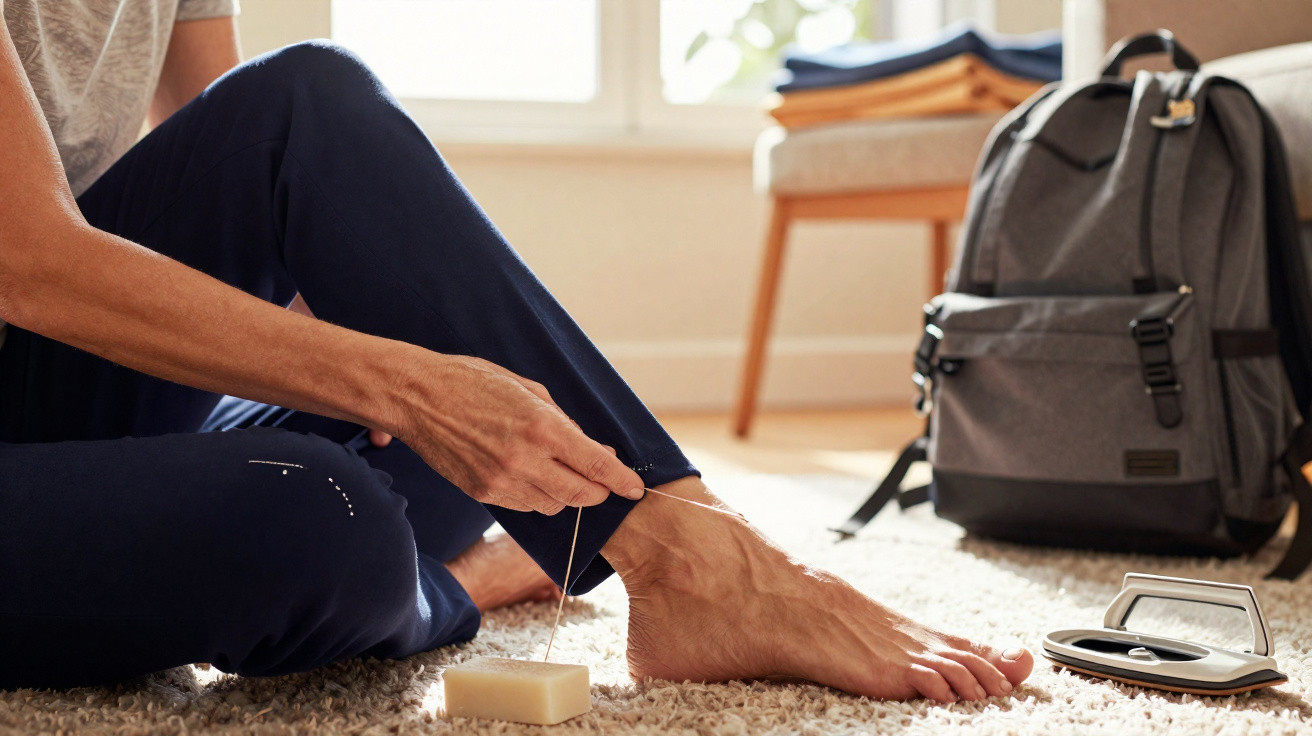
For anyone wanting to extend bread’s freshness further, the inner fabric can be treated with beeswax. All that is needed is pure beeswax pellets or leftover wax, baking parchment and an iron. Sprinkle the wax lightly over the inside of the bag, then melt it in with the iron between two sheets of baking parchment.
The wax coating makes the fabric mildly water-repellent while keeping it flexible and breathable. The effect is similar to commercially available beeswax wraps, only in bag form. Many users report that bread stays fresh for around twice as long in it.
For cleaning, lukewarm water and a little mild household soap are enough. Avoid hot water so that the wax does not melt out of the fabric. Leave it to air-dry afterwards, rather than placing it directly on a radiator.
Care, everyday advice and clever variations
Before using the bag for the first time, give it a thorough wash, preferably at a higher temperature. This removes any old odours and residual detergent. A quick press with an iron makes the fabric easier to sew and helps the seams sit neatly.
For everyday use, always allow bread to cool completely before putting it into the bag. Freshly baked warm bread releases a great deal of moisture, which would otherwise collect in the fabric. Shaking out the empty bag briefly and leaving it open on a hook helps prevent unpleasant smells.
- Pack bread only once it has cooled down.
- Wash the bag regularly, every one to two weeks depending on use.
- Give the inside of the bag a good shake from time to time to remove crumbs.
- Use gall soap or plain soap for stubborn stains.
What else can be sewn from the leftovers
A tea towel will often leave some fabric unused, but these pieces do not need to be thrown away. The long striped bands are ideal for sewing small lavender-scented sachets for the wardrobe. Simply sew rectangular pieces together, fill them with dried lavender and close them by hand.
Smaller clean pieces can be turned into round or square bowl covers. With elastic sewn into the edge, the fabric replaces conventional cling film. For dry foods such as rice, pasta or pulses, use the same pattern as for the bread bag, just in a smaller size. This creates useful storage bags for shopping at a packaging-free shop.
Practical guidance for beginner sewers
Anyone sewing for the first time should begin with a small test piece. This makes it possible to see how the machine handles the dense fabric and to find a suitable stitch length. A slightly thicker needle, such as a denim needle, often helps to prevent the linen from tearing.
One simple way to achieve straight seams is to draw a pencil line at an even distance from the fabric edge and follow it while sewing. Small irregularities are no disaster; they are part of the charm of handmade items.
Those who enjoy the project can try different sizes: a large bag for a baguette, a wider one for a tin loaf, or a shorter version for bread rolls. Gradually, this creates a complete set that makes bakery bags and plastic bags unnecessary, while bringing old grandparents’ kitchen towels into everyday use once again.


Comments
No comments yet. Be the first to comment!
Leave a Comment