
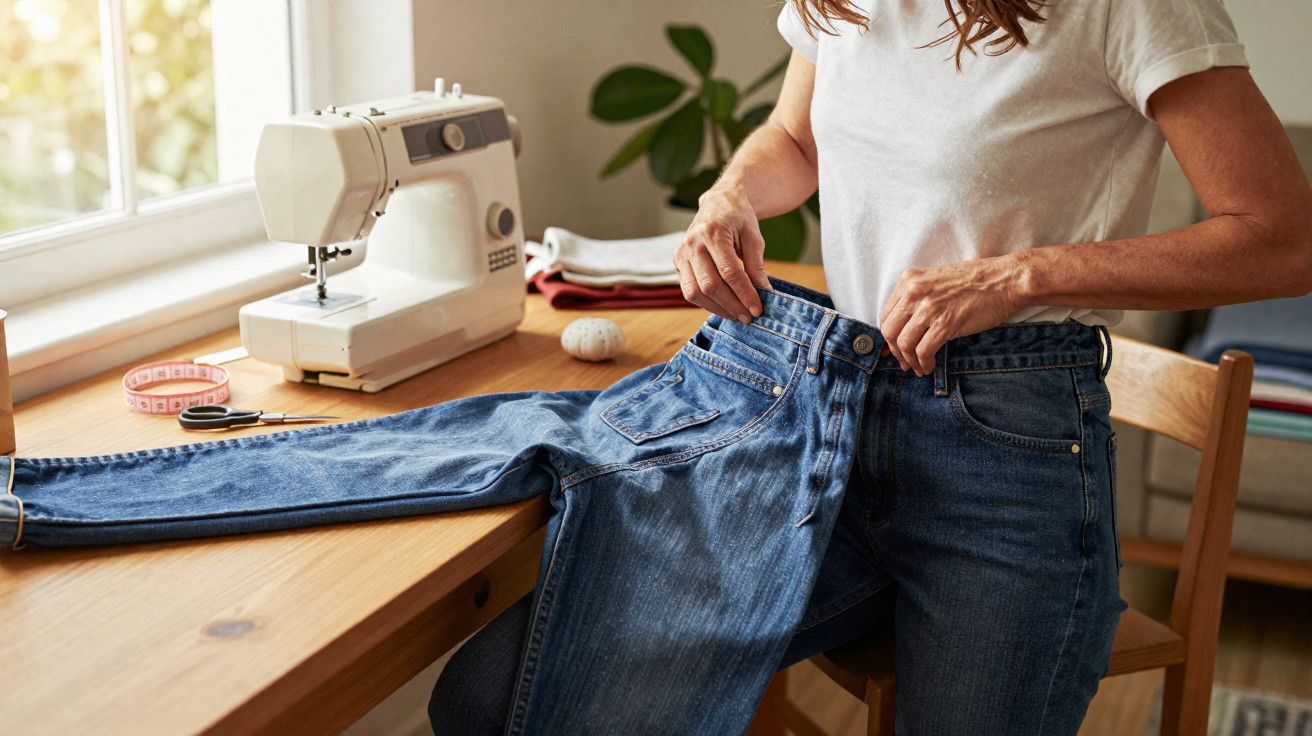
A simple sewing trick can increase a waistband by up to 5 centimetres.
It is a familiar situation: your trousers will barely fasten, the button is strained and the zip refuses to close. Rather than going shopping in frustration or filling your wardrobe with items that almost fit, there is a practical answer. A small, carefully placed alteration to the waistband creates extra room without spoiling the trousers’ shape or requiring a professional tailor.
Why favourite trousers suddenly no longer fit
A gain of a few kilograms, an evening bloated stomach or a wash that was slightly too hot can all make trousers feel tighter than they once did. Jeans, in particular, tend to offer very little forgiveness.
- Weight fluctuations: even 2–3 kilograms can be noticeable at the waistband.
- Water retention and bloating: waist circumference often increases significantly over the course of the day.
- Washing machine: high temperatures and tumble drying can shrink fabrics.
- Hormonal changes: around the menopause, for example, body fat often shifts towards the stomach.
The issue is nearly always in the same place: the waistband. It is firm, has little stretch and sits exactly where the body often changes most. The fabric around the hips and thighs will usually still fit well; it is only the fastening that will not cooperate.
The good news: a targeted alteration to the waistband can create up to 5 centimetres of extra room – quickly, affordably and invisibly from the outside.
How a trouser waistband is made – and why it feels restrictive
A trouser waistband is generally constructed from a strip of firm fabric. It is cut on the straight grain, which gives it structure but virtually no elasticity. This is precisely what causes the familiar feeling of being squeezed.
When the waist measurement changes, the waistband cannot give. The tension is then focused on:
- the button;
- the buttonhole area; and
- the zip.
The material becomes unattractively stretched in these areas, creases form and sitting down quickly becomes uncomfortable. Rather than allowing a little extra room all round, the waistband acts like a rigid ring.
The key idea: create an elastic section in the waistband
The technique involves adding a discreet kind of safety zone at one point: a small piece of stretchy fabric or elastic that gives when the stomach needs more room.
An elastic insert is especially suitable for this. It is usually a piece of wide elastic or a triangular gusset of stretch fabric. The insert is worked into an existing seam, such as:
- the side seam; or
- the back centre seam.
When the trousers are worn, these positions are generally concealed and barely disrupt their overall appearance. The hip line remains intact and the way the fabric hangs is virtually unchanged.
An elastic insert in the waistband can increase a pair of trousers’ circumference by up to 5 centimetres – with no need to buy another pair and no visible “DIY fix”.
Step by step: up to 5 cm extra room in around 30 minutes
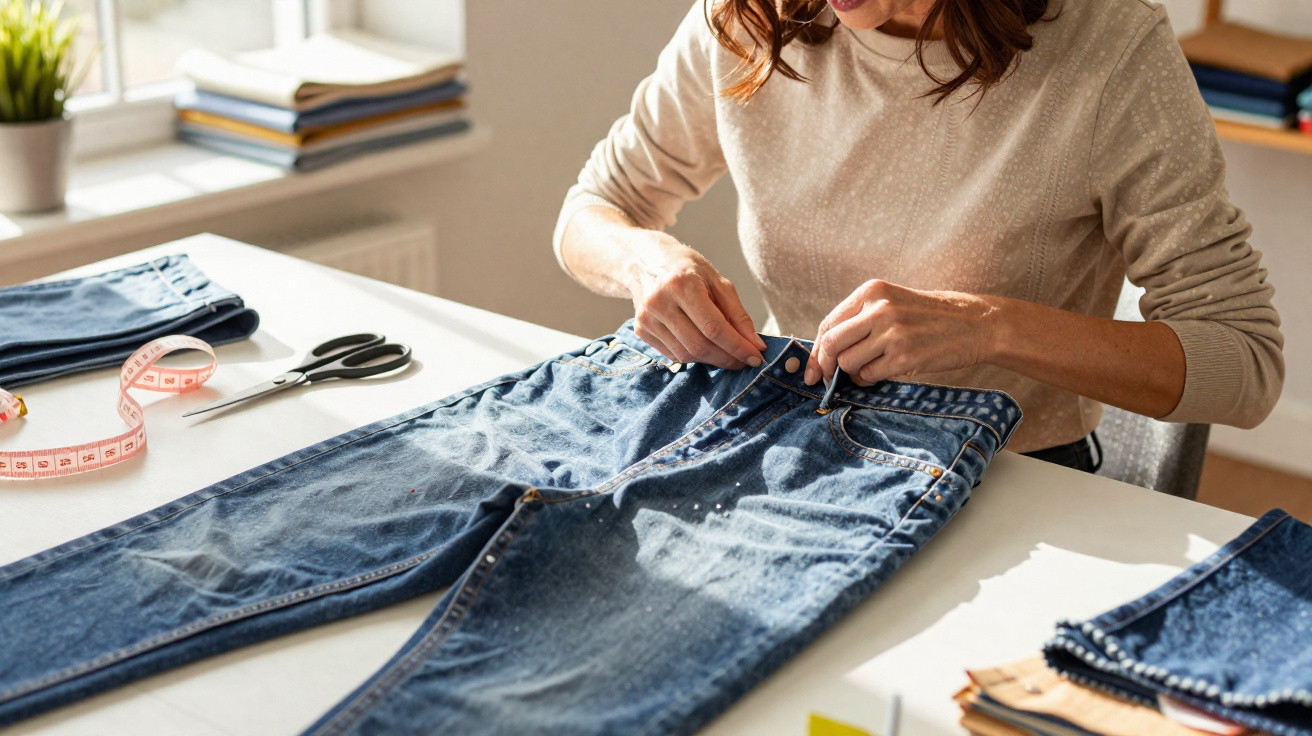
1. Prepare the trousers and choose the right position
Turn the trousers inside out so every seam is easy to access. The best locations are usually:
- Side seams: positioned at the sides of the body and often covered by tops or jumpers.
- Back seam: centred on the rear waistband and highly discreet.
Using a seam ripper or small scissors, unpick the seam for about 4 to 5 centimetres downwards. It is important to unpick the waistband itself along this section of the seam as well.
2. Prepare the elastic insert
For the alteration, you will need:
- firm elastic at least 3 cm wide or
- a sturdy stretch fabric, such as leftover jersey or stretch material.
Cut two small triangles from the chosen material. The triangle’s base will form the upper edge at the waistband, while its point faces towards the hip. The angle determines how much extra circumference is gained: the wider the base, the greater the extension.
3. Pin, try on and adjust
Place the triangles into the V-shaped seam opening and secure them with pins. Ensure both sides are symmetrical, otherwise the trousers may sit unevenly afterwards.
Now comes the most important stage: a quick fitting. Carefully turn the trousers the right way round, put them on and check:
- Does the waistband feel comfortable?
- Is the fabric sticking out anywhere?
- Is the added room too little or too much?
Depending on how they feel, you can still adjust the width of the triangles slightly until the fit is right.
4. Sew in place – by machine or by hand
If you have a sewing machine, an zigzag stitch is the best option. It is durable while allowing the material to remain stretchy. Without a machine, a firm hand stitch with close spacing will also be sufficient.
The order is as follows:
- First sew the triangles securely to the sides of the opening.
- Neatly close the waistband along the top again, joining it to the insert.
- Trim back any excess fabric on the inside and secure the threads.
The result is a modification that remains practically invisible from the outside. Inside, only a small triangular piece of elastic material can be seen in the waistband seam.
Alternative without elastic: extra room with no synthetics
Anyone wishing to avoid synthetic fibres can use a traditional tailoring method: fabric cut on the bias grain. Cutting woven fabric diagonally creates a natural degree of stretch.
Suitable options include:
- a leftover piece from the hem of an old pair of trousers in a similar fabric; or
- material from an unworn garment in a matching colour.
Cut triangles from this fabric again, this time at a 45-degree angle to the grain. The process then follows the elastic version exactly: open the seam, insert the triangles and sew them in place. The trousers gain some flexibility without using synthetic elastic.
Bias-cut fabric provides natural elasticity – ideal for anyone who does not feel comfortable with elastic in the waistband.
A common case: a beloved jeans waistband during the menopause
Many women say that, around the menopause, every pair of trousers suddenly pinches at the stomach even when their weight has barely changed. Body shape shifts, waist circumference increases and firm jeans in particular become a test of patience.
A particularly subtle solution works well here: two small side inserts in the waistband. They are practically invisible beneath a jumper or T-shirt, yet provide noticeably greater comfort when sitting down. This keeps favourite jeans wearable without investing in a completely new size.
There is also a positive side effect: less frustration in the wardrobe and more personal choice, because not every physical change should automatically lead to pressure to shop.
Why this method benefits the environment and your budget
Every garment that is worn for longer saves resources: water, energy, chemicals and transport. Public bodies and environmental organisations have pointed out for years that extending a garment’s useful life is one of the most effective ways to reduce the enormous volume of textiles sent to waste.
Rather than replacing every pair of trousers that has become tight, this solution requires only half an hour of work and a small piece of elastic or fabric. The comparison is straightforward:
| Factor | Buying new | Waistband extension |
|---|---|---|
| Cost | €30–€120 per pair of trousers | From a few cents to a small euro amount |
| Time required | Shopping, trying on, returns | Approx. 30 minutes at home |
| Environmental impact | New production, including transport | Existing clothing continues to be used |
Once you have learned this technique, it can be used on several garments: tailored trousers, chinos and skirts with waistbands – anywhere the fastening still closes but feels restrictive during everyday wear.
Practical tips for a neat result
- Match the thread colour: thread in the waistband’s colour makes the seam almost invisible.
- Keep fabric scraps: old, unwanted trousers are ideal sources of material.
- Try on twice if needed: pin first, then test the fit – this helps prevent using a gusset that is too large.
- Choose a discreet position: a side or back placement keeps the alteration visually subtle.
- Use firm materials: elastic that is too soft quickly loses its stretch and its effect.
If you are unsure, practise first on a less expensive pair of trousers. After just one or two attempts, the process becomes familiar and altering your favourite jeans feels much easier.
The psychological effect is worth noting, too: people who alter trousers rather than immediately getting rid of them often become more mindful about clothing overall. Many say they make fewer impulse purchases afterwards and prefer improving pieces they already own.
Especially during periods of changing body shape – whether due to stress, life stages such as pregnancy or menopause, or shifting routines – a “flexible waistband” can make a wardrobe far less stressful. This small sewing alteration turns the rigid centimetres around the stomach into a comfortable reserve that adapts to everyday life instead of restricting it.


Comments
No comments yet. Be the first to comment!
Leave a Comment