
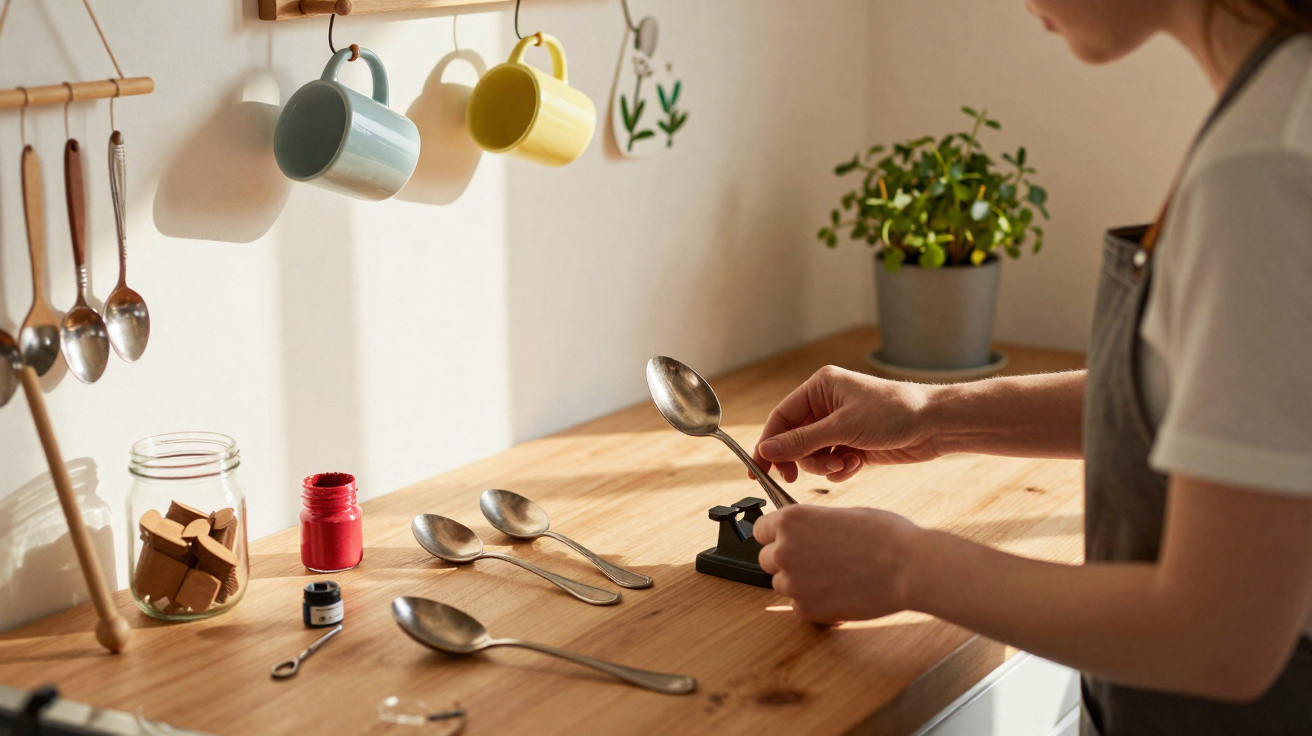
A stroll through a flea market or second-hand shop can reveal an affordable source of inspiration in the cutlery basket. In particular, discarded spoons can be turned into decorations, jewellery or useful aids for the home and garden with only a few tools – while keeping sturdy materials out of the bin.
Why old spoons are such exciting finds
Spoons are among the most overlooked treasures on second-hand shelves. They are durable, often attractively decorated and rarely cost very much. That combination makes them perfect for upcycling enthusiasts on a smaller budget.
“Buying second-hand spoons saves money, reduces waste and brings distinctive one-off pieces into your home at the same time.”
Three materials are especially interesting:
- Silver spoons: Soft enough to bend, with an elegant appearance and ideal for jewellery.
- Stainless steel: Extremely hard-wearing, making it suitable for hooks, handles or garden decorations.
- Wooden spoons: Easy to paint and excellent for colourful kitchen accents.
Choosing and preparing spoons properly
It is worth inspecting each spoon carefully before starting a craft project. Not every spoon is suited to every idea. If you plan to make jewellery, choose soft silver or silver-plated cutlery. For coat hooks and handles, tougher stainless steel is the better choice, as it will not bend out of shape later.
Identifying the material: a small magnet is a big help
A simple magnet is enough to tell silver apart from other metals. If the magnet sticks to the spoon, it is not solid silver. That does not make the spoon unusable – it is simply better suited to sturdy projects than delicate rings.
Cleaning and basic preparation
Before a spoon goes on the wall or onto a finger, clean it thoroughly:
- Soak the spoon in warm, soapy water.
- Remove dirt with a soft brush.
- Rinse it with clean water.
- Dry it carefully so that it does not rust.
If you need the spoon flattened, for example for name labels or plant markers, place the bowl on a firm surface and tap it gently with a rubber mallet until it lies flat.
For holes or cuts, you will need a little equipment: a hacksaw or sturdy side cutters, plus a drill fitted with metal drill bits. Safety glasses, gloves and securing the spoon firmly are essential to prevent it from slipping.
Twelve DIY ideas: turning spoons into décor, jewellery and garden helpers
With a few basic tools, an unremarkable spoon can become surprisingly useful. Here are twelve ideas that, with a little practice, can also be made in a rented home.
1. Wall hooks for mugs, coats or bags
Bend the spoon handles slightly and screw the bowls onto a wooden board to create simple hooks. Placing several side by side makes:
- an original mug rack for the kitchen,
- a compact coat rack for the hallway,
- or a useful hook for a dog lead and rucksack.
2. Serving tray with spoon handles
A plain wooden board and two longer spoons used as handles can make a tray look like a designer piece. Screw the handles to the sides of the board, leaving the spoon bowls facing outwards as decorative details.
3. Bird feeder with a jar and wooden spoon
A small glass jar, a wooden spoon and some wire or cord are all you need for a hanging feeding station. The spoon acts as a perch, while the jar holds seeds or suet feed. It is ideal for a balcony or garden.
4. Wind chime made from spoon bowls
Saw off the spoon bowls, drill holes in them and hang them from strings to create a metallic wind chime. Add glass beads or old keys for a soft sound that recalls summer evenings.
5. Plant labels for herbs and vegetables
Flattened spoon bowls can be labelled using letter punches, metal stamps or even a permanent marker. Basil, thyme and tomatoes then have durable labels that can withstand rain without difficulty.
6. Colourful wooden spoons as kitchen décor
Wooden spoons are ideal for adding colour. Acrylic paint, varnish or decorative patterns can turn their handles into small works of art. Displayed in a vase or on a wall, they resemble a bright bouquet.
7. Upgrading spoons with paint and resin
For a slightly more involved craft project, decorate spoon handles with paint and epoxy resin. Paint on a pattern, allow it to cure, then cover it with a thin layer of resin – the handle will shine like new and become resistant to water.
8. Pendants made from spoon bowls
After being cut to shape, a spoon bowl can become a pendant. Small stones, glued-in cabochons or stamped patterns create a piece of jewellery that no one else is guaranteed to own.
9. Rings made from spoon handles
The classic project: saw off the spoon handle, smooth the edges, then bend it around a ring mandrel or suitably sized rod. This produces substantial, often richly decorated rings. Depending on the spoon, they contain 30 to 50 grams of metal and feel correspondingly substantial.
10. Decorative pulls for lamps and ceiling fans
Small spoons, or just their handles, can be used as ornamental pull handles. Attached to a cord, they give table lamps, fans or floor lamps a personal touch.
11. Jewellery holder from an old spoon rack
An old wooden spoon rack may turn up at a flea market. With some sandpaper, fresh paint and a few extra holes, it becomes a practical jewellery organiser: hooks for necklaces, holes for earrings and a surface for bracelets.
12. Place cards made from hammered spoons
Handmade place settings work well for special occasions. Stamp or write the name on the flattened spoon, then use the handle as a stand or tuck it into a napkin. After the meal, guests can take their name card home.
How to find the best spoons in a second-hand shop
When browsing, look specifically for mixed bundles of cutlery. They are often less expensive than matching sets and include many different shapes – precisely what makes upcycling so appealing.
What should you look for?
- Decorated handles: Excellent for jewellery and decorative hooks.
- Large serving spoons: Strong enough for handles and coat racks.
- A gentle bend test: Carefully flex the spoon a little. If it breaks or feels brittle, leave it behind.
Related pieces can be just as useful: an overlooked wooden spoon stand can become a feature piece with a fresh coat of paint. Even cut-off spoon remnants can still be used in wind chimes or tiny pendants.
Why spoon upcycling is genuinely worthwhile
Upcycling spoons is more than a pleasant social media trend. It conserves resources by using existing materials rather than buying new ones. Metal cutlery in particular takes considerable effort to produce, yet it often ends up in bulky waste as soon as one piece is missing or its design is “out of fashion”.
“Every transformed spoon extends the life of an everyday object that would otherwise be discarded – and turns it into a unique piece.”
Many of these projects are also suitable for beginners. If jewellery feels too ambitious at first, start with plant labels or straightforward hooks. Over time, your collection of tools and techniques will grow, and the projects can become more complex.
It becomes especially interesting when spoons are combined with other materials: workshop wood offcuts, old jars, fabric ribbons or driftwood can create entirely new objects alongside metal spoons. The result is an interior that does not come from a catalogue, but tells stories of flea-market finds, craft evenings and a touch of improvisation.



Comments
No comments yet. Be the first to comment!
Leave a Comment