
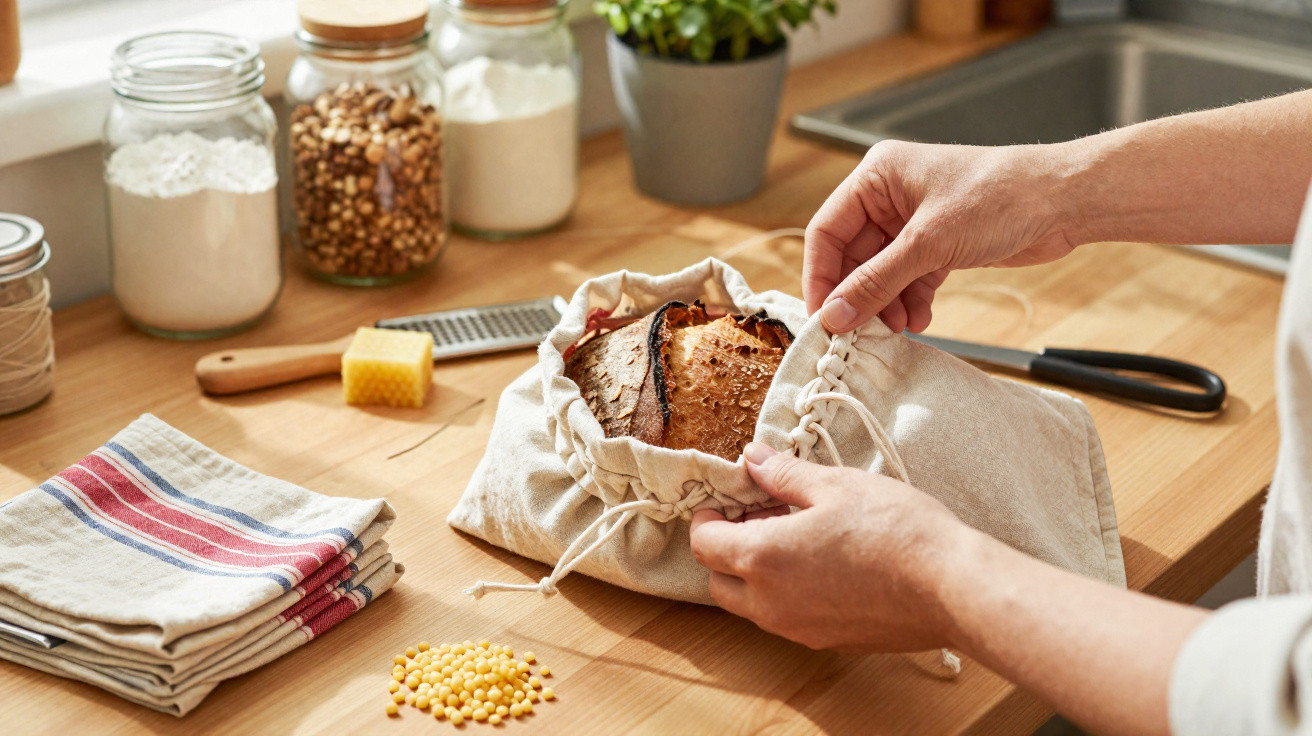
Rather than using old kitchen linens solely for cleaning or throwing them away, give them a second life. Traditional striped tea towels, particularly those made from linen or linen blend, can be turned into a fashionable accessory with just a few simple stitches. The result reduces waste, saves money and looks exceptionally good.
Why old striped tea towels are so valuable
The familiar tea towels with red or blue stripes often come from an era when fabrics were made to last far longer than many are today. Many of these hidden gems are woven from pure linen or a linen-and-cotton blend, giving them strength, absorbency and impressive durability.
Discarded linen tea towels are among the most overlooked classics for sustainable sewing projects in the kitchen.
Years of washing and use leave the fabric soft, less prone to fraying and comfortable to hold. These are precisely the qualities needed for a bag that should keep bread fresh for longer and withstand frequent washing.
Their appearance is another advantage. The understated stripe design suits a country-style kitchen beautifully, while also fitting neatly into more contemporary spaces. Its gently worn character means that every sewn bag looks individual rather than like a mass-produced shop-bought item.
The brilliant idea: turn Grandma’s tea towel into a bread bag
Sewing ideas for reusable packaging have become increasingly common online in recent years. One particularly popular project is a bread bag made from old tea towels. It can replace the thin paper bags from the bakery or plastic carrier bags from the supermarket, while adding a touch of country-kitchen charm to a coat peg or kitchen cupboard.
The main benefit is that it makes use of something already at hand. Ordering a bread bag made from new linen can easily cost £15 to £20 each. Making one from existing kitchen linen costs little more than a small amount of thread, some time and the enjoyment of sewing.
How to make a bread bag without a sewing course
No professional equipment is required for this bag. A basic sewing machine is enough, and a needle and thread will work if necessary. Following a sensible order matters more than achieving perfection:
- Prepare the fabric: Wash, dry and lightly iron the tea towel. Mark any heavily worn areas.
- Cut it carefully: Remove sections that are holed or extremely thin, while keeping the strong striped parts. An elongated rectangle that can later be folded is ideal.
- Reinforce the side seams: A French seam works particularly well: first sew with wrong sides together, trim the seam allowance closely, then sew again with right sides together. This encloses the raw edges so they do not fray.
- Finish the top edge: Fold a wide hem inwards along the upper edge and stitch it down. Leave an opening for a channel through which to thread a drawstring.
- Thread in a cord or ribbon: Cotton cord, parcel string or a strip made from fabric offcuts can all be used to close the bag.
If preferred, retain the tea towel’s original hem as the upper edge. This saves work and gives the bag an appealing vintage finish.
Why linen keeps bread fresher for longer
Linen and older linen-blend fabrics handle moisture in a distinctive way. The material absorbs some of the bread’s remaining moisture, then gradually releases it again, helping to create a balanced environment inside the bag.
The right fabric prevents bread from becoming soggy or drying out at speed – that is the key to a successful bread bag.
As a result, the crust stays crisp without the crumb becoming rubbery or the loaf turning stale too soon. Far less condensation forms than in plastic packaging, where it can often lead to mould.
There is also a practical side benefit: tightly woven linen is less appealing to some common pantry pests. It is not a replacement for good kitchen hygiene, but it can support it usefully.
Upgrade with beeswax: turn the bread bag into a natural “Bee Wrap”
Anyone wanting to enhance the bag’s freshness-preserving qualities can lightly rub the inside with pure beeswax. Gentle heat – using a hairdryer, for instance, or an oven set to a low temperature with baking paper – allows the wax to soak into the fibres.
The fabric remains pliable but becomes slightly water-repellent, gaining an extra protective layer. A baguette or loaf of tin bread will generally stay moist for noticeably longer without completely losing its crust. After use, simply wipe it gently with lukewarm water and a little mild washing-up liquid to avoid damaging the wax.
Care, hygiene and everyday use
Wash the tea towel thoroughly before using it for the first time, removing dust and any old detergent residue. After that, an ordinary wash at a moderate temperature is sufficient, depending on how soiled it is.
In everyday use, only put bread inside once it is no longer hot. Hanging the bag up rather than pushing it into a corner promotes airflow and helps prevent musty smells. Between loaves, allow the fabric to dry completely and air it out.
Make more from leftovers: small zero-waste projects using fabric offcuts
Cutting the bag will almost always leave smaller strips and pieces behind. Although many are thrown away without a second thought, they can be put to practical use:
- Scented sachets for wardrobes: Sew narrow strips together, fill them with dried lavender flowers and tie them closed.
- Bowl covers: Add elastic around the edge of round or oval pieces – an ideal alternative to cling film.
- Mini bags for dry goods: Make smaller versions of the bread bag for nuts, rice or pasta; they are useful for zero-waste shops.
- Patchwork cloths: Stitch very small scraps together to create hard-wearing cleaning cloths.
One tea towel can therefore become a small collection of everyday helpers that replace several single-use products.
Why the sewn bread bag trend is here to stay
The combination of nostalgia, practical value and waste reduction resonates with many people. A bread bag made from family linen carries a story: perhaps the tea towel came from a grandmother’s wedding trousseau or sat on the kitchen table for decades.
At the same time, many people appreciate no longer bringing home fresh paper bags with every visit to the bakery. Those who buy bread regularly quickly notice how much less waste they produce. For families collecting fresh rolls every day, this can save several hundred bags over a year.
Another advantage is that handmade bags make popular gifts. A neatly sewn bread bag, perhaps embroidered with a name, is far more welcome at housewarming parties, birthdays or as a contribution to Sunday brunch than another purely decorative item with no purpose.
Common questions – and practical answers
| Question | Practical answer |
|---|---|
| Can I use cotton tea towels? | Yes, pure cotton works, although linen generally regulates moisture slightly better. |
| How often should I wash the bread bag? | Every one to two weeks depending on use, or sooner if crumbs or flour marks are visible. |
| Does this make a bread bin unnecessary? | No. Many people place the bag inside a bread bin as well, which gives added protection. |
| Does it work for bread rolls too? | Yes, they stay fresh a little longer. It is best to put them in only once completely cool. |
Anyone attempting their first bag should avoid starting with excessive perfectionism. Slightly uneven details are part of its charm and serve as a reminder that this is not a mass-produced product, but a practical piece of handmade kitchen craft.
There is an educational benefit, too: children can see how an apparently useless fabric scrap becomes a useful object. This can open a conversation about valuing possessions, the quality of textiles, and the difference between disposable items and products made to last.

Comments
No comments yet. Be the first to comment!
Leave a Comment