
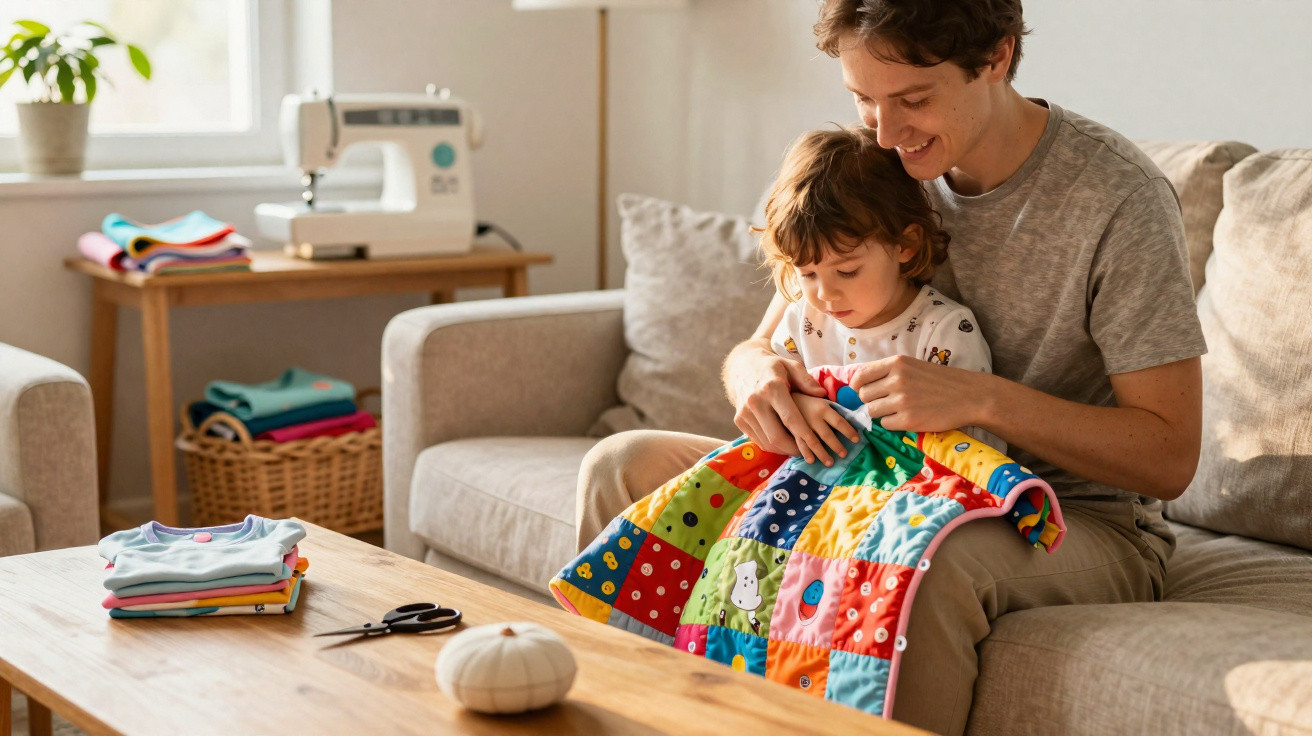
Tiny sleepsuits and bodysuits are piling up in the wardrobe – too precious to throw away and too special to be forgotten.
Almost every family has these boxes: baby clothes, carefully folded and stored away in the loft, cellar or back of a cupboard. Every item holds a story, yet everyday life means no one sees them any more. A simple sewing project can bring those memories back into the living room: a soft blanket to hold and use every day.
When baby bodysuits disappear into a box
During their first year, a baby may get through five to seven bodysuits a day. Spills, milk stains and growth spurts mean the washing machine seems to run constantly. In the end, there are piles of tiny clothes that no longer fit but remain difficult to part with emotionally.
Many parents put these little items into boxes: one for size 50/56, another for 62/68, and perhaps a third for the first birthday. Over time, the boxes are moved to the loft, the cellar or the furthest corner of a wardrobe. There, the fabric slowly yellows, moths may find it, and the memories are quite literally kept under lock and key.
Giving the clothes away can feel wrong, selling them brings in very little money, and throwing them away is simply not an option for many people. The emotional attachment remains powerful, however many years pass.
Storage items alone can become a useful object that makes memories visible – day after day.
Favourite clothes become a memory blanket
This is where the idea of a memory blanket, often called a “memory quilt”, comes in. Rather than leaving baby clothes in a box, they can be turned into a patchwork throw. Numerous small fabric squares eventually form a large, soft blanket that can sit on the sofa, at the end of the bed or in a cosy corner.
The central idea is that only the most meaningful items, rather than every piece, become part of the blanket. These might include:
- the first outfit worn home from hospital
- the bodysuit from the first Christmas
- a favourite item from a grandparent or godfather
- a sleepsuit with stains that will not come out but recall a special weekend
- the outfit worn for the first photographs
Every square on the blanket represents a particular moment. While snuggling on the sofa, families can point to individual panels and explain when the child wore that item. Fabric is transformed into a family photo album that can be held.
Why baby bodysuits are ideal for a memory blanket
Baby bodysuits are usually made from cotton jersey, a soft, stretchy fabric. It feels pleasant against the skin and is highly durable. Studies by textile research institutes show that, when processed correctly, jersey fabric can last for a long time while retaining its shape.
There is also the emotional element. Few garments appear in as many photographs as those first bodysuits. They are there for nights of feeding, streams of visitors, baby groups and family celebrations. This constant presence makes them particularly suited to a blanket that can later move onto the sofa or into a child’s bedroom.
A sewing trick for taming stubborn jersey
Anyone who has sewn with jersey before will know the challenge: the material stretches, curls at the edges and shifts beneath the sewing machine. Patchwork, however, requires accurate edges and square corners. This is where an understated sewing aid becomes useful: iron-on interfacing, often sold as fusible stabiliser.
Without firm interfacing, the blanket will become wavy. With the right preparation, the squares retain their shape.
In practice, the cutting process works as follows:
- Smooth out the reverse side of the washed, dry baby clothes.
- Iron a piece of interfacing onto the wrong side of the fabric.
- Prepare a square template, for instance 15 x 15 centimetres.
- Use the template to mark and cut out the most attractive motifs from the baby clothes.
Ironing on the interfacing before cutting is the order that determines the final result. The reinforcement makes jersey behave almost like woven fabric. Its edges fray less and stay firm.
Step by step to a personal memory blanket
For a standard throw, it is worth collecting around 25 to 30 garments. That may sound like a lot, but during a child’s first year the collection tends to grow surprisingly quickly. A project could look like this:
| Blanket size | Approximate number of garments | Best use |
|---|---|---|
| 75 x 75 cm | 20–30 | Pram, cosy corner in the nursery |
| 90 x 120 cm | 35–50 | Sofa, play mat |
| 135 x 180 cm | 60–120 | Family blanket for the living-room sofa |
Once cut, the squares are arranged by colour, pattern or memory. Some parents put them in chronological order, while others prefer to group them by shades or themes, such as “celebrations”, “everyday life” or “favourite animals”.
The squares are then sewn together with a 1-centimetre seam allowance, always with right sides facing. First, strips are made; these are then joined to create one large panel. A soft backing fabric, such as fleece or Minky plush, is added to the reverse. This also conceals all the internal seams.
One useful touch is not to discard popper strips from old bodysuits. They can be used to attach the blanket to cot bars or a buggy, preventing it from slipping down repeatedly.
Sew it yourself or leave it to professionals?
Not everyone owns a sewing machine or feels confident taking on a project like this. Essentially, there are two options: do it yourself or commission a specialist studio.
Benefits of sewing it yourself
People who pick up the needle themselves experience every stage consciously. Sorting through the clothes naturally becomes a journey through the child’s first year. Many say it allows them to say goodbye to the baby years once more – not with sadness, but with a gentle smile.
- complete control over the design and arrangement
- individual shapes are possible, such as hearts or strips
- lower costs if supplies are already available
- a strong emotional connection: “I made this blanket myself”
Anyone who has never sewn before can combine the project with a sewing course. Many adult education centres and fabric shops run patchwork workshops. These provide an opportunity to learn the basics and ask questions: Which needle works for jersey? Which thread? What stitch length?
When a specialist studio makes sense
In many towns and cities, small workshops specialise in making memory blankets from baby clothes. They generally work with set sizes and clear requirements: garments must arrive washed and dry, while stains and holes should be marked so that the best sections can be used.
Waiting times are often between four and twelve weeks. The advantage is that professionals understand jersey inside out, use high-quality machines and can advise on size, backing fabric and layout. For people with limited time, this still provides a high-quality keepsake.
What parents should consider when choosing baby clothes
Before making the first cut, there is an important decision to make: which pieces will stay permanently in the blanket, and which can be passed on? It helps to ask a few guiding questions:
- Which garments do I associate with a particularly strong feeling?
- Which patterns or slogans reflect my child’s character?
- Are there items from people who are especially close to my child?
- Which colours work well together to make the blanket look harmonious?
Anyone who feels unsure can spread out all the clothes for an evening, take photographs and make the selection later with some distance. Not every item has to be included; fewer pieces chosen deliberately are often better.
More than decoration: what memory blankets do for families
Many families find that the memory blanket naturally becomes part of everyday life. It lies in the nursery, travels with the family or is placed over the legs during story time. Later, children often enjoy pointing at the individual squares and asking: “Was that when I was still very small?”
This creates new rituals. There might be a regular reading evening when one particular corner of the blanket is always used. Or there may be a birthday when everyone traces the patterns together and talks about what happened in the first year. The blanket does not become outdated; its emotional meaning grows over time.
There is another benefit too: “too much stuff” becomes one single, clearly defined keepsake. That makes space in both cupboards and minds. Minimalism and emotion do not have to conflict; on the contrary, they reinforce each other.
Practical advice on care, safety and variations
Anyone putting so much effort into a keepsake will want to enjoy it for a long time. A few points make daily use easier:
- Choose a lower washing temperature; 30 degrees is often enough.
- Avoid a high spin speed to protect the seams.
- Secure or remove metal parts such as old poppers if young children pull on them frequently.
- Dry the blanket thoroughly on a regular basis so that moisture cannot build up.
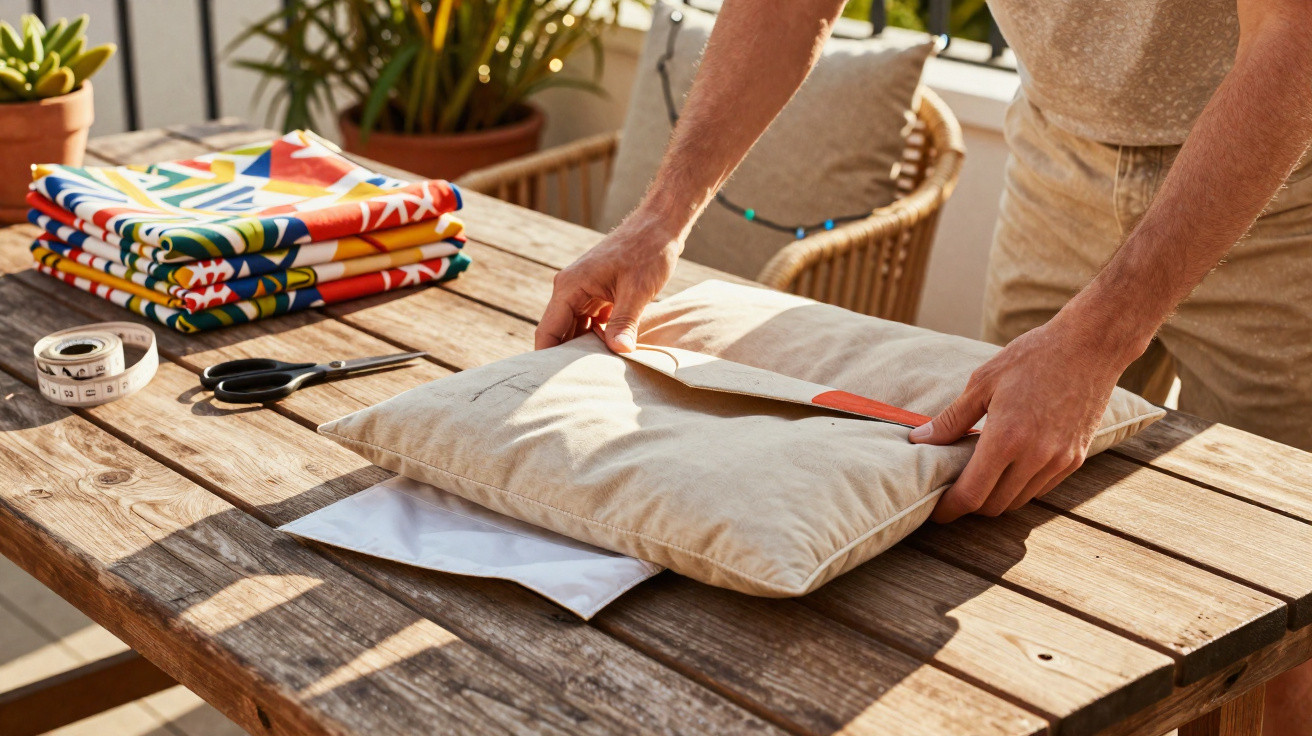
The basic idea also works in other forms. Leftover pieces can become cushion covers, seat pads for a play area or wall hangings. Some parents combine baby clothes with fabric from maternity clothes or grandparents’ T-shirts. In this way, different generations come together in one textile project.
Those who wish can add to the blanket later, for example with appliquéd names, dates of birth or small embroidered symbols. This makes the item even more personal – and ensures that old baby bodysuits do not merely survive but continue to tell their story.
Comments
No comments yet. Be the first to comment!
Leave a Comment