
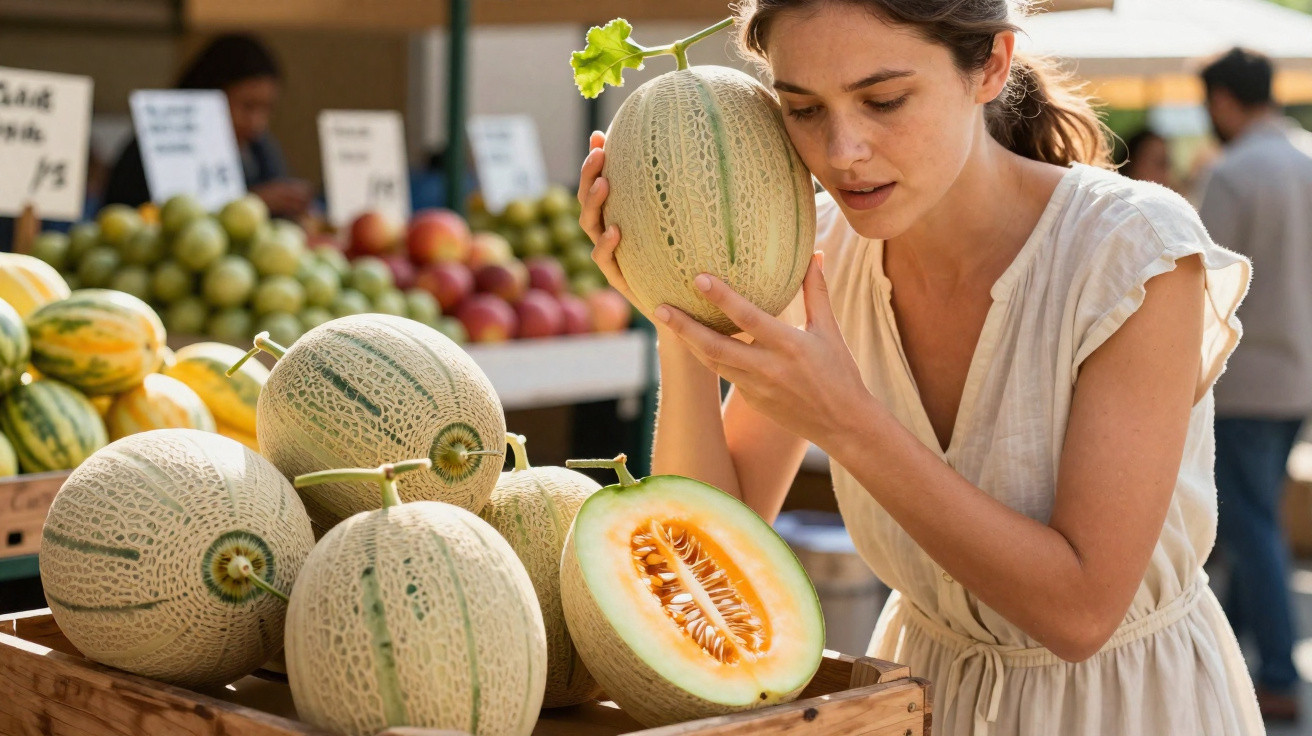
Choosing a sweet melon before cutting it open can seem challenging, yet a few clues make the task much easier. The simplest approach is to assess its weight, scent and the end opposite the stalk. A melon at the right stage of ripeness is usually heavy for its size, gives off a gentle fragrance and yields slightly when pressed.
What is the trick to tell whether a melon is sweet?
The most useful test is to gently press the end opposite the stalk. If this area feels extremely firm, the melon is likely still unripe. If it sinks too easily or feels soft, it may be overripe.
Ideally, it should have a little springiness, with no cracks, leaking liquid or fermented smell. Alongside a pleasant aroma and a substantial weight, this sign improves your chances of taking home a sweeter fruit.
Which signs should you check before buying?
As well as touch, the melon’s appearance and smell can help you spot a riper one. It does not need to look flawless, but it should feel firm, appear clean and have no overly soft patches.
- Weight: pick the melon that feels heavier than its size suggests.
- Aroma: a sweet, mild scent points to good ripeness.
- Skin: it should be firm, without deep cracks or sunken areas.
- Touch: the end opposite the stalk should yield only slightly.
- Sound: when lightly tapped, a fuller sound may suggest a good amount of flesh.
What shows that a melon is still unripe?
An unripe melon will generally have very little scent, an overly hard skin and a less appealing weight for its size. Once opened, its flesh is likely to be less fragrant, less juicy and milder in flavour.
- Almost no smell from the skin.
- An end that is very hard to the touch.
- Skin that looks excessively green, depending on the variety.
- Fruit that feels very light beside others of the same size.
- No sweet fragrance near the base.
How can you avoid buying an overripe melon?
An overripe melon often reveals the issue through its smell. If its aroma is too strong and resembles fermentation, or if liquid is coming through the skin, it is best to leave it behind. Very soft areas also suggest that the fruit may be starting to spoil.
It is also worth checking for deep dark blemishes and open cracks. Small surface marks can be normal, but sunken or damp patches, or an unpleasant odour, indicate that its quality has already deteriorated.
How should you store a melon after choosing it?
While the melon is whole, it can be kept for a short time in a cool, well-ventilated place away from direct sunlight. Once cut, it should be placed in the fridge in a sealed container or covered, as exposed flesh loses its aroma and can take on odours from other foods.
The best outcome comes from considering several signs together: weight, smell, touch and appearance. No single trick is completely reliable, but checking these details greatly improves the likelihood of choosing a sweet, juicy melon that is ready to eat.






Comments
No comments yet. Be the first to comment!
Leave a Comment