
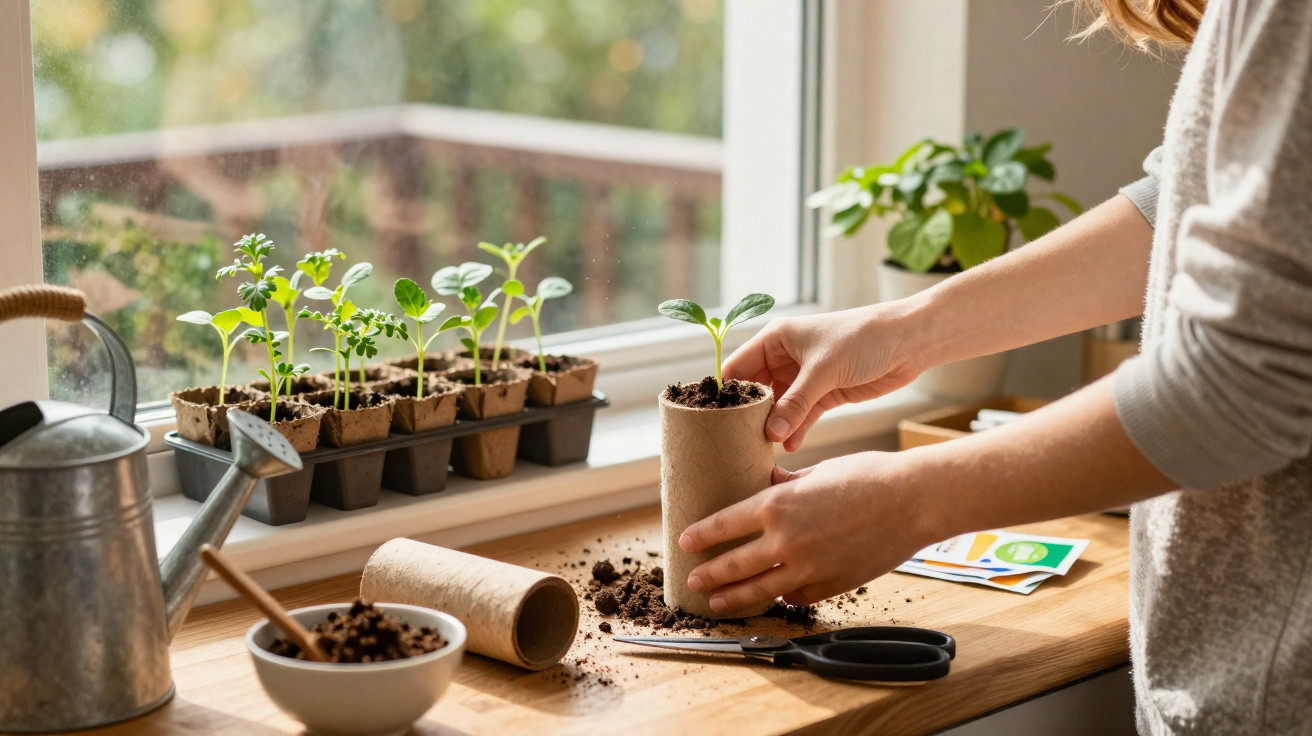
Empty cardboard tubes do not have to go straight into the bin. One keen gardener has shown how toilet paper rolls can help raise tomatoes, courgettes or herbs, saving money, waste and hassle in the process.
Most households throw away empty cardboard tubes without a second thought. A gardener has demonstrated that they can instead become the starting point for a whole crop of tomatoes, courgettes or herbs. This straightforward approach turns a disposable item into a useful tool for starting seedlings on a windowsill.
How an ordinary cardboard tube becomes a plant pot
The idea is so obvious that many people may wonder why they had not thought of it first. Rather than buying new plastic trays, the gardener uses standard toilet paper rolls as small seedling containers.
Empty cardboard tubes become biodegradable plant pots that can go straight into the soil.
In brief, the tubes are collected in a sturdy cardboard box rather than discarded. Positioned closely together, they are filled with seed compost and sown with seeds. After several weeks, each complete tube is planted in the garden soil or a large container. The cardboard breaks down while the roots grow straight through it.
Step by step: turning toilet rolls into seedling pots
Anyone wishing to try this method does not need specialist equipment, only some patience and a few basic guidelines.
Materials to have ready
- Clean, dry toilet paper rolls, without fragrances and with as little printing as possible
- One medium-sized, sturdy cardboard box, such as a delivery box
- Seed compost or finely textured potting compost
- Tomato, courgette, pepper or herb seeds
- Scissors or a knife
- A watering can with a rose or a spray bottle
Making the mini pots
- Collect the rolls: Gather several toilet paper rolls first, until there are enough for a row – around 15 to 30.
- Cut them down: Slice each roll across the middle. This creates pots around 6 to 8 centimetres tall, an ideal size for young plants.
- Strengthen the base: For greater stability, make four short cuts at one end, then fold the resulting tabs over one another, as you would with the base of a small box.
- Prepare the box: Cut a larger ‘window’ into one side of the box. This lets light reach the seedlings and makes watering easier later on.
- Position the rolls: Place the halved rolls tightly together inside the box. The closer they are packed, the more upright they will remain.
Sowing and growing seedlings on the windowsill
Once the ‘frame’ is in place, the gardening itself can begin.
- Fill them: Put seed compost into every roll and press it down gently, without compacting it. Air in the growing medium helps the roots.
- Sow the seeds: Add one or two seeds to each pot – for example tomatoes, courgettes, peppers, lettuce, or herbs such as basil and parsley.
- Cover them: Depending on the variety, cover seeds with only a light layer of compost. Fine seeds often need just a very thin covering.
- Water them: Water carefully using a fine rose or spray bottle. The compost should be moist, not soaking wet.
- Choose a position: Put the box in a bright window, on a windowsill or on a sheltered balcony. Avoid cold draughts.
The cardboard box works like a small greenhouse: everything stays in place, and watering remains manageable.
From the living room to the vegetable garden
The first shoots will emerge after a few days or weeks. Growth rates vary between plant types, so regular checks will show when it is time to move on to the next stage.
When the young plants have developed two to three true leaves, rather than only their first seed leaves, they are ready to be moved into a bed or a larger pot.
Planting the toilet rolls straight into the soil
This is the real advantage of the method: there is no need to repot plants with bare roots.
- Dig a planting hole of the right size in a bed or container.
- Put the entire roll and plant into the hole, leaving the cardboard in place.
- Firm the soil around the sides and water thoroughly.
The cardboard will rot down over time in the soil. Young roots can easily push through the soft material. This avoids the usual transplant shock that often occurs when plants are removed from plastic trays.
Why the toilet roll trick is proving so popular
Many amateur gardeners say in the comments that they are delighted by how simple it is. There is no plastic involved, costs are minimal, and most of the required materials are already generated in everyday life.
A disposable item becomes a small building block for a resource-conscious garden – all without expensive equipment.
The main benefits at a glance
| Benefit | What this means in practice |
|---|---|
| Low cost | There is no need to buy seed trays or single-use plastic. |
| Less waste | Cardboard tubes are reused and only end up in the soil later. |
| Gentle planting | Roots do not need to be pulled out, reducing stress for the plants. |
| Flexible sizing | Rolls can be cut shorter or stacked, depending on the plant type. |
| Ideal for small flats | A cardboard box fits on almost any windowsill. |
What to consider when using toilet rolls in the garden
Although this technique is robust, there are a few points to watch if seedlings are to thrive.
Moisture and mould
Cardboard absorbs water. If the rolls stay too wet for long periods, mould can develop. As well as looking unattractive, this can weaken seedlings.
- Keep the compost moist rather than waterlogged.
- Turn the box slightly at regular intervals so air can reach every side.
- Remove affected rolls if there is severe mould growth.
Printing inks and fragrances
Many manufacturers print designs or coloured logos on their rolls. It is better to choose cardboard that is as untreated as possible. Avoid heavily printed or strongly scented rolls when they will be planted directly in a vegetable garden.
Which plants are especially suitable
Not every crop thrives equally well in small cardboard rolls. They work particularly well for plants that are sensitive to transplanting or need a head start in the UK climate.
- Tomatoes: A classic choice because they are started indoors.
- Courgettes and squash: These develop strong roots that quickly grow through the cardboard.
- Peppers and chillies: They enjoy the warmth of a windowsill and benefit from gentle planting out.
- Herbs: Basil, parsley and chives grow well in smaller roll halves.
- Lettuce: It can be sown in batches for a continuous harvest later.
Plants that immediately produce deep roots or dislike being moved, such as carrots and parsnips, are less suitable. These are better sown directly into the bed.
Gardening as a break from everyday life
Many people say that sowing, watering and watching small shoots emerge helps them unwind. The routines involved in raising seedlings are simple but regular: preparing compost, sowing seeds, checking moisture and observing progress.
Spending a few minutes with young plants each day creates a regular moment of calm in everyday life.
Studies show that people who garden often tend to feel less stressed and more balanced. This does not apply only to people with large gardens. Even a balcony planter or a mini vegetable garden on a windowsill can create this effect.
More ways to use cardboard in the garden
The toilet paper roll method is only a starting point. Anyone who enjoys it can go further and reuse other leftover cardboard items.
- Egg boxes: These suit very early sowings, such as lettuce or spinach. The individual cups can later be cut out and planted in the soil.
- Corrugated cardboard as a weed barrier: Lay flat layers of cardboard over beds and cover them with mulch. The cardboard suppresses weeds and breaks down slowly.
- Kitchen roll tubes: Longer tubes can be used for young plants with particularly deep roots, including certain flower varieties.
By gradually incorporating more household materials into the garden in this way, gardeners can do more than reduce the amount of waste they produce. It also changes the character of the task: disposable items become useful helpers, and an inconvenient cardboard tube becomes a small starting point for the next tomato harvest.


Comments
No comments yet. Be the first to comment!
Leave a Comment