
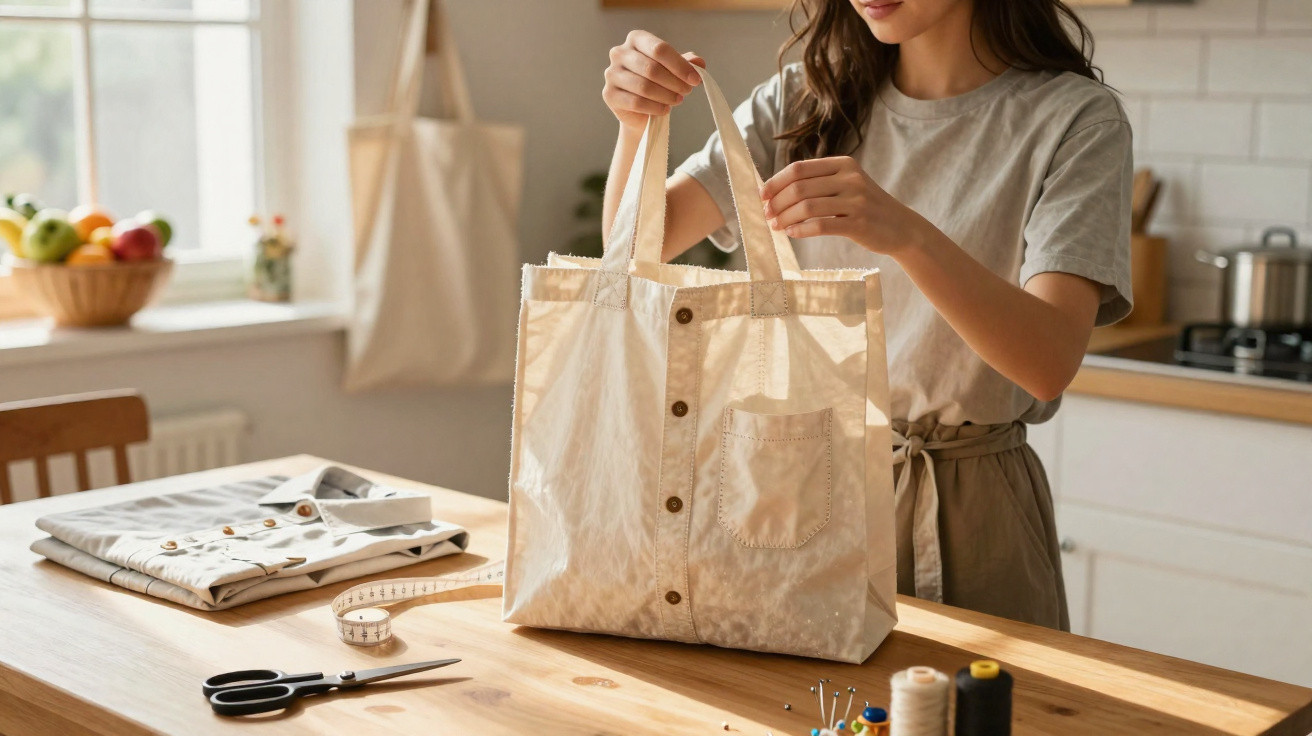
Frayed collars, stretched cuffs and shirts that nobody wears often pile up in wardrobes. Rather than binning them or leaving them pushed to the back for years, these pieces can be turned into a practical everyday accessory that cuts both waste and costs while looking surprisingly smart.
Why old shirts are worth another look
Food, energy and clothing are all becoming more expensive. At the same time, there is growing unease about textiles being thrown away far too soon. Environmental authorities report that each person disposes of several kilograms of clothing every year, even though much of it still provides usable fabric. This is where a simple idea comes in: instead of being discarded, shirts can be repurposed as sturdy shopping bags.
"A discarded men's shirt made from tightly woven cotton can replace costly fabric bags and reduce waste – without spending a penny on materials."
Men's shirts work particularly well because they are usually made from durable fabrics such as poplin or a closely woven cotton blend. These materials can cope with friction and weight, making them suitable for glass bottles, tins, bags of flour or crates of fruit.
From wardrobe leftover to shopping companion: the benefits of this idea
A good-quality fabric bag from a shop can easily cost €15–30. Turning an unworn shirt into a robust shopping bag brings the material cost down to virtually nothing. If you have three shirts in size XL or an oversized fit at home, you can make several bags in one go and save roughly €45–90.
The benefit does not stop there. Every bag made from an old textile can replace several single-use or flimsy reusable supermarket bags. It can be machine-washed at 40°C, dries quickly and is ready to use again straight away. This is especially useful for anyone who shops regularly at a market or a packaging-free shop.
How to turn a men's shirt into a sturdy shopping bag
Sewing may sound like complicated handiwork to many people. However, this method involves only a few straightforward stages and is suitable even for those with basic sewing-machine skills.
Preparation and materials
- 1 large men's shirt, ideally size L, XL or oversized
- Cotton or another similarly tightly woven fabric; avoid thin viscose
- Scissors, pins or sewing clips
- A sewing machine with straight-stitch and zigzag-stitch settings
- Matching thread, either cotton or polyester
- A tape measure or ruler
Wash the shirt beforehand. Small stains or slightly faded areas are not a problem; they can give the bag a relaxed, worn-in appearance.
Step 1: Cut the basic shape
Lay the fully buttoned shirt flat on a table, with the front and back aligned precisely. Make the following three cuts:
- Cut off the sleeves directly along the seam where they join the body.
- Remove the collar and collar stand by cutting a gently rounded neckline just below the collar.
- Straighten the lower hem if it is strongly curved.
Leave the button placket untouched, as it will later add structure to the front and create an attractive visual feature. If the shirt has a breast pocket, keep it on the front; it is ideal for a shopping list, trolley token or keys.
Step 2: Close the bottom of the bag
Turn the cut shirt inside out so that the inner side faces outwards. The lower opening now becomes the base of the bag:
- Align the edges carefully, edge to edge.
- Secure them with pins or clips and make sure there are no folds.
- Sew a straight line across the full width.
- Finish the same seam line with a zigzag stitch to prevent fraying.
For an especially hard-wearing base, sew back and forth several times at both ends of the seam. This reinforcement is worthwhile for glass bottles or heavier shopping.
Step 3: Make handles from the sleeves
The removed sleeves now provide the material for the handles. They will form two wide, durable straps:
- Cut a long strip approximately 10 centimetres wide from each sleeve.
- Fold each strip lengthways down the centre, with the right side of the fabric facing outwards.
- Stitch the open edges close to the edge to create a firm strap.
If you expect to carry very heavy shopping, reinforce the handles with a second seam or fold them double.
Step 4: Attach the handles securely
The bag can now take its final shape. Keep it inside out at this point so that the attachment seams will be on the inside later:
- Position the handles symmetrically around the top opening, with one end at the front and the other at the back.
- Fold each end several centimetres inwards.
- Sew each one in place using a rectangle with an additional cross stitch. This familiar box-and-cross stitch provides strong support.
Finally, turn the whole bag the right way out. Check the seams and, if necessary, add a second line of stitching at stress points such as the base and handle attachments. Your shopping companion is then ready.
"The existing breast pocket turns a simple fabric bag into a thoughtfully designed everyday helper with an extra compartment."
How much money and waste shirt shopping bags can save
Anyone who regularly buys replacement bags from shops will soon notice the difference. Here are a few examples:
| Number of old shirts | Possible new shopping bags | Estimated saving |
|---|---|---|
| 1 shirt | 1 bag | €15–30 |
| 3 shirts | 3 bags | €45–90 |
| 5 shirts | 5 bags | €75–150 |
There is also an environmental advantage: the shirt does not end up in general waste or a textile recycling bank, but remains in use at home. Tightly woven cotton can last for many years, can be washed repeatedly and replaces a large number of thin paper or plastic bags.
Which shirts are suitable – and which are not?
A shopping bag that can carry weight needs the right characteristics. Use these points when choosing a shirt:
- Size: L, XL or a loose cut provides enough fabric for generous capacity.
- Material: Closely woven cotton or a cotton blend lasts the longest. It is best to avoid thin, see-through fabrics.
- Condition: Worn collars and damaged cuffs do not matter. Stable sections around the body of the shirt are more important.
- Design: Checks, stripes and plain fabrics all work well. Patterns can make the bag stand out from standard shopping bags.
If you have several shirts, you can assign each bag a useful purpose: one for heavy jars and bottles, another for fruit and vegetables, and a third for bread and baked goods.
More uses for the leftover fabric
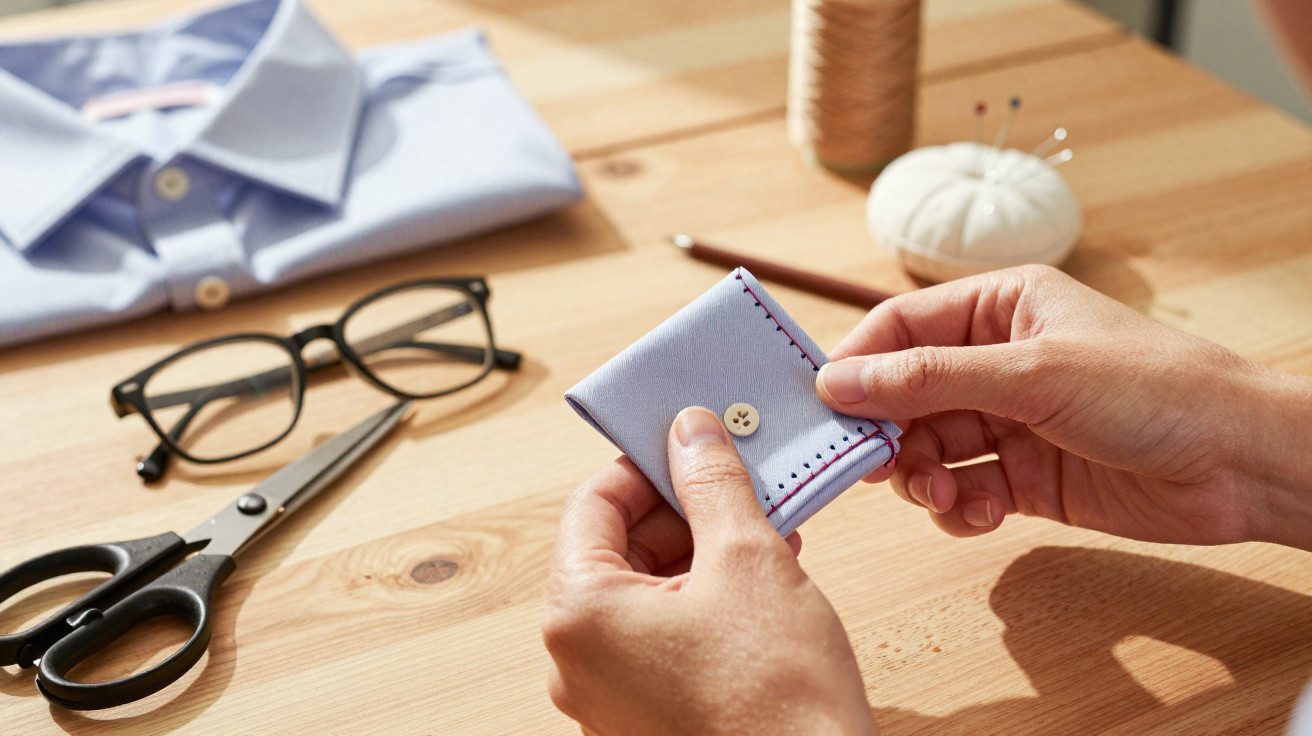
After cutting the shirt, pieces of collar, cuffs or narrow strips will often remain. These can be made into small projects that increase the value of the fabric further:
- Narrow strips for gift ribbon or as an alternative to cable ties
- Mini bags for loose tea bags, nuts or bars of soap
- A glasses case with simple padding made from doubled fabric
This means that hardly any textile leaves the household unused. Anyone who enjoys sewing can gradually move on to more involved upcycling projects, such as cushion covers, aprons or seat cushions.
Practical advice on durability and care
A quick look at care and use will help the new bag last. Once sewn, it can be treated much like an ordinary garment:
- Machine-washable at 30 to 40°C
- Air-dry where possible to help the fabric keep its shape
- Check the seams from time to time, particularly around the base and handles
- For very heavy loads, use two bags to avoid concentrated strain
If you are unsure, test the bag first with a moderate load, such as two to three glass bottles and a few packets. If everything holds, it is ready for the next large shop.
Why this project is especially worthwhile for families
Family households in particular tend to accumulate countless shirts over the years that no longer fit or have fallen out of fashion. Instead of storing them away in boxes, one afternoon at the sewing machine can produce a complete set of shopping bags. Children can help choose fabrics or place the handles, making this a practical introduction to repair and sewing culture.
The result is tangible: less clutter in the wardrobe, lower spending on bags and a small yet practical contribution to reducing everyday waste. A discarded everyday item becomes a useful accessory to take out naturally on the next shopping trip.


Comments
No comments yet. Be the first to comment!
Leave a Comment