
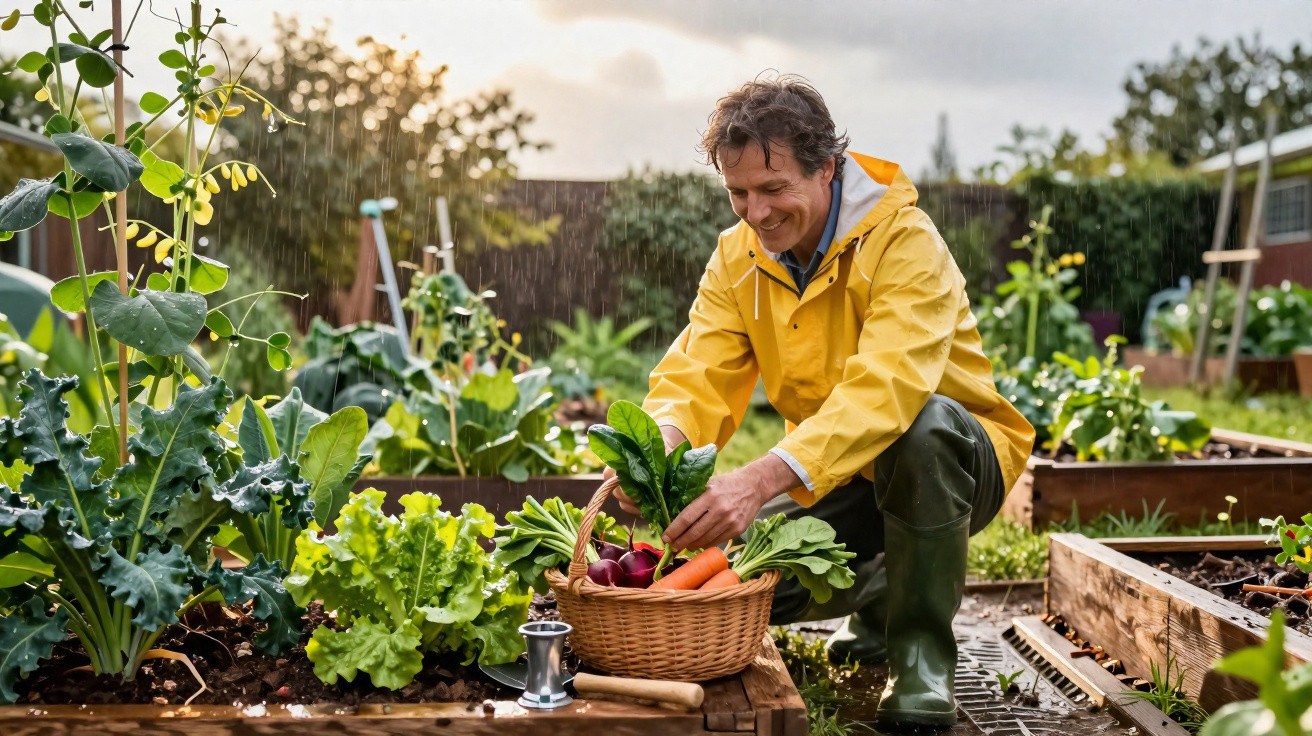
What grows now determines what will be on the plate in winter.
Many home gardeners in Germany are experiencing prolonged wet spells in 2025. The good news is that some vegetables enjoy moisture and can even benefit from it. With suitable choices and a few straightforward measures, yields can remain dependable and surprisingly plentiful.
Rain is not a showstopper: why moisture-tolerant vegetables excel now
Waterlogging puts roots under strain, while fungal spores are simply waiting for damp foliage. Even so, certain crops remain vigorous. They develop steadily, store reserves and cope with fluctuating temperatures. These are precisely the qualities that make them valuable companions during wet periods.
"Anyone choosing moisture-tolerant varieties turns poor weather into a harvesting strategy: a slow growth cycle, sturdy leaves and deep roots."
Success depends on the whole combination: varieties suited to the site, airy soil and sensible spacing. This lets plants make use of consistent moisture without becoming submerged in mud.
The ten wet-weather heroes: varieties that produce in persistent rain
- Lamb's lettuce (mâche): enjoys cool, damp ground and remains tender and flavoursome.
- Kale: exceptionally hardy and able to withstand wind and rain; it becomes milder after cold weather.
- Winter spinach: grows quickly in a damp autumn and continually produces fresh leaves.
- Winter leeks: have deep roots, stay stable in wet soil and offer a long harvesting period.
- Autumn garlic: planted in late autumn, it uses winter moisture to form strong cloves.
- Winter carrots: grow into well-shaped roots in loose soil, even with plentiful rain.
- Turnips (white turnips): undemanding crops that appreciate regular moisture.
- Beetroot: a resilient crop that copes with heavy soil as long as the ground remains aerated.
- Chicory: relatively unaffected by wet conditions around both leaves and roots.
- Watercress: loves water and thrives in damp areas and channels.
"Their shared feature is moisture-tolerant physiology and a growth habit that suits cool weather."
Tender leaves enjoy cool moisture
Lamb's lettuce and winter spinach produce reliably while the soil stays fresh. Both crops quickly close their rows, suppress weeds and provide leaves over an extended period. When rain falls, less soil splashes onto the foliage if mulch covers the surface.
Kale and its cousins: hardy through winter
Kale stands firm in the wind. Its large leaves catch the rain, yet the plant remains steady. Regularly picking the lower ring of leaves encourages new growth and reduces fungal pressure. In exposed locations, horticultural fleece protects it from wet snow.
Deep-rooted crops: beetroot and carrots
Roots reaching deep into the ground use moisture evenly. Beetroot produces juicy bulbs when the soil retains a crumbly texture. Carrots benefit from a loosened seedbed. In heavy soil, rows on low ridges allow water to run off at the sides.
Turnips and radishes: small roots with a big appetite for rain
White turnips and winter radishes grow rapidly, suit successive sowings and respond well to consistent moisture. Sowing in stages provides crisp harvests for weeks rather than woody roots.
Peas and broad beans: a bonus for mild areas
Late-autumn sowings work in mild regions. Peas and broad beans enjoy moisture, though not persistent waterlogging. A sheltered position and moderately fertile soil are sufficient. Harvesting begins early in spring.
In practice: prepare the soil, plant and protect
Loosen soil and direct water away
Break up compaction before wet weather arrives. Loosen the ground to a depth of two spade lengths, work in coarse compost and add some washed sand to clay soils. Raised beds or shallow ridges ensure drainage.
"Drainage, mulch, spacing and variety choice: four controls that safeguard the harvest despite rain."
Plant correctly in changeable weather
Avoid sowing immediately before heavy rain. Seeds may form a surface crust or sink too deeply. Instead, wait for a calm frosty night, then work on soil that has dried slightly. Make rows a little higher and keep paths lower.
Mulch and air: reduce fungal pressure
A 3–5 cm layer of leaves, straw or chipped twigs reduces splashback. Leave generous gaps between plants so foliage can dry. Water in the morning rather than the evening. Remove affected leaves promptly and do not add them to the compost heap.
| Vegetable | Planting/sowing time | Spacing | Particular benefit in wet conditions |
|---|---|---|---|
| Lamb's lettuce | Late summer–autumn | 10–15 cm | Stays tender and is less likely to bolt in cool moisture |
| Kale | Plant in summer | 40–60 cm | Leaves dry quickly and plants remain firm in wind |
| Winter leeks | Plant in summer | 15–20 cm | Deep roots use water consistently |
| Beetroot | Summer–autumn | 25–30 cm | Tolerates moisture but requires loose soil |
Mistakes that cost harvests
- Ignoring crop rotation: diseases and nematodes remain in the bed. Leave at least three years between crops from the same family.
- Applying too much nitrogen: soft growth is more susceptible to disease. Feed moderately, using compost rather than a quick fix.
- Sowing too densely: leaves do not dry well, giving fungi an easy opportunity.
- Overlooking persistent waterlogging: if puddles remain for longer than 48 hours, the root respiration system suffers.
- Underestimating slugs: wet years boost their populations. Control them mechanically.
Slugs, site conditions and extra tips
Slugs favour wet nights. Beer traps attract slugs from neighbouring areas, so they are best avoided. Better options are slug fences, copper tape on raised beds, boards used as collection points and hand-picking in the morning. Nematodes work in spring in severely affected beds.
Assess the site: sandy soils dry more rapidly and need extra mulch. Heavy soils retain water, so they require ridges and plenty of organic matter to create a crumbly structure. A simple test is useful: after rain, dig down 20 cm. If the soil smells musty and smears, it lacks air. If it smells fresh, its structure is sound.
For small gardens and balconies
Winter spinach, lamb's lettuce and beetroot also grow in containers. The key rule is to provide large drainage holes, 30–40 cm of growing medium and a mineral component in the compost. Use saucers only briefly and never leave them filled with water. This prevents waterlogging on the balcony.
Added value in rainy years
Using rainfall intelligently saves watering and extends the harvest. Combinations are effective: kale acts as a windbreak, with spinach in front as a quick gap-filler. A row of lamb's lettuce fits between leeks and beetroot. Mixed cropping keeps the ground covered and stabilises the microclimate.
"Choose slow-growing, cold-hardy varieties, loose soil and raised rows. Then rain changes from a risk into a harvesting aid."
There are still risks to consider: flooding washes nutrients away. A light application of rock dust after heavy rain stabilises the surface. Where gutter outlets discharge, mulch and a narrow infiltration channel prevent erosion. Anyone just starting out can test two soil approaches on one square metre: one with compost and a ridge, the other without. After four weeks, the stronger development indicates the right approach for the entire bed.





Comments
No comments yet. Be the first to comment!
Leave a Comment