
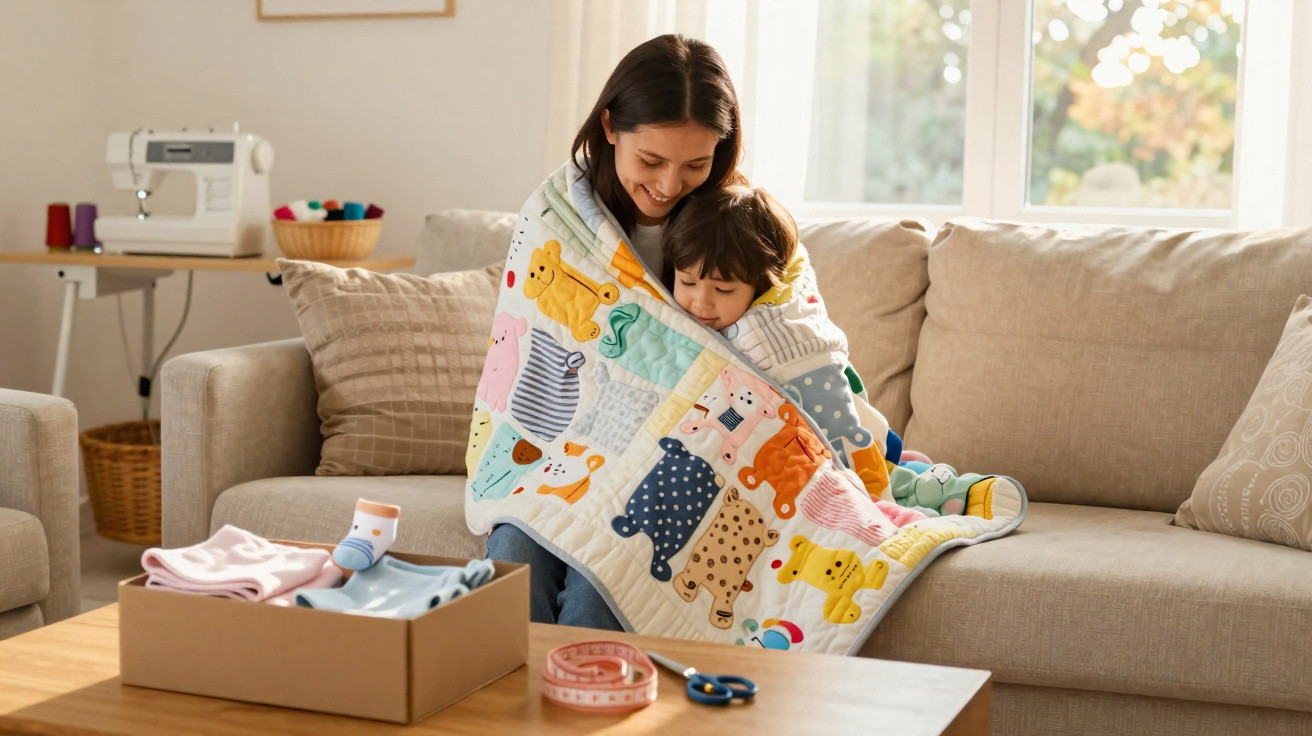
A straightforward sewing project can turn them into a lasting family keepsake.
Almost every family knows the situation: the children have long outgrown their first sizes, yet the tiny bodysuits, pyjamas and miniature T-shirts remain neatly folded in a corner of the house. They bring back memories of the first nights, the first smile and the first holiday. Throw them away? Unthinkable. Give them away? That can feel wrong too. This is where a creative idea, currently delighting many parents, comes in: those bodysuits become a large, softly lined memory blanket – a tactile textile album.
From a dusty box to the centrepiece of the sofa
In many homes, baby clothes fill entire removal boxes. Particularly during the first year, a bodysuit goes across the changing mat several times a day on average, so dozens of items quickly accumulate. Rather than getting air and attention, they spend years in the loft, fade a little more with every season and gradually slip further from mind.
Yet every item is attached to a small story: the outfit worn home from hospital, the bodysuit marked by tomato sauce from the first pasta supper, the top Grandma chose with trembling hands. Once the lid of the box closes, all those memories lie dormant.
“The idea of a memory blanket brings precisely these moments back into everyday life – visible, tangible and cosy.”
Instead of storing dozens of individual garments, you create one larger item that sits in the middle of the living room, moves to the sofa and ends up on the child’s bed on cold days. It is a kind of family chronicle made from fabric.
What a memory blanket made from bodysuits involves
In the English-speaking world, the established term is “Memory Quilt”; here, it is generally called a memory blanket or a patchwork throw made from baby clothes. The principle is simple: cut old bodysuits, pyjamas and tiny sets into evenly sized squares, then sew them into a blanket, usually with a soft fleece or Minky fabric backing.
The choice of garments is what gives it its appeal. Many parents deliberately select only pieces with an emotional connection:
- the bodysuit from the first birthday
- the outfit from the first family photograph
- a present from godparents or grandparents
- favourite garments worn especially often
- outfits from particular stages, such as breastfeeding or starting nursery
The result is a blanket that does more than provide warmth: it tells stories. Later, children can reach for a square and hear the memory behind it: “You took your first steps in this bodysuit.” The blanket works like a picture book without pages, resting on the sofa rather than a shelf.
Jersey fabric can be tricky: what really matters when sewing
Bodysuits are almost always made from cotton jersey – pleasantly soft, but rather challenging to sew. The fabric is knitted rather than woven, which makes it stretchy. Put it straight under the sewing machine and it may distort, become wavy or develop uneven edges.
The key aid is fusible interfacing (often sold as Vlieseline). Apply this interfacing to the reverse of the fabric before cutting out the squares. Its fibres stabilise the stretchy areas, so the jersey behaves almost like a firm cotton fabric while sewing.
Step-by-step guide to a blanket made from bodysuits
Anyone wishing to use a sewing machine themselves can broadly follow this process:
- Collect: Around 25 to 30 bodysuits and small garments are enough for a medium-sized blanket.
- Prepare: Wash everything, allow it to dry, fasten the poppers and press lightly.
- Make a template: Cut a square from cardboard, for example 15 x 15 cm.
- Iron on the interfacing: Attach fusible interfacing to the wrong side of the bodysuit fabric.
- Cut the squares: Position the template around the best motifs, then cut them out.
- Lay out the design: Arrange the squares on the floor and decide on their order.
- Sew: First make rows by placing squares right sides together, using approximately 1 cm seam allowance; then join the rows together.
- Attach the backing: Cut fleece or Minky fabric to the right size, place it right sides together with the patchwork, stitch around the edge, leave a turning gap, turn it through and topstitch close to the edge.
More experienced sewers can include extra details: reuse small breast pockets, reposition appliqués or stitch labels into individual squares as “chapter headings”.
DIY or a professional studio – which is the better fit?
Whether you sew the blanket yourself or commission it depends on several factors: time, skill and emotional connection. Making it yourself clearly requires more patience. At the same time, sorting, cutting and stitching the garments creates a deeply personal journey back to the child’s earliest days.
“Many parents report laughing, crying and recalling details they had long forgotten while sewing – like spending an evening alone with old photo albums.”
Those without a sewing machine or uninterrupted time can hire professional studios. Small workshops specialising in memory blankets made from clothing are now available in German-speaking countries too. They work with defined size formats, such as:
- 75 x 75 cm for a baby or pram blanket
- 90 x 120 cm for a child’s bed
- 135 x 180 cm as a sofa throw for teenagers or adults
Depending on the finished size, workshops require anything from around 20 to well over 100 garments. The waiting period is often several weeks because every blanket is individually planned and sewn. The clothing must be freshly washed and as free from stains as possible; any holes should be marked in advance so that the studios can incorporate them creatively or avoid them.
Practical tips: from popper plackets to care
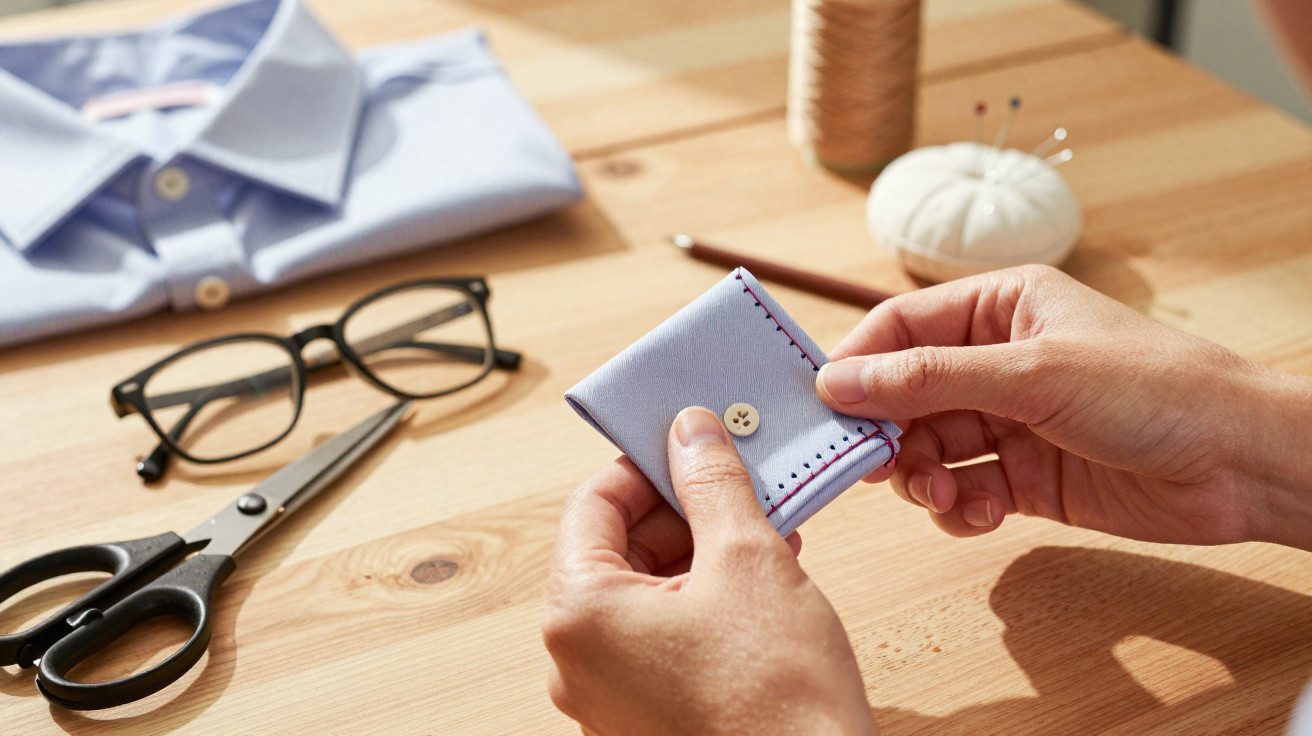
Upcycling baby clothes creates other interesting components alongside the squares. The popper plackets found on many bodysuits are particularly useful. Rather than discarding them, they can be made into fastenings that attach the blanket, for instance, to the edge of a bed or a baby car seat. This stops it continually slipping down.
Sleeve cuffs and small bows can also be put to new use: as hanging loops, delicate edging decorations or handles that make the blanket easier for younger children to hold.
When it comes to care, a memory blanket may be emotionally precious, but it should remain suitable for everyday use. A gentle wash cycle with mild detergent protects the fabrics. It is better to avoid the tumble dryer, as air-drying preserves colours and shape more effectively. If individual squares have particularly delicate motifs, place them deliberately in less hard-wearing areas, such as the centre rather than the corners.
Why these blankets mean so much to children
For children, this blanket is more than an attractive accessory. They unconsciously connect its patterns and colours with many scents, sounds and feelings from their earliest years. Even if they cannot consciously remember them, the fabric evokes something familiar. Some later use the blanket as a bedspread in their teenage bedroom, while others take it with them to their first home of their own.
The blanket also creates opportunities for family conversations. While snuggling up together, stories can be shared that might otherwise never be mentioned: how exhausting the first nights were, how proud the parents were of the first doctor’s visit without tears, or how excited the grandparents were before meeting the baby.
More ideas for keepsakes made from baby clothes
Anyone with fabric left after making the blanket, or who deliberately does not want to cut up every item, will find many further options. Particularly pretty tops can become cushion covers to match the throw. Small hats or gloves can be arranged in a deep picture frame and hung on the wall. Even old wrap-front bodysuits can be cut into narrow strips and sewn into a personalised fabric ribbon for gift wrapping.
One thing remains important: not every item has to be used. Some parents keep one or two especially significant pieces in their original condition in a small box. The blanket complements these treasures, rather than replacing them completely. This creates a balanced combination of practical use and preserved memories.
Anyone embarking on a project like this soon realises that it is not simply about a beautiful blanket. It is about transforming the wildest, most chaotic and most intense phase of family life into a tangible part of everyday living – something that lies in the living room rather than disappearing into a box in the cellar.


Comments
No comments yet. Be the first to comment!
Leave a Comment