
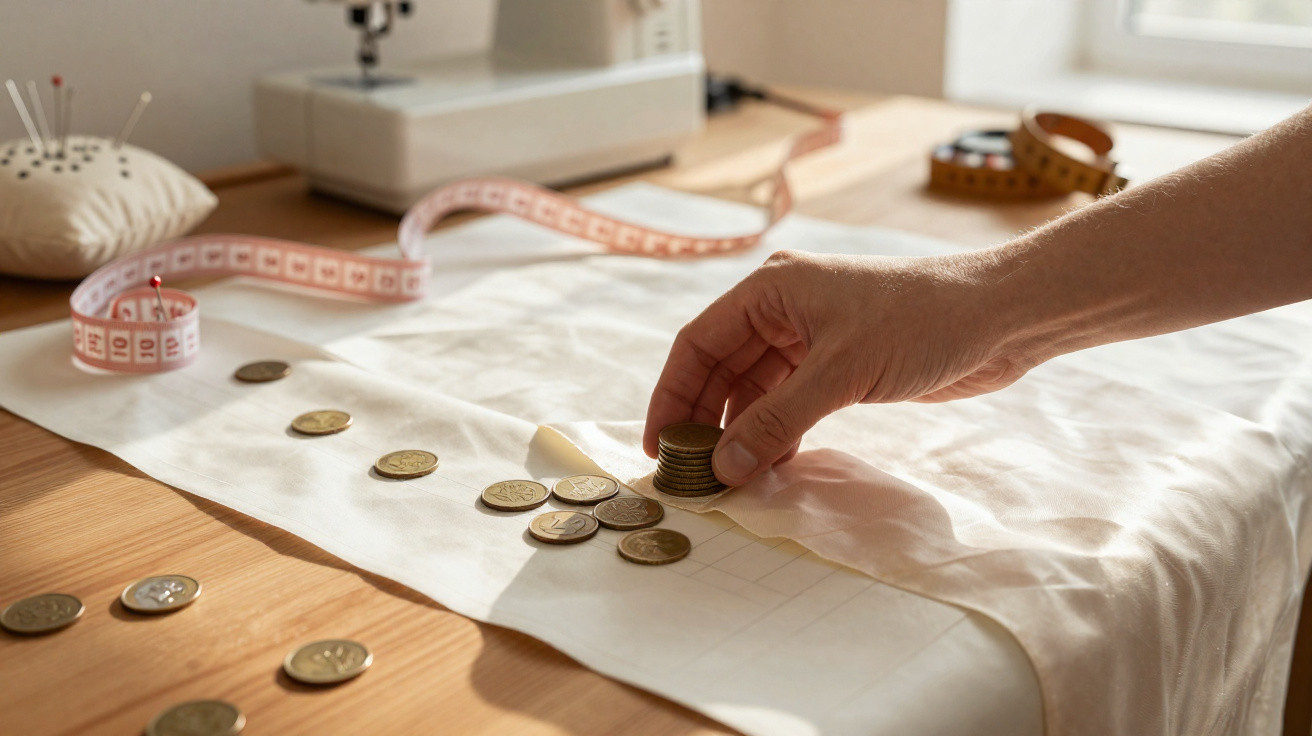
In sewing studios, they are rapidly becoming the quiet miracle solution for difficult fabrics.
Rather than punching holes in silk, softshell or fine jersey, an increasing number of hobby sewers and professionals are using a surprisingly simple method: they swap pins for homemade weights made from old coins. Although it may sound like a craft project, in practice it solves several issues at once, from damaged fibres to leaky rain jackets.
Why coin weights are currently in demand at the sewing machine
Anyone who sews regularly knows the issue: pins are useful, but they leave marks behind. On delicate or technical fabrics, those marks can remain visible permanently – and may even impair properties such as waterproofing.
“The idea: hold the pattern and fabric in place using weight alone, without creating a single hole.”
This is where coins come in. Rather than pinning the paper pattern to the fabric, you place so-called pattern weights on top. Old coins are particularly well suited to this because they:
- are small and flat;
- have a consistent weight;
- often sit unused and seemingly worthless in drawers anyway;
- can be easily grouped, wrapped and stacked.
Textile specialists and institutes have long warned against perforating technical or extremely fine fabrics too heavily. The materials most affected include:
- silk and fine woven fabrics;
- lightweight jerseys and knitted fabrics;
- softshell and other performance fabrics;
- coated cotton, oilcloth and faux leather;
- genuine leather.
Every hole becomes a small weak point in these materials. In performance jackets, it can later provide an “entry point” for water; in silk, even a tiny injury to the fibre remains visible and may cause the fabric to tear. Using weights instead protects the material’s structure entirely.
Before reaching for the pliers: which coins are actually suitable?
Before any coin ends up in the sewing room, it is worth carrying out a quick reality check. Not every old currency coin is automatically worthless. Some pieces have collector value or are made from precious metals.
Collectors often use a rarity index ranging from 0 to 100. The lower the figure, the more commonplace the item. A typical historic silver coin with a low rarity rating appears very frequently and will usually be worth little more than its material value.
A practical example: a common silver coin contains just over four grams of fine silver. Using a rough reference price of a little over €2,000 per kilogram, its metal value quickly comes to around €10 per coin. Coins like these are best kept away from the sewing scissors.
“For the sewing room, very common circulation coins made from non-precious metals – such as cupronickel – are the best choice.”
The rule of thumb is:
- Check old collections online briefly: are there any indications of collector value?
- Set aside coins containing precious metals, such as silver or gold.
- Recycle only clearly common, damaged or obviously valueless pieces.
If in doubt, simply use small-denomination coins that are current or only recently ceased to be legal tender, and that would not interest a collector. For sewing, their weight is all that matters in the end.
Weight and size: how heavy a good pattern weight should be
For most uses, a practical range is around 40 to 60 grams per weight. That is enough to:
- stop patterns made from thin tissue paper from shifting;



Comments
No comments yet. Be the first to comment!
Leave a Comment