
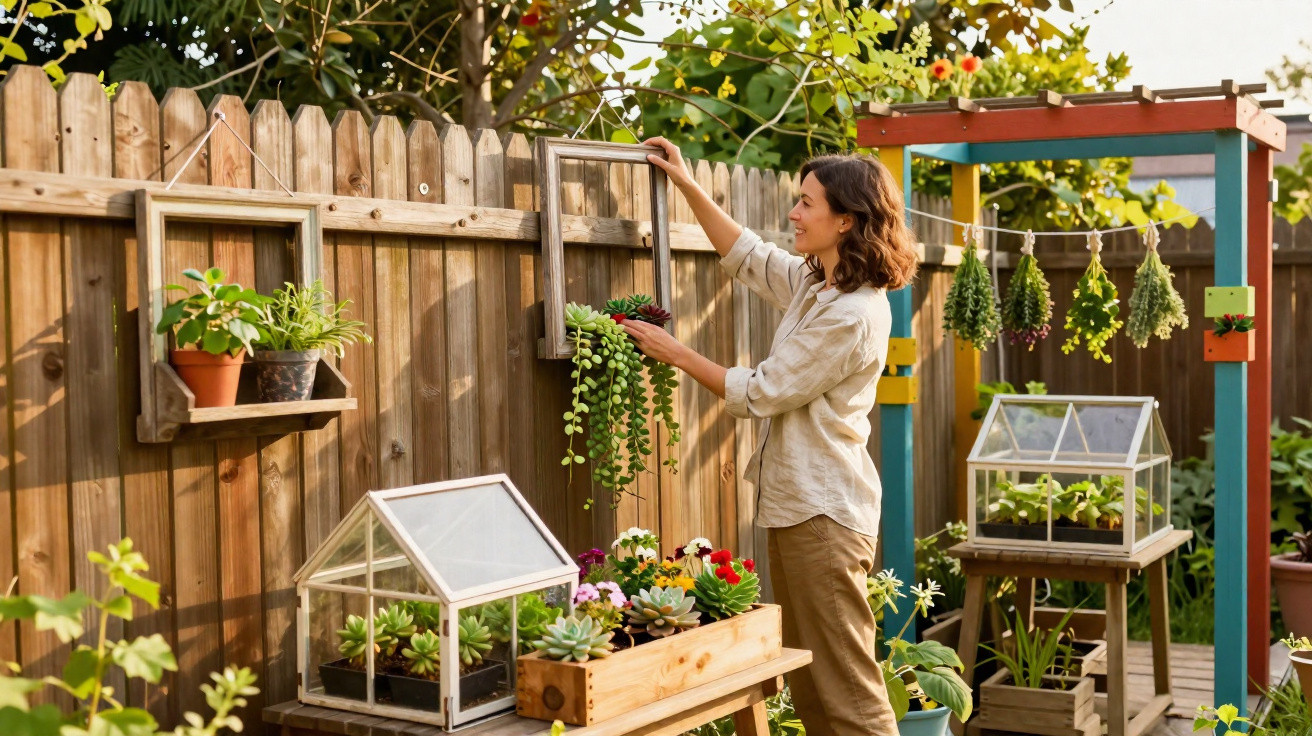
Old picture frames are scattered around homes everywhere, no longer displaying photographs. At the same time, the desire for more greenery is growing, even on the smallest balconies. What many people do not realise is that these forgotten frames are perfect for making shelves, planters, decorative features or even mini greenhouses – without an expensive trip to the DIY shop.
Why old picture frames are suddenly so valuable in the garden
Wooden frames are sturdy, lightweight and are often already available at home. Once you stop seeing them simply as holders for pictures and start treating them as building materials, they offer a surprising range of DIY possibilities. Best of all, most of these ideas work just as well in rented homes with a tiny balcony or a narrow courtyard.
“What appears to be bulky waste can become useful garden helpers – with few tools, little money and plenty of charm.”
The trend has gained particular momentum in the United Kingdom, where compact terraced-house gardens and narrow patios are a fact of life. Hobby gardeners there demonstrate how frames can be turned into shelves, planter boxes, mini greenhouses and colourful focal points. Many of these ideas transfer directly to homes elsewhere.
1. A floating plant shelf from a single frame
The most straightforward option is a suspended shelf for one houseplant or a small pot of herbs.
- Choose a sturdy frame with glass.
- Fit a thin backing board, such as plywood or thick card.
- Glue or screw two lengths of string or cord to the top corners.
- Hang the frame from a hook, curtain pole or shelf.
- Place a lightweight plant pot in the centre of the glass.
This creates a floating spot for pothos, a succulent or a scented candle. It is ideal by a kitchen or living-room window, and also works on a covered balcony.
2. Turn four frames into a proper planter box
Anyone with several old frames can build a small yet decorative planter box from them, ideal for a balcony, windowsill or patio corner.
Use four frames of identical size as the sides. Stand them upright, then glue or screw them together along their vertical edges. Small wooden blocks or angle brackets on the inside will keep the construction square. Next, attach a wooden board underneath as the base, securing it from below.
Once assembled, the whole box can be sanded and painted in colour. If preferred, replace the glass with plywood or thin timber slats to create visual detail. Add a layer of liner or a suitably sized insert, fill it with compost, and it is ready for herbs, pansies or small perennials.
3. A living plant picture for the wall
So-called “Living Frames” are especially popular: frames in which small succulents grow like a picture.
A deep frame is suitable for this, or an old picture frame extended with a box-like section on the back. Line the rear section with horticultural fleece or durable plastic sheeting, then add a thin layer of compost. Cover the front with wire mesh or a coarse net to hold the compost in place.
Small succulents or mat-forming plants can then be inserted through the openings in the mesh. Allow them to root while the frame is lying flat, then hang the complete living picture on the wall. It makes an eye-catching feature on sheltered exterior walls or in a conservatory.
4. A mini greenhouse made from unwanted glazed frames
If you have several glass-fronted frames, you can make a small greenhouse for raising plants, sized to fit over a pot, balcony planter or herb tray.
Just six frames of roughly the same size are enough: four for the walls and two for the roof. First, remove all old hanging fittings and nails. Connect the frames into a box using small hinges or angle brackets. Any gaps can be filled with wood filler, followed by a coat of weatherproof paint.
Finally, refit the glass panes with silicone or grab adhesive. The finished cover protects young tomatoes, chillies or basil from wind and cool nights. On an urban balcony, it can often stand in for the garden shed that is not there.
5. A cutting station that stands out in the living room
Anyone who enjoys propagating cuttings can turn a frame into a stylish growing station. The process is simple:
- Remove the glass from the frame.
- Glue or screw in a sturdy backing board.
- Drill two holes through the backing.
- Wrap wire or strong cord around a jar, test tube or small bottle.
- Feed the wire ends through the holes and fasten them at the back.
When the frame is hung on the wall, the container appears to float in front of it. Add water and a cutting of ivy, monstera or coleus, and the former picture becomes a living plant laboratory.
6. A herb-drying rack from two wooden frames
Anyone harvesting basil, mint or sage on the balcony will know the problem: where do all those herbs go while they are drying?
The answer is to stretch insect mesh or fine wire mesh across the back of two matching wooden frames. Use four equal lengths of cord to connect the top corners of the first frame to a ceiling fixing point or hook. Four shorter lengths of cord hold the second frame beneath it.
This produces a two-tiered, airy drying rack. Spread the herbs out loosely and turn them regularly; after a few days, they will be dry enough for tea, seasoning blends or scented sachets.
7. Picture frames as colourful garden art for fences and pergolas
Picture frames without glass make ideal garden decorations. They are lightweight, easy to move and quickly add interest to dull grey fences or shed walls.
One approach is to spray old frames in bold colours – turquoise, sunny yellow or red, whichever you prefer. Hang them together on a fence, pergola or trellis. You can also add fairy lights or allow climbing plants such as nasturtiums to grow through them.
The result is a kind of “open window” that brings colour to an outdoor space even in winter. A frame collage combined with fairy lights looks surprisingly polished in the evening, despite the materials being virtually free.
8. A rustic garden sign for children and guests
Frames also work well for playful signs: the name of a balcony garden, a “Welcome” sign at the entrance, or a marker for a tomato bed.
The method is simple and suitable for children:
- Paint the frame with chalk paint or blackboard paint.
- Once dry, lightly sand the edges to create a vintage look.
- Attach artificial flowers, ribbons or small wooden letters to the frame.
- Hang a cord with cut-out letters or a small wooden board in the middle.
This is a lovely project for families. Children can paint, glue and write, then proudly display “their” sign beside a raised bed or on the balcony railing.
What DIYers should consider when working with picture frames
For all the creative potential, it is worth taking a moment to consider safety and materials. Old frames may have splinters, loose joints or fragile panes of glass. Before converting them, inspect everything carefully, tighten screws and sand down sharp edges.
For outdoor projects, ordinary craft paint often will not last. Weatherproof wood stains or exterior paints are a better choice. If you use glass in the garden, secure it properly and avoid places where children play or balls are likely to fly. Perspex or old picture frames with acrylic glazing are suitable alternatives for greenhouse projects.
Why the effort is worthwhile – and what else can be upcycled
Alongside their appearance, the main advantage of these ideas is their sustainability. Rather than buying new decorative items and planters, you reuse materials already on hand. This saves money, reduces waste and gives a balcony an individual character that no furniture-shop set can offer.
Other dust-gathering items can be used just as creatively: old ladders as plant shelves, wine crates as raised beds, or redundant window frames as cold frames. Once you begin viewing household items with a gardener’s eye, potential plant furniture seems to be everywhere.
Old picture frames are an ideal starting point. They are easy to work with, need very few tools and deliver quick, visible results. Perhaps they will not only clear the stack of frames from the cupboard, but also transform the balcony into a small and distinctly personal green stage.





Comments
No comments yet. Be the first to comment!
Leave a Comment