
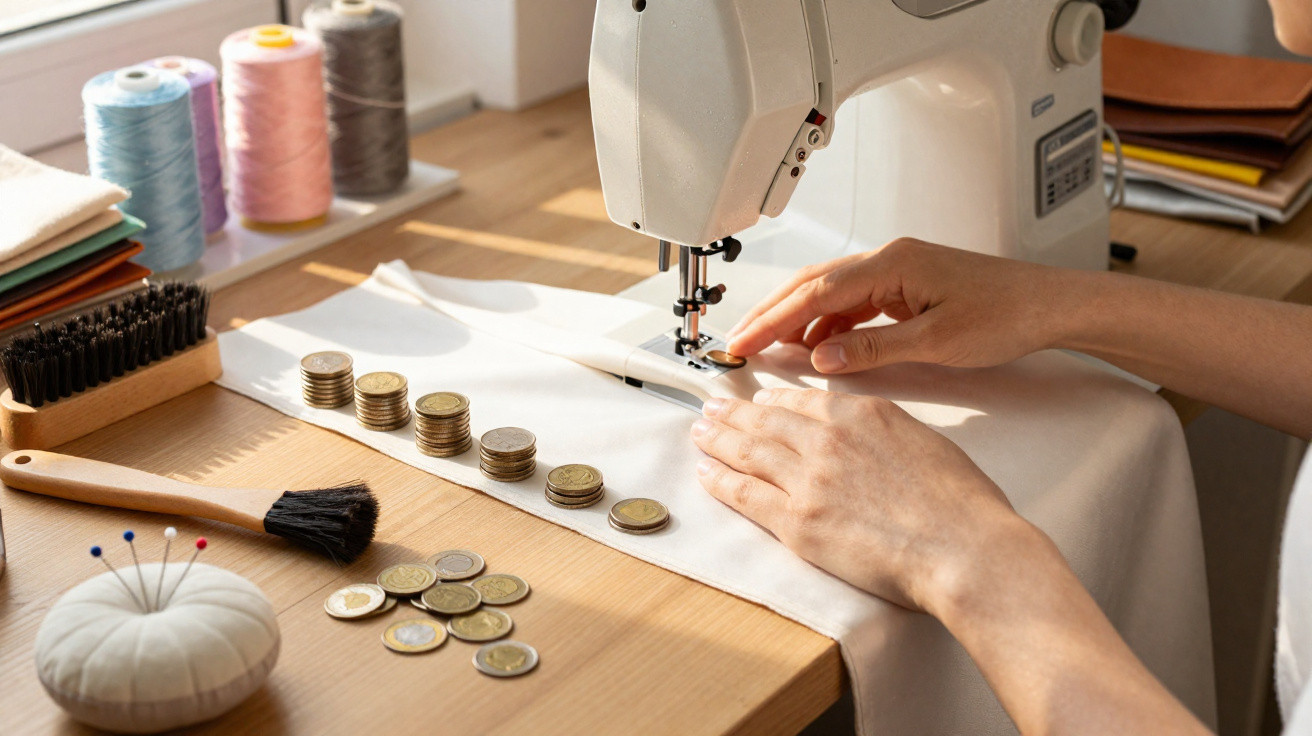
In sewing studios, these forgotten items are being given an unexpectedly clever second life.
Anyone working with silk, softshell or lightweight jersey will know the issue: every pin leaves a mark. Many home sewers and professionals therefore turn to a solution that seems almost absurdly simple – and works precisely because of that: they turn worthless coins into accurate pattern weights, avoiding holes, runs and leaks.
Why coin pattern weights are so popular at the sewing machine
Countless homes have jars filled with old or foreign coins. They are not valuable enough to exchange, yet feel too good to throw away. Within sewing circles, these very pieces have become something of an insider tip: they are transformed into small weights that hold pattern pieces and fabric in place through their weight alone.
Coin weights keep fabric and pattern pieces securely in position – without making a single hole in the material.
The result is remarkably effective. Rather than piercing the fabric with pins, the pattern piece lies flat on the material and is held down by several small weights. This keeps the surface intact. With delicate or expensive fabrics in particular, it can save stress, time and, potentially, a considerable amount of money.
Pinpricks as a risk: when holes become a genuine problem
Textile technology experts have long advised using as few pins as possible with certain materials. The reason is straightforward: each puncture cuts fibres or damages coatings, and the resulting damage often cannot be reversed.
Fabric types that pins can quickly damage
- Silk, chiffon, organza: Prone to runs and visible pin marks.
- Fine jerseys: Stitches can ladder and the fabric may become distorted.
- Softshell and technical fabrics: Every pin can create a future point for water to enter.
- Faux leather and real leather: Holes remain permanently visible; nothing ‘springs back’.
- Coated cotton and oilcloth: Pierced areas can quickly become weak points.
For rain jackets or outdoor clothing especially, every additional perforation can later turn into a leak. Instead of securing the pattern piece, you may unintentionally damage exactly what you meant to protect: the waterproof surface.
Before making them: which coins are actually suitable?
Before taking a coin collection straight to the sewing machine, it is worth briefly checking for potential collector value. Not every forgotten coin is automatically worthless. Depending on their rarity and material, some pieces can still fetch surprisingly high prices.
Check collector value against material value
Coin collectors use what are known as rarity indices. In very simplified terms, this means:
- Low rarity value: The coin is common in circulation and is usually worth only its material value.
- High rarity value: The coin is rare and may be of interest to collectors.
Coins made from precious metals – such as silver – can have a noticeable material value even when they are no longer legal tender in everyday use. The current market price matters here: even a few grams of precious metal can soon add up to several pounds.
The basic rule in the sewing room: sort first, then recycle – only common, everyday coins should be turned into weights.
For use on the cutting table, coins made from base-metal alloys such as cupronickel are particularly suitable. They are durable, do not rust and withstand daily use without difficulty.
What weight makes sense for each pattern weight?
For improvised pattern weights to work properly, a few basic considerations about weight are needed. If they are too light, the fabric shifts; if they are too heavy, they become cumbersome to handle.
Practical values from everyday sewing
The weight of one medium-sized coin provides a useful guide. By combining several coins, the target weight can be adjusted easily. In day-to-day use, the following ranges have proved effective:
- 40–60 grams per weight for lightweight fabrics and pattern pieces made from thin paper.
- 60–80 grams for slightly heavier cotton or larger pattern pieces.
- Several weights placed side by side for particularly stubborn materials or long edges.
An even distribution matters more than the precise number of grams. The flatter and wider the weights sit, the more stable the fabric remains while marking out and cutting.
Step by step: turning coins into practical pattern weights
Making them is straightforward even for sewing beginners. One afternoon is enough to create a complete set of weights that can last for years.
1. Clean the coins
Old coins often carry dirt, traces of hand cream or oxidation residue. A brief soak in warm soapy water, followed by thorough drying with a cloth, is usually enough. This keeps fabrics clean and prevents them from picking up a metallic smell.
2. Prepare the coin stacks
Stack four to six coins, depending on the total weight required. To prevent them from slipping or rattling, use a narrow strip of masking tape or a piece of felt wrapped snugly around the stack.
The principle is simple: a secure stack of coins that is comfortable to hold and creates a flat resting surface.
3. Sew a fabric cover
To make sure the weights do not scratch the fabric, place them in a small cover:
- Cut squares of cotton or linen measuring roughly 10 × 10 centimetres.
- Position the coin stack in the centre and fold the edges inwards.
- Close the open sides by machine or hand, creating a small ‘cushion’ or triangular shape if preferred.
Those who wish can use colourful fabric offcuts from earlier projects. That makes every weight distinctive, while also clearing small pieces from the scrap box.
How coin pattern weights work on softshell, silk and leather
These small fabric parcels show their strengths when put to use. The switch from pins to weights is immediately noticeable, particularly with demanding materials.
Softshell and raincoat fabrics
On a softshell coat, every pin compromises the water-repellent layer. With pattern weights, the paper pattern lies flat while the fabric underneath stays smooth. Mark the lines with tailor’s chalk and cut directly – without creating a single hole in areas that need to remain watertight later.
Fine silk and delicate jerseys
Silk slips easily, distorts and can look suddenly ‘chewed up’ after a few pinpricks. Placing several coin pattern weights along the pattern edge keeps the material still. It is neither stretched nor pulled upwards, and no puncture marks are left behind.
With thin jerseys, the weights prevent the stitches from being stretched. The edge remains in its natural shape, helping to produce neat seams later on.
Leather and coated fabrics
Leather does not forgive mistakes: once holes have been made, they stay visible, even if the seam is later unpicked. Coin pattern weights are ideal here for securing pattern pieces on leather or faux-leather surfaces without risking permanent marks.
Practical extra tips for everyday use
Anyone who uses coin pattern weights regularly will soon develop their own routine. A few techniques are useful from the outset:
- At corners and curves, use more smaller weights rather than a few heavy ones.
- For large pattern pieces, such as back pieces, add weights along the centre lines rather than using them only around the edge.
- For slippery fabrics such as viscose or satin, sew covers from a rougher material, such as linen, for better grip.
- Store the weights in a bowl beside the cutting table so they are always within easy reach.
Anyone who often works with paper pattern pieces also benefits in the long term because they suffer less damage. Rather than becoming full of pinholes, they stay smooth and can be used more often or passed on when needed.
Legal considerations, terminology and useful sewing-room additions
In many countries, deliberately destroying valid coins can be legally sensitive. In Germany, using coins that have been withdrawn from circulation or foreign coins is considerably less problematic. As a general rule, valid cash should not be drilled, bent or melted down, even though such cases are rarely pursued in practice.
For anyone unfamiliar with the term ‘pattern weight’: in English-speaking countries, “pattern weights” have long been standard, especially in fashion and costume work. They are sometimes made from metal, ceramic or even glass. Coin versions serve the same purpose – but are considerably cheaper and come with a recycling benefit.
Combined with good fabric scissors, a sharp rotary cutter and non-slip cutting mats, they create a work area that is far more precise than the traditional mix of pins and improvised coffee mugs used as weights. Once you have seen how calmly smooth silk behaves beneath evenly distributed weights, you will usually not want to return to the old system.

Comments
No comments yet. Be the first to comment!
Leave a Comment