
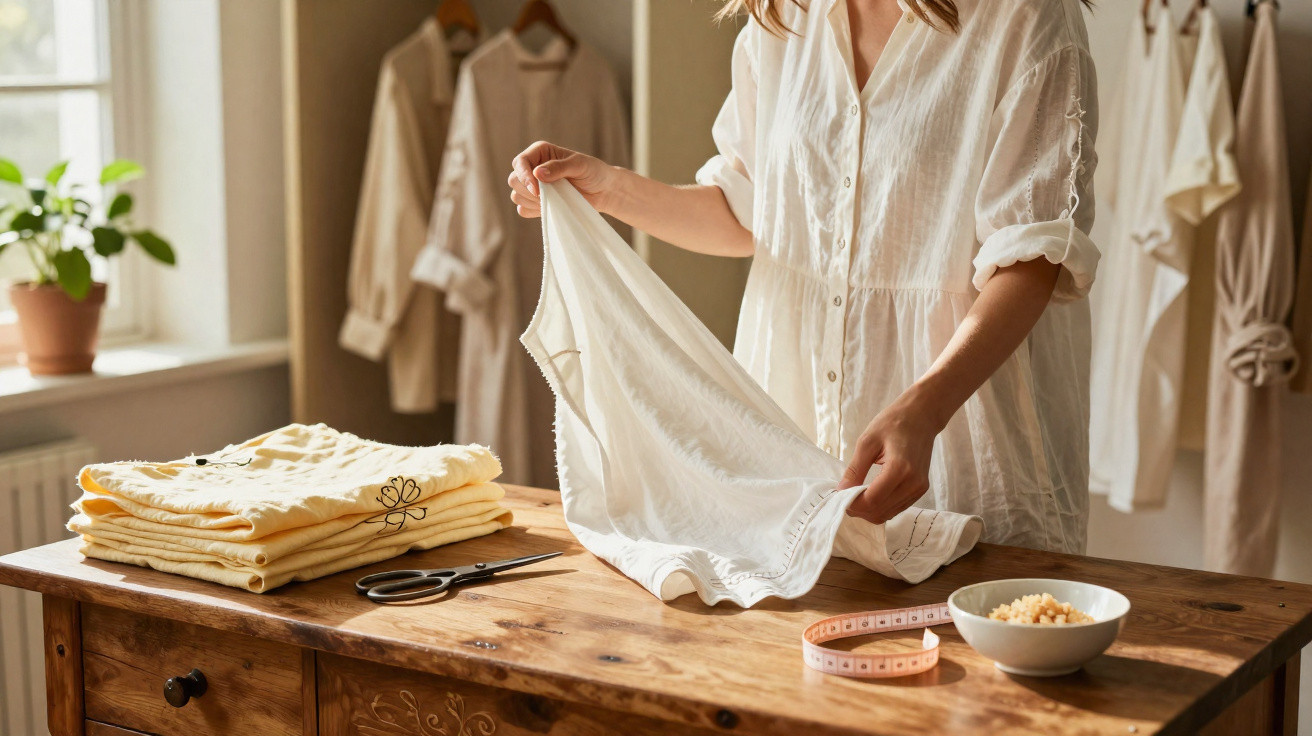
In interiors magazines, on Pinterest and across sewing communities, one material is appearing ever more often: old linen sheets from family collections. Once relegated to the back of a cupboard, they are now sought-after raw material for premium home textiles and distinctive clothing. These unassuming piles of fabric hold far more value than most people realise.
Why old linen sheets are in such demand
Anyone looking for sustainable ideas for the home soon comes across nostalgic fabrics with a history. Vintage linen and linen-cotton sheets fit this trend perfectly. They have a calm, timeless appearance and offer a texture that modern mass-produced textiles rarely match.
“What seems like clutter becomes a one-of-a-kind, high-quality piece – often with the quality of expensive designer items.”
Three factors account for their appeal:
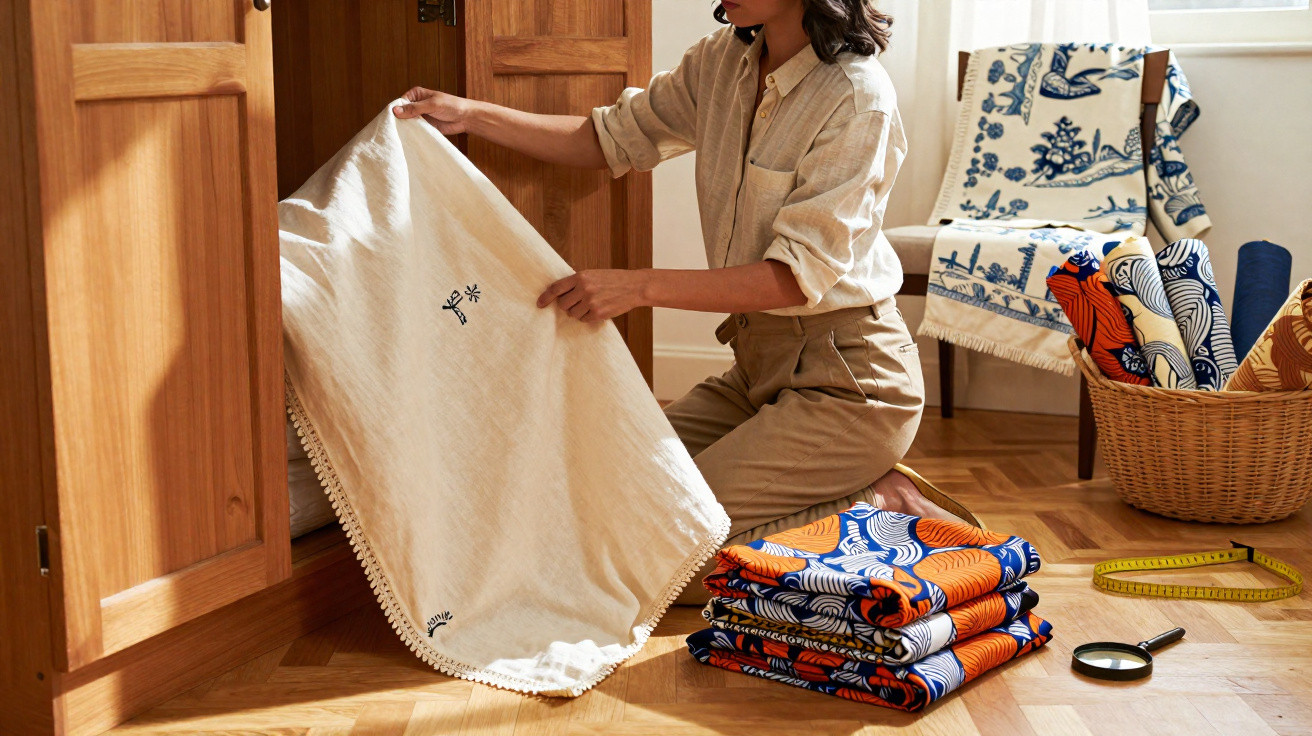
- Authenticity: Hand-embroidered monograms, delicate crocheted edging and inherited initials give every piece a family story.
- Sustainability: No new raw materials and no additional manufacturing are required, while the textile’s usable life is significantly extended.
- Quality: Older linen is often considerably heavier and more hard-wearing than many fabrics currently sold in shops.
There is also a financial benefit for anyone who can sew. One large sheet can provide several square metres of quality fabric that could easily cost a three-figure sum from a specialist retailer.
How to identify high-quality old linen
Before an old bed sheet becomes a design piece, inspect it carefully. Not every fabric is equally suitable for new projects.
Features to look for
- Fabric weight: Older linen sheets often feel weighty. Compared with many newer textiles, they are denser and firmer while still remaining supple.
- Fibre type: Linen, linen-cotton blends and heavy cotton are ideal. Old hemp cloth can also be an interesting option.
- The light test: Hold the sheet up to a window. If the fibres are even and there are no bare or heavily worn patches, the fabric is usually still strong.
- Edges and seams: Neat hems, firm selvedges and embroidered monograms are major advantages, as they can be deliberately incorporated into the new design.
- Smell: A musty odour will generally disappear after a thorough wash, whereas signs of mould or mildew stains are a warning.
“As a rule of thumb, choose a sheet that appears yellowed but is thick and densely woven over one that is brilliantly white but very thin.”
Old cotton fabrics offer another benefit: their more open fibre structure often takes dye better than modern textiles. This makes them especially suitable for dyeing methods and creative surface treatments.
Gentle cleaning: turning yellowed sheets brilliant white again
At first glance, many old sheets can look disappointing: yellowish discolouration, light staining, creases and a stiff handle. With suitable care, however, they can be restored remarkably well.
Step-by-step refresh guide
- Inspect in daylight: Spread out the fabric and mark any heavily worn central areas. Later, use these sections for smaller makes or sample pieces instead.
- Pre-wash: Remove surface dust and storage odours with an initial wash at around 40–60°C.
- Brighten: For a whiter finish, use a hot soak with oxygen bleach based on percarbonate. Add two tablespoons per litre of water, leave it to soak for several hours, then wash as normal.
- Treat stains: Rust-like spots can often be lifted with lemon juice and salt. Place the treated area in sunlight, then rinse thoroughly.
- Spin gently: Avoid an excessively fast spin speed so that fibres and seams are not put under unnecessary strain.
- Iron while damp: When the cloth is still slightly damp, it will iron more smoothly and regain its attractive drape.
With careful treatment, a single sheet can yield several square metres of usable material, often without buying anything new.
From bed sheet to luxury piece: ideas for the home
Once the linen is clean and smooth, the creative stage begins. Simple projects for the home can look instantly high-end.
Popular beginner projects
- Throw with a dyed effect: A plain, slightly yellowed linen sheet can take on a modern look with tie-dye or Shibori dyeing. Warm shades such as rust, terracotta or muted green conceal old shadows while adding depth to a room.
- Cushion covers with envelope closures: The edge sections can quickly become simple cushion covers. Monograms or lace trim can be positioned in the centre or at one side.
- Boho curtains: An old sheet with a border makes an excellent lightweight curtain. Often, only a few seams are needed because the original hems can be retained.
- Wall panels and headboards: Stretched over a wooden frame, dense linen works as a large textile artwork or an upholstered headboard.
“The trick is to plan cleverly around existing details such as hems, embroidery and edges rather than cutting everything away.”
Offcuts can be sewn into coordinating accessories, including small bags, bread-basket liners, napkins or fabric storage baskets. This lets the material run like a common thread throughout the room.
Linen in the wardrobe: clothing made from grandma’s sheets
Anyone with some sewing experience can turn these quality lengths of fabric into wearable clothing. Linen has a weighty drape and looks refined even in straightforward patterns.
Suitable garments and accessories
- Wrap dresses: Loosely cut wrap dresses benefit from the fabric’s weight and do not require complicated darts.
- Midi skirts with button plackets: The old selvedge can often be used as a ready-made hem. This reduces sewing work and creates a particularly neat result.
- Aprons and work smocks: Cross-back aprons with large pockets are especially popular. Monograms can be applied as a prominent feature.
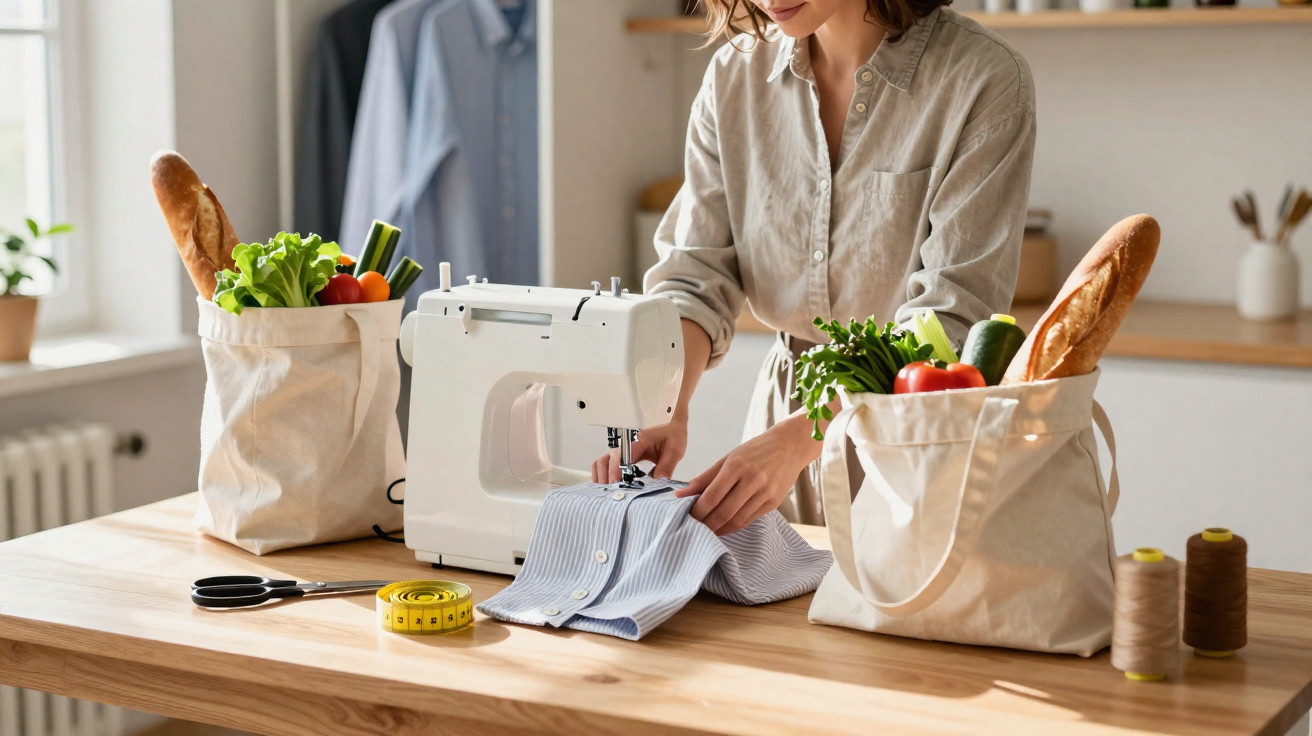
- Large tote bags: Sturdy linen is ideal for shopping bags, bread bags or laundry sacks.
By paying attention to the grainline and cutting economically, several items can be made from one sheet. Minor sewing imperfections are less noticeable in the fabric’s lively texture than they would be on smooth synthetic materials.
Where to find good old linen sheets
Not everyone still has a stack of family linens in the loft. Even so, quality vintage stock can be found relatively inexpensively from several sources.
| Source | Typical prices | Advantage |
|---|---|---|
| Flea market / driveway sale | approx. €5–€30 per sheet | Wide selection, prices are often negotiable, with unexpected finds |
| Second-hand and vintage shops | approx. €20–€80 | Usually already sorted and clean |
| Antiques dealers | sometimes well over €100 | Particularly rare pieces with fine handwork |
| Family collection | free | Personal history, often several matching sheets |
When browsing, it is worth handling the cloth. Its weight, feel and sound when shaken reveal a great deal about its quality. A sheet that feels heavy in the hand and makes a faint “rustling” sound as it moves is usually tightly woven and durable.
Risks, limitations and useful additions
For all the appeal of this trend, there are a few pitfalls. Old sheets can have hidden damage, including tiny holes, thinning areas and moth marks. Cut these sections out generously or reserve them only for small appliqué details.
If you are unsure whether a piece is colourfast, test an inconspicuous area with a damp white cloth. If the colour transfers heavily, wash the fabric several times before using it, or dye it completely and deliberately.
Combining old linen with modern materials can produce particularly interesting results. A wide elasticated waistband turns a simple linen skirt into a comfortable everyday item. Metal eyelets, leather handles or contrast stitching give bags and accessories a contemporary appearance.
Linen can be especially pleasant for people with sensitive skin because it is breathable and helps regulate temperature. Linen dresses and trousers often feel cooler in summer than synthetic fabrics. Those prone to allergies may also benefit from the fact that any chemical finishes on old sheets will long since have washed out.
A forgotten pile of household linen can ultimately become a small home textile studio, producing home accessories, clothing and gifts that clearly stand apart from mass-produced goods while preserving a piece of family history.

Comments
No comments yet. Be the first to comment!
Leave a Comment