
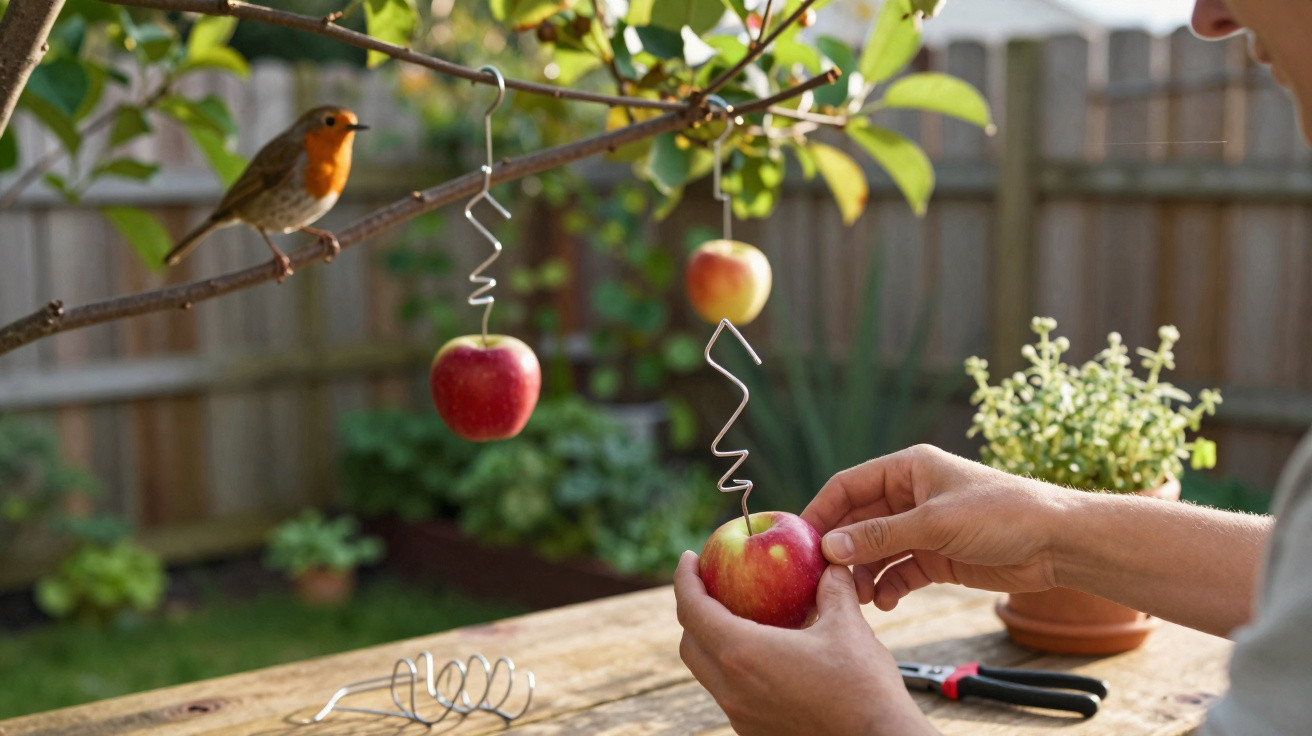
When you look out of the window in spring, you can see birds busily building nests and searching for food. At precisely this time, they are often short of energy. Rather than buying expensive feeding stations, you can make a sturdy, free bird feeder in minutes with a simple trick: use an unremarkable wire coat hanger that would otherwise only take up room in the wardrobe.
Why a metal coat hanger is ideal for an improvised bird feeder
Many coat hangers from dry cleaners are made from very thin metal wire. This material is surprisingly well suited to the garden: it is lightweight, withstands rain and wind, yet can still be bent easily with pliers. It can become a holder that securely supports half an apple or a fat ball, without dropping it at the first gust of wind.
“With just a few bends, a discarded wire hanger can be turned into a durable feeding spot that costs nothing and can be used for years.”
Its greatest benefit is that there is nothing new to buy. Nearly everything required is already in the home, and the instructions can be completed even after a busy day at work.
Materials: what you really need for a £0 bird feeder
Minimum effort, maximum benefit
Only a very short list of tools is needed for this construction. Many readers will already have everything at home:
- 1 thin-wire metal coat hanger, typically from a dry cleaner
- 1 pair of wire cutters or sharp pliers for trimming
- 1 pair of flat-nose pliers for secure bending
- 1 halved apple or 1 fat ball for wild birds
Nothing else is necessary. With a little force and the pliers, the wire can be shaped, then remains firm and holds the food reliably. The result is a kind of airborne “mini restaurant” that can simply be hung from a branch.
Which birds benefit from this homemade feeding station
Small garden helpers with big appetites
Many species welcome an additional food source, especially in spring and late winter. Common visitors include:
- blue tits and great tits
- chaffinches and greenfinches
- robins
- house sparrows
These species cope well with narrow hanging constructions because they are quick and agile. A slim wire hanger with food is ideal for them, while larger birds and ground-feeding visitors will often stay away.
“Narrow hanging food holders encourage agile songbirds while making it harder for larger species and predators to raid the buffet.”
These birds also do valuable work in the garden. By eating caterpillars, aphids and other pests, they support ecological balance and can often reduce the need for chemical products.
A finished wire bird feeder in three minutes
Step 1: Prepare a stable hook
First, clear the work surface and set out all the items. Then prepare the hanger:
- Use flat-nose pliers to carefully undo the small wire twist directly beneath the hanger hook.
- Pull the wire apart until it forms one long, straight length.
- Leave the large hook at the top in its original shape, as it will later hang from the branch.
- Firmly squeeze the base of the hook together with the pliers so it cannot open in windy conditions.
The hook provides a secure anchor point in the tree. The more neatly it is formed, the more steadily the food will hang and the more easily birds can land.
Step 2: Shape the holder for an apple or fat ball
The long section of wire below the hook now becomes the actual food holder. There are two straightforward versions, depending on the “menu”:
| Option | Shape | Suitable for |
|---|---|---|
| U-shape / point | Bend the wire end upwards and form a U-shape or a sturdy point | Half an apple, pear or other firm fruit |
| Spiral / basket | Twist the lower end into a spiral to create a close-fitting round “pocket” | Fat balls and smaller food balls |
For the fruit version, later push the apple half directly onto the point or place it in the U-shaped cradle. For a fat ball, slide the ball into the spiral basket. It is important that it fits tightly and cannot slip out as it swings.
One detail must not be overlooked: use the pliers to bend sharp wire ends inwards. This allows birds to land without injuring their feet.
The best garden location: safe and easy to spot
Where the improvised bird feeder should hang
Even the most attractive feeding station is of little use if it is placed badly. Three aspects matter:
- Height: Position it two to three metres above ground level, so cats and other predators have little chance of reaching it.
- Visibility: Provide a clear approach route, while keeping it close to branches where birds can take cover.
- Distance from windows: Keep it at least ten metres away from large glass surfaces to prevent collisions.
A sturdy branch on a decididuous or fruit tree is ideal. The hanger hook will sit securely there, while birds can quickly retreat into the foliage if disturbed.
“Hanging feeding stations close to windows risks collisions - a few extra metres of distance can save lives.”
Benefits for the environment, your budget and everyday life
Recycling instead of plastic waste
Many shop-bought feeders are plastic and fail after one or two winters. In practice, this improvised wire-hanger holder lasts noticeably longer. Although metal will corrode over time, it usually remains usable for years and does not leave colourful plastic waste in the flower bed.
At the same time, it gives a new purpose to an item that might otherwise be thrown away. This form of upcycling reduces demand for new products as well as transport and packaging requirements: small everyday steps that can quickly make a difference.
What to consider when feeding wild birds
Even with such a simple design, it is worth keeping a few conditions in mind:
- Use only food specifically suitable for wild birds.
- Avoid salted or seasoned leftovers and bread.
- Remove rotten fruit and rancid fat balls immediately.
- Regularly clear food remains from the ground below the bird feeder.
Replacing the apple or fat ball every few days helps prevent disease and ensures that only fresh food is available.
More simple, wildlife-friendly garden projects
Other ideas requiring very little effort
The wire-hanger feeding station is just one example of how everyday objects can quickly be used to create habitats. A similar approach can be used to make:
- small insect hotels from old bricks and bamboo canes
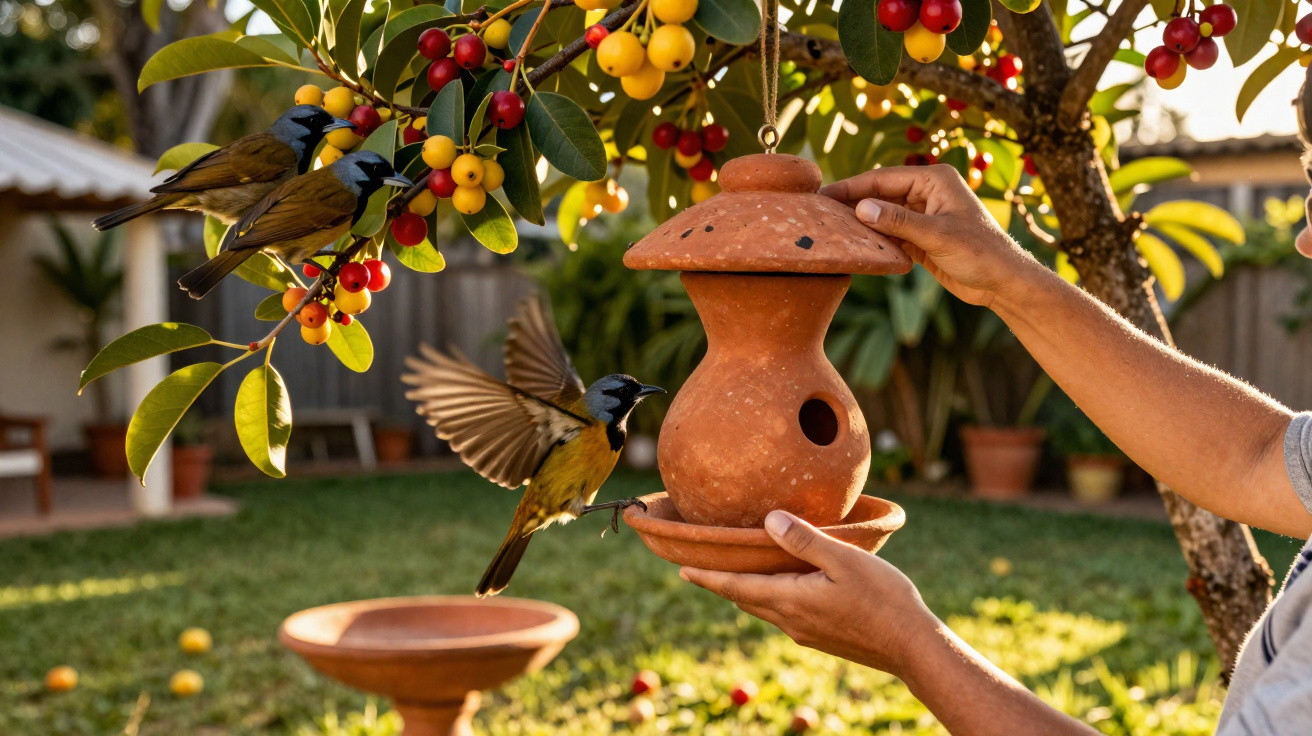
- bird drinking bowls from unwanted ceramic bowls
- jar lids as miniature water stations for bees
These small additions need very little time, yet they noticeably change the activity in a garden: more birds, more insects, more movement, and a closer view of what would otherwise remain hidden in the shrubs.
Anyone who has watched the first tit cautiously settle on a homemade food holder will often reach straight for another old hanger. A simple craft idea can soon become a permanent feature of the garden, complete with a quiet daily nature show right outside the patio door.


Comments
No comments yet. Be the first to comment!
Leave a Comment