
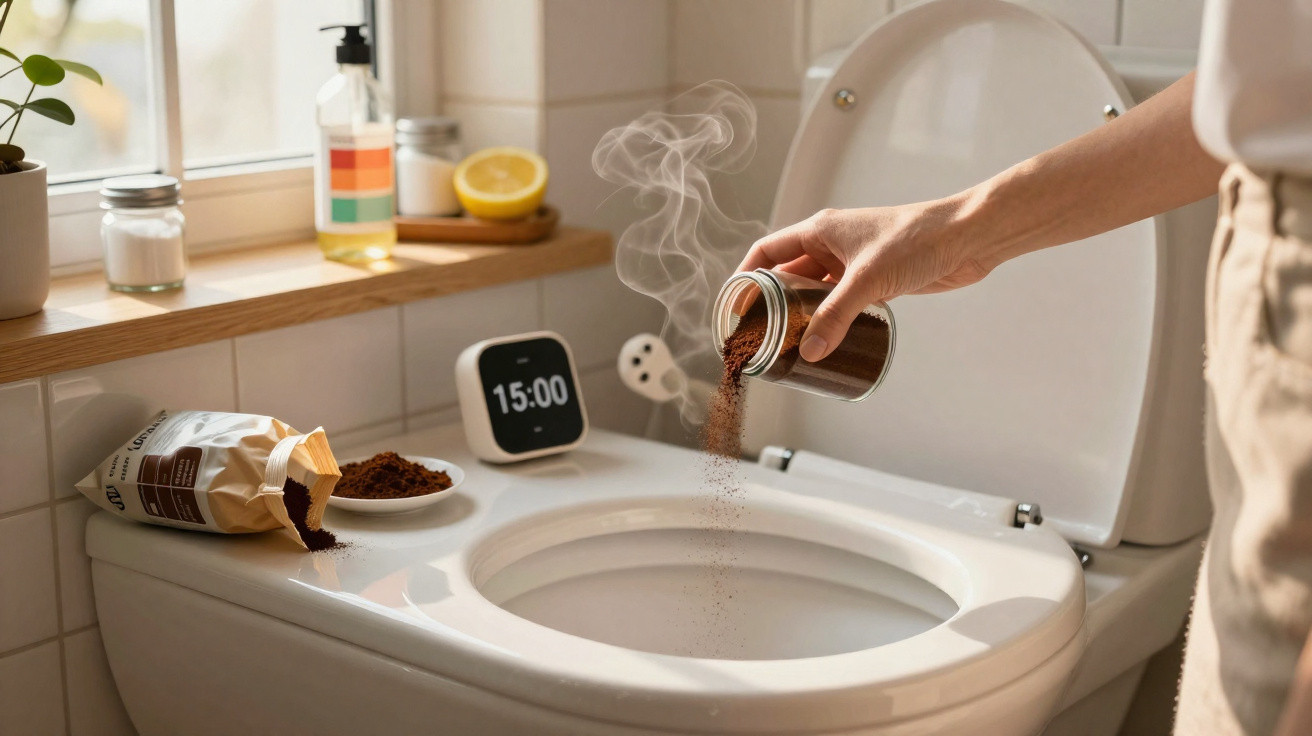
Many people clean the bathroom regularly yet still feel frustrated: just before guests arrive, the toilet does not smell as pleasant as they would like. Expensive fragranced toilet blocks and harsh cleaning products are not the only answer. A simple cupboard staple can transform the air in the loo surprisingly quickly – without leaving behind a chemical-lab smell.
Last-minute freshness before visitors: what matters most
When guests are due, most people focus first on the living room, kitchen and dining table. The toilet often slips further down the to-do list – even though visitors notice its smell very clearly. The impression made by the bathroom often influences how well cared for a home feels.
Regular cleaning is still essential, of course. Even so, odours can linger in the drain, toilet bowl or room air. In that case, a quick burst of freshness is needed: one that feels clean and subtle rather than strongly artificial.
“With a simple kitchen product, the smell in the toilet can change in around 15 minutes, making many people think of a hotel bathroom.”
Coffee in the toilet: how this quick freshness trick works
For many people, coffee is as much a part of the morning as checking their phone. What is less widely known is that it can work wonders in the bathroom too. The robust aroma of the grounds does more than mask unpleasant smells; the compounds they contain can also bind them to some extent.
Step-by-step guide to the coffee trick
For an emergency refresh before visitors arrive, ordinary ground coffee is enough. Ideally, it should not be freshly ground, but should still retain its aroma.
- Sprinkle 2–3 teaspoons of ground coffee directly into the toilet bowl.
- Close the lid so that the aroma collects around the bowl.
- Leave it for around 10–15 minutes.
- Flush thoroughly once, adding a little warm water if desired.
Afterwards, the bathroom should smell noticeably more pleasant, often slightly like a café – just without the cake counter. If you like, place a small open bowl containing some ground coffee on the cistern or basin as well. It works as a natural room fragrance.
“Coffee does not merely neutralise toilet odours in the short term; it can leave the room smelling noticeably fresher for several hours.”
When the coffee trick is particularly useful
- When unexpected visitors are on their way and there is no time for a thorough clean.
- After a particularly smelly use of the toilet, especially in small flats.
- In guest bathrooms without windows or with poor ventilation.
- In rented homes where the drain regularly smells musty.
Coffee will not, of course, be enough for toilets with heavy limescale or visible dirt. It is a freshness boost, not a complete cleaning product.
Natural alternatives: what else helps with toilet odours?
Anyone without leftover coffee at home, or who dislikes its scent, can use other household remedies. Three kitchen staples have proved reliable for years: bicarbonate of soda or baking powder, vinegar and citric acid. As well as cleaning the bowl, they help create a more neutral smell.
Bicarbonate of soda and vinegar: a fizzing cleaning combination
The combination of bicarbonate of soda, or ordinary baking powder, and vinegar is almost a household standard for people who want to avoid aggressive cleaners.
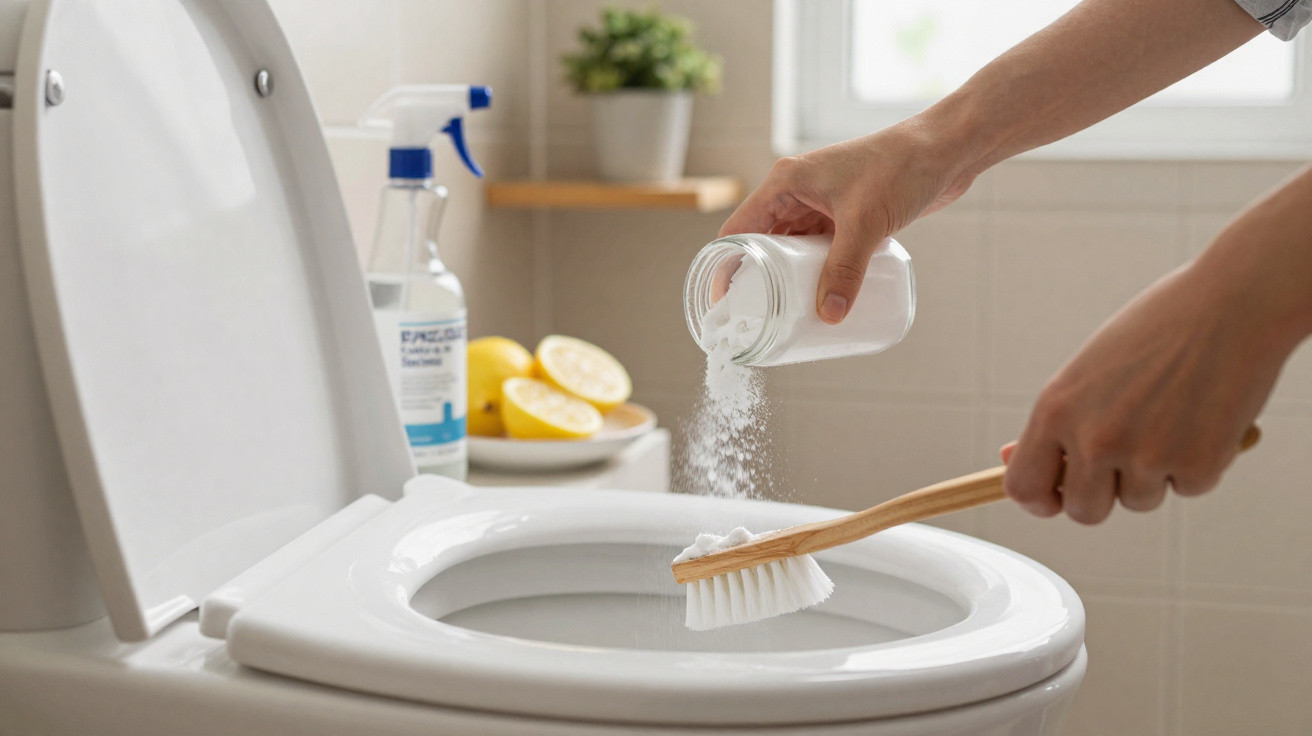
- Put roughly half a cup of bicarbonate of soda into the toilet bowl.
- Pour in one glass of vinegar, preferably white household vinegar.
- The mixture will start to fizz, helping to loosen deposits and dirt.
- Leave it to work for several hours or overnight.
- The next morning, scrub with the toilet brush and flush.
The foam loosens marks around the bowl and lighter limescale deposits. At the same time, the characteristic toilet smell fades away. This mixture is well suited to regular deep cleaning, particularly in hard-water areas.
Citric acid: a shinier bowl with less limescale
Citric acid powder is available in almost every supermarket. In the bathroom, it is particularly effective against limescale rings and urine scale.
- Add three tablespoons of citric acid powder to the toilet bowl.
- Pour over a little warm water so the powder disperses properly.
- Let it work for 15–30 minutes, or longer where limescale is severe.
- Scrub with the brush and flush.
The benefit is that the bowl not only looks cleaner afterwards, but also smells much fresher. Its fragrance is less intense than coffee, instead giving more of an impression of lemon and cleanliness.
“Unlike some strong toilet cleaners, citric acid does not irritate the nose or airways and can be used regularly.”
If the odour remains: check the drain and everyday habits
Sometimes even the best kitchen-based trick only works briefly. In those cases, the cause is often more than an overlooked toilet bowl. Common reasons include:
- Toilet paper remnants or wet wipes in the drain.
- Flushing too infrequently or using too little water.
- Blocked ventilation or a lack of short, thorough airing.
- A damp bathroom mat or old towels that smell stale.
Anyone experiencing recurring odour problems should have the trap and ventilation checked. In blocks of flats, the entire pipe system may also be affected. It is then worth speaking to the property manager before pouring litres of drain cleaner down the pipes.
Tips for a consistently fresh toilet – without overdoing the fragrance
A bathroom does not need to smell like a cloud of perfume to be perceived as clean. A neutral, gently fresh scent is entirely sufficient. A few simple habits can make this fairly easy to achieve.
| Problem | Simple measure |
|---|---|
| Musty underlying smell | Air the room regularly; opening the window wide briefly is better than leaving it tilted, and wash textiles more often. |
| Strong smells after use | Use the coffee trick or place a bowl of bicarbonate of soda beside the bowl. |
| Limescale rings and urine scale | Leave citric acid or a bicarbonate of soda and vinegar mixture to work once a week. |
| Smell coming from the drain | Run hot water through regularly and, if necessary, have it checked by a specialist. |
What to consider when using household remedies
As useful as coffee, bicarbonate of soda and citric acid are, they should not be used without a little thought. Coffee, for instance, may leave traces in the bowl when used in large quantities, especially in older toilets. Anyone using the trick should always flush thoroughly and, where needed, give the bowl a quick scrub afterwards.
Vinegar also requires some care: it is not compatible with every metal. If larger quantities reach taps or metal components in the cistern, damage can develop over time. Applying it directly and carefully inside the bowl avoids this issue.
Practical routines for reluctant cleaners and busy people
Those who dislike cleaning or have very little time are best served by low-effort routines. For example, add some bicarbonate of soda and vinegar to the bowl shortly before bed, then close the lid. In the morning, a quick pass with the brush and one flush are all that is needed.
Before expected visitors arrive, one or two teaspoons of coffee can then provide the finishing touch for the smell, while the actual cleaning has already been done. The bathroom will look well cared for without requiring a last-minute cleaning marathon.
For sensitive noses, a mixture of citric acid and warm water is a suitable alternative. It cleans while adding a light, clean fragrance that is less dominant than coffee – an advantage where guests are quick to find smells unpleasant.




Comments
No comments yet. Be the first to comment!
Leave a Comment