
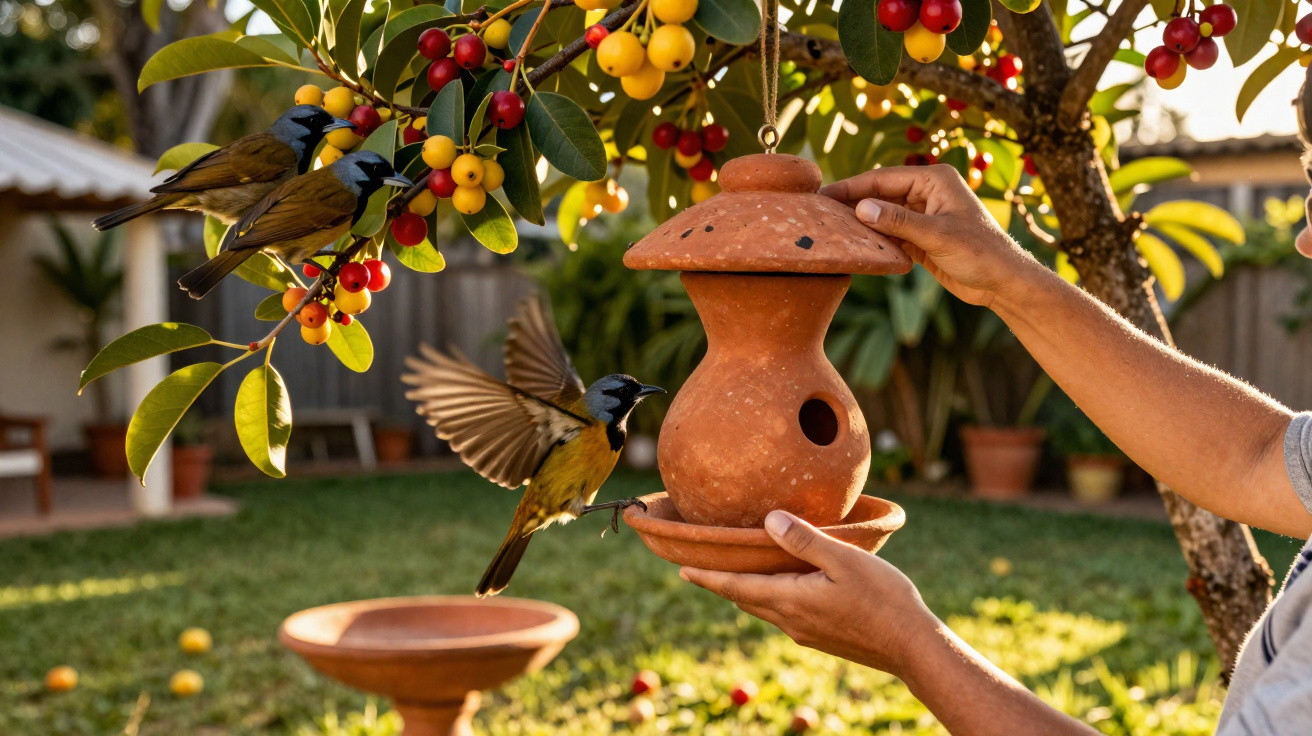
Anyone with a fruit tree in the garden can attract thrushes and sparrows with one straightforward addition that can transform the setting. These birds seek out peaceful places with shade, natural food and easy access to clean water. Once they find these conditions, they are more likely to visit the garden regularly, making it feel livelier, more balanced and more pleasant throughout the day.
Why do thrushes and sparrows like gardens with trees?
Thrushes and sparrows favour places that provide both comfort and safety. Fruit trees create shaded spots and offer natural shelter from intense heat and potential predators. The ground around them also tends to contain seeds, insects and small fallen fruits, all of which form part of these birds’ diet.
The calmness of the setting is another key consideration. Quiet gardens with varied planting make birds feel better protected. When the area is left undisturbed and does not have excessive activity, visits become more frequent in every season.
What helps attract birds to a fruit tree?
The most suitable addition is a shallow container of clean water placed close to the tree’s branches. This small measure quickly catches the attention of wild birds, especially during hot weather. It provides water for drinking as well as a place to cool their feathers during the day.
A few details can make the garden even more appealing to birds:
- Low-sided containers make access easier for smaller birds.
- Replacing the water every day keeps the area healthier.
- Adding small stones gives birds a secure place to perch.
- Placing the container near the foliage creates a sense of natural protection.
How can you make the garden more attractive to thrushes and sparrows?
Alongside fresh water, it is important to retain natural features in the garden. Dry leaves on the ground allow sparrows to search for seeds, while dense branches provide safe places to rest. The more natural the environment is, the greater the presence of wild birds is likely to be.
Simple measures can help create a more welcoming space for birds:
- Avoiding pesticides protects insects that birds use as food.
- Planting flowers increases the activity of small creatures in the garden.
- Keeping green areas helps birds feel secure.
- Moderate pruning helps preserve sheltered spaces.
What can drive wild birds away from the garden?
Constant noise, heavy footfall and dirty water containers can quickly deter thrushes and sparrows. Before staying, these birds assess their surroundings and avoid areas that appear risky or uncomfortable. The regular presence of predatory animals also greatly reduces visits.
Garden upkeep is another important factor. Dry spaces without vegetation, or those treated with excessive chemical products, are less appealing to different species. When the garden provides natural balance, shade and fresh water, the fruit tree becomes a genuine meeting point for wild birds.



Comments
No comments yet. Be the first to comment!
Leave a Comment