
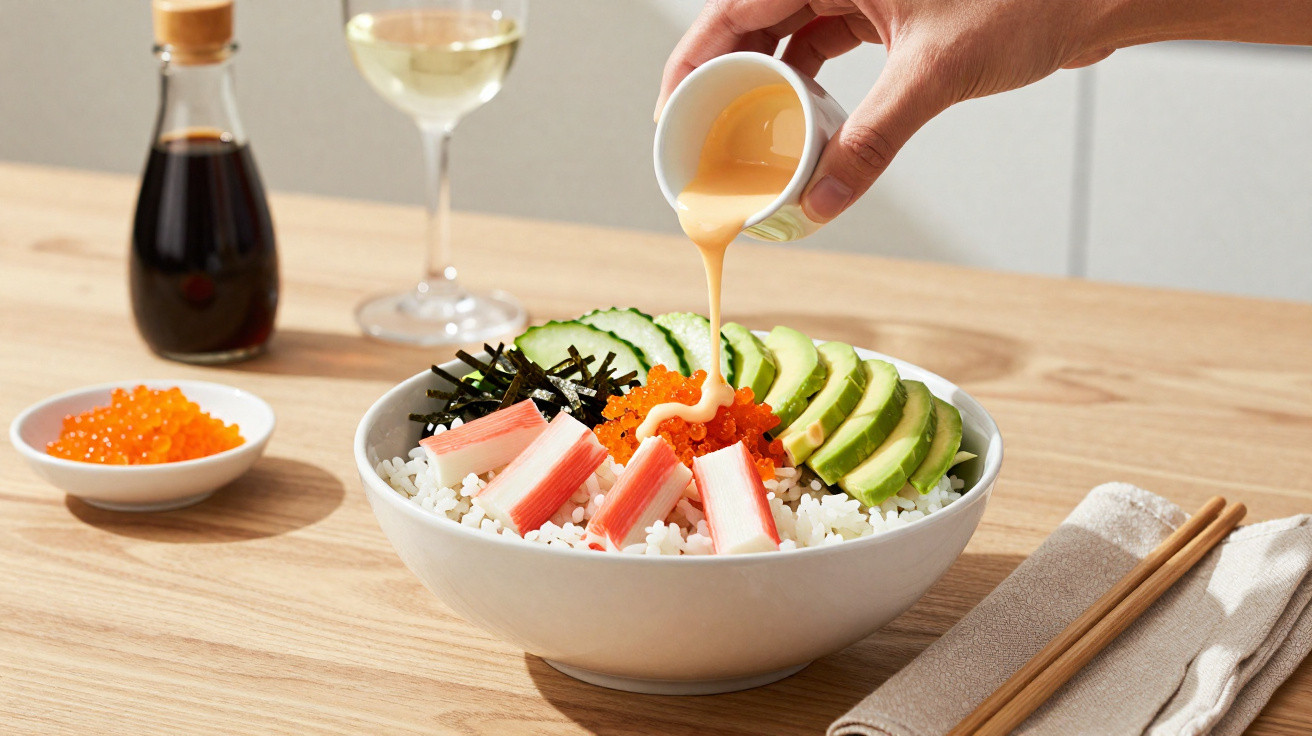
Active time: 20 minutes
Total time: 55 minutes
Serves: 4
Why this recipe works
- A fiery Kewpie mayonnaise and sriracha sauce coats the imitation crab, creating a creamy topping with the heat and richness associated with a classic California roll.
- Seasoned sushi rice and gently vinegared cucumber bring freshness and brightness to the bowl.
- Diners can tailor their bowls with toppings such as avocado, furikake, masago and roasted seaweed snacks.
These Spicy California Roll Bowls capture all the appeal of a spicy California roll, without any need to roll sushi. Warm, seasoned sushi rice forms the base for a creamy kani, or imitation crab, salad dressed with Kewpie mayonnaise, sriracha, toasted sesame oil and a little rice vinegar for subtle sweetness. Crisp cucumber, rich avocado and spring onions are added, before a scattering of crunchy furikake provides contrasting texture. Serve with roasted seaweed snacks, which can be used to scoop up the ingredients much like temaki. Masago is optional, although its salty, oceanic burst gives the bowl a sushi-bar character.
Although this recipe does not involve rolling, thoroughly rinsing the short-grain sushi rice remains important. This removes excess starch from the surface, helping the grains cook fluffy rather than overly sticky or gluey.
The bowls are highly adaptable. Replace the kani with sushi-grade ahi tuna, salmon or cooked prawns, or choose tofu for a vegetarian version. If Kewpie is unavailable, ordinary mayonnaise can stand in, though it will not have quite the same distinctive richness. These bowls make an excellent desk lunch but are filling enough for dinner as well. They also suit meal prep: prepare the rice and kani salad ahead, then cut the avocado immediately before serving to keep it fresh and bright.
What is masago?
Masago is capelin roe, from a type of smelt that lives in cold northern waters. It is frequently labelled and sold as smelt roe. In Japanese cuisine, masago is commonly used as a sushi garnish or filling, contributing a mild saline flavour and a crisp pop of texture. The roe is naturally pale yellow, or light and translucent, but producers often dye it orange and occasionally other colours. Find it in the chilled or frozen seafood aisle of a Japanese grocer, or buy it online.
Types of imitation crab
Imitation crab is generally made with surimi: a paste of deboned, minced and usually washed or refined white fish, blended with starches, egg whites and proteins, flavourings and colourings. Supermarkets often sell several formats, which vary between brands. Flake-style imitation crab separates into fine, delicate strands and is popular in sushi bowls, crab salads and dips because it blends easily. Stick-style products are firmer and can be sliced for traditional California rolls or eaten as a snack. Chunk-style pieces are thicker and particularly suitable for hot dishes.
Notes from the Food & Wine Test Kitchen
- Use any remaining masago in omelettes, stirred through pasta, or over cheese and crackers.
- Substitute cooked prawns, smoked salmon, tinned tuna or tofu for the imitation crab.
- Keep leftover masago in the fridge or freezer.
Suggested pairing
Serve your California roll in a bowl with a fuller-bodied, richer-style sake, such as Bōken Ringo Junmai Ginjo.
This recipe was developed by Justin Chapple; the text was written by Andee Gosnell.
Ingredients
Original recipe (1X) yields 4 servings.
- 475 ml water
- 285 g short-grain sushi rice, thoroughly rinsed and drained
- 3/4 teaspoon kosher salt, divided
- 180 ml Kewpie mayonnaise
- 3 tablespoons sriracha
- 1 tablespoon toasted sesame oil
- 60 ml plus 1 1/2 tablespoons seasoned rice vinegar, divided
- 450 g flake-style kani (imitation crab), cut into 2.5 cm pieces
- 2 tablespoons masago (optional)
- 1 small cucumber, thinly sliced (about 475 ml)
- 1 avocado, thinly sliced
- Furikake and thinly sliced spring onions, to garnish
- Roasted seaweed (nori) snack sheets, to serve
Method
Place the water in a medium saucepan and bring it to the boil over a high heat. Add the rice and 1/2 teaspoon of the salt, then bring back to the boil. Turn the heat down to low, cover and cook without disturbing until the rice is tender and the water has been absorbed, about 20 minutes. Take off the heat and leave to steam, still covered, for 15 minutes.
While the rice cooks, whisk the mayonnaise, sriracha, sesame oil, 1 tablespoon of the vinegar and the remaining 1/4 teaspoon salt in a large bowl. Spoon 120 ml of the mayonnaise mixture into a small bowl and reserve. Add the kani to the remaining mayonnaise mixture and toss until coated. Mix in the masago, if using, and set aside. In a medium bowl, combine the cucumber with 1/2 tablespoon rice vinegar, then set aside.
Loosen the rice with a fork. Pour the remaining 60 ml vinegar over it and carefully fold it through with a wooden spoon. Divide the rice between 4 bowls, then top each with equal amounts of the kani mixture, cucumber and avocado. Finish with furikake and spring onions, and serve alongside the roasted seaweed snack sheets and reserved mayonnaise mixture.
Make ahead
The rice, crab mixture and sliced vegetables, excluding the avocado, can be prepared up to one day ahead. Keep them separately in airtight containers in the fridge. The mayonnaise sauce can be made up to three days beforehand and refrigerated in an airtight container.





Comments
No comments yet. Be the first to comment!
Leave a Comment