
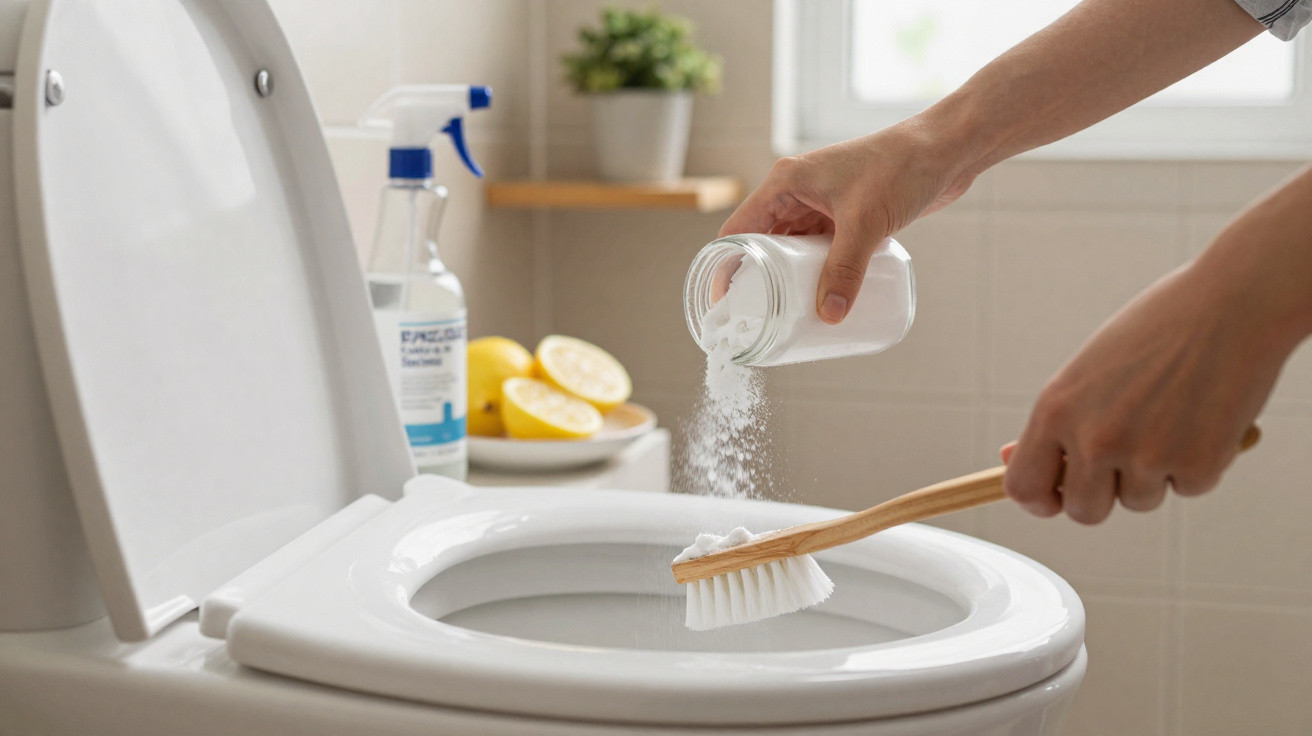
Adding bicarbonate of soda to the toilet bowl once a week can neutralise unpleasant smells, loosen light dirt and lessen surface marks that ordinary disinfectant does not always remove by itself. Bicarbonate of soda acts as a mild abrasive and deodoriser, making it useful for maintaining the ceramic between more intensive cleans. It is not a replacement for disinfection where there is a contamination risk, but it can improve cleaning around the base, inner rim and waterline.
What does bicarbonate of soda tackle in the toilet bowl?
Bicarbonate of soda primarily works on odours, organic residue and grime clinging to the porcelain. Although many disinfectants add fragrance and reduce microorganisms, bicarbonate of soda can help lift the dull film that traps smells and leaves the bowl looking dirty.
It can also help remove light stains caused by standing water, minerals and everyday use. Its effect is limited on old rust marks or hard limescale deposits; in those situations, a cleaner formulated for the particular type of build-up is needed.
What is the right amount of bicarbonate of soda to use?
For weekly maintenance, add roughly 120 ml of bicarbonate of soda straight into the toilet bowl. This is enough to cover the water and some of the inner sides without creating an excessive amount of powder or wasting product.
For best results, follow this straightforward process:
- Pour 120 ml of bicarbonate of soda into the bowl.
- Use the toilet brush to spread the powder over the inner sides.
- Focus brushing on the waterline and the bottom of the bowl.
- Leave it to work for 10 to 15 minutes before flushing.
- Brush again if any odour or visible marks remain.
How long should bicarbonate of soda be left to work?
For routine cleaning, the recommended contact time is 10 to 15 minutes. This gives bicarbonate of soda time to neutralise odours and soften some of the dirt before the final scrub.
If the toilet bowl has a stronger smell or light staining, it can be left for up to 30 minutes. There is no need to leave it overnight as part of a weekly routine, as the additional cleaning benefit is usually small and the process becomes less convenient.
How can it be combined safely with other ingredients?
Bicarbonate of soda can be used with white vinegar to create fizzing that helps loosen dirt beneath the inner rim. Put the bicarbonate of soda in the bowl first, then add the vinegar; do not combine them in a container before applying them.
To boost the cleaning effect, proceed carefully:
- Add 120 ml of white vinegar after the bicarbonate of soda.
- Wait for the foam to settle before brushing.
- Leave it for a further 10 minutes, then flush.
- Choose citric acid instead of vinegar where limescale is more noticeable.
- Never mix vinegar, bicarbonate of soda or acids with bleach or chlorine-containing products.
How often should the toilet bowl be cleaned this way?
Once a week is a suitable frequency for bathrooms with normal use. In homes with many occupants, limited ventilation or highly mineralised water, it can be applied twice a week, always followed by brushing and a full flush.
Consistent cleaning delivers the best results: bicarbonate of soda for odours and light dirt, vinegar or citric acid for mineral deposits, and a suitable disinfectant when proper sanitising is required. This keeps the toilet bowl freer from stains, trapped smells and porcelain build-up without relying on harsh products for every clean.





Comments
No comments yet. Be the first to comment!
Leave a Comment