
Many hobby keepers initially blame unsuitable feed or stress. Yet the real cause is often an inconspicuous nocturnal pest: the red poultry mite. It hides in timber, cracks and beneath perches by day, then secretly feeds on blood at night. Anyone who reaches only for bottles and sprays will spend a great deal and rarely solve the issue for good. A simple addition to the run can very often turn things around.
The unassuming dust bath that keeps mites under control
Anyone who watches chickens for any length of time will notice a striking habit: in dry spots, they happily roll in soil and dust, scratch out shallow hollows and lie there in complete relaxation for minutes at a time. To an inexperienced observer, this may look like “a spa treatment”, but it is actually highly effective body care.
“A purpose-made dust bath in the run acts like a natural anti-mite shower – without chemicals and without causing the birds stress.”
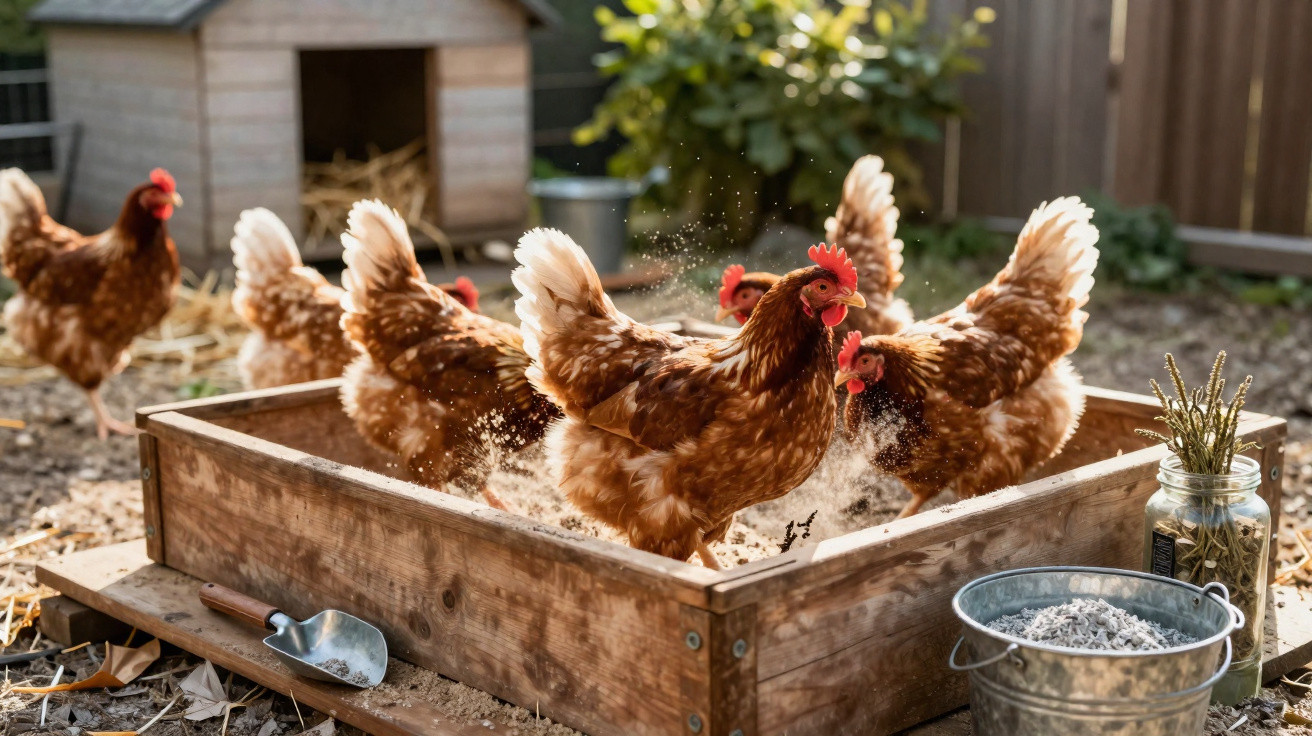
The fine particles work their way down to the skin, dislodge larvae and eggs, absorb surplus skin oils and deprive parasites of the conditions they need. Red mites in particular, along with other external pests, cope poorly with such a dry setting. Providing a good dust bath helps chickens protect themselves, making it an important part of keeping the coop low in mites.
Water baths, by contrast, offer chickens very little benefit. Wet plumage loses its insulating properties, chills more quickly and creates an ideal environment for bacteria and mites. Birds that remain damp are more susceptible to illness, which only makes problems in the coop worse.
The ideal dust bath: what it really needs
No costly equipment is necessary to set one up in the run. Selecting a suitably sized container, using the correct filling and choosing a dry location are far more important.
Suitable containers
- A sturdy wooden box with no gaps in its base
- An old mortar tub or large plastic container
- A shallow livestock or feed trough
- A discarded sandpit shell, using one half only and cleaning it thoroughly
The sides should be high enough for the chickens to roll about properly without immediately scattering all the material outside. For a small flock of four to five birds, dimensions of around 50 x 50 centimetres and a depth of roughly 15 centimetres have proved effective. This lets several hens squeeze in at once, which noticeably improves acceptance.
A recipe for an effective filling
The filling determines how well the dust bath works against mites. A dry, fine blend that moves easily through the feathers is ideal. This tried-and-tested basic recipe is for a larger bath:
- 10 litres of fine, dry, sieved sand
- 5 litres of sieved wood ash, from untreated wood only
- 5 litres of very fine garden soil without stones
Sand acts as a natural exfoliant. As the birds move, it mechanically loosens larvae, lice and other pests from their plumage. Wood ash penetrates deeply, dries out the parasites’ surroundings and may effectively suffocate them. It also absorbs excess skin oil. The fine soil binds the ingredients into a pleasantly loose yet shapeable mix in which the birds are happy to lie for longer.
“Absolute dryness is essential: even slightly damp mixtures lose their effect and quickly turn into sticky mud.”
The best location in the run
For the dust bath to remain effective, it needs the right position. A dry, sheltered area protected from rain is ideal. Suitable places include:
- beneath the covered section of the run
- directly beside or underneath the coop, provided rain cannot reach it
- under a solid roof or a small homemade shelter
If rain gets into the container, the fine powder becomes mud, which neither helps against mites nor appeals to the birds. Anyone who already has a covered scratching area can simply incorporate the dust bath there. The only requirements are that chickens can step in and out easily and have sufficient room to jostle around.
Keeping the dust bath hygienic and effective over time
Chickens do not use a dust bath solely for personal care. They also leave droppings and feathers behind. Without maintenance, the mixture loses its effectiveness fairly quickly. A few simple tasks will keep the bath usable for a long time.
A short weekly routine
- Use a small rake or hand trowel to break up compacted areas.
- Remove heavily soiled corners, droppings and damp patches.
- Top up with fresh material when needed.
Once the filling feels heavy, clumpy or noticeably damper, it is worth replacing it completely. A grey, dull appearance and a musty smell are also signs that the material is spent. The old mixture can be added to the compost without difficulty, as the parasites cannot survive there without a host.
“Many keepers report that scratching and feather pecking decrease significantly within just a few weeks of introducing a dust bath.”
How keepers can tell when mites are involved
Not every restless behaviour in the coop is caused by mites. However, certain signs point clearly in that direction:
- Chickens scratch and preen themselves unusually often.
- Their plumage looks untidy, with some areas becoming thin.
- Egg production falls, and eggs become fewer or smaller.
- Birds are unsettled on the perch in the evening and frequently change position.
- On light-coloured birds, tiny red spots may be visible on the legs or beneath the wings.
Shining a torch onto perches and into cracks in the coop at night will often reveal whole “columns” of pests when an infestation is severe. At that stage, the coop must be cleaned thoroughly, the perches treated with a flame or appropriate products, and a good dust bath provided at the same time. This combination noticeably curbs the population.
Why chemicals alone are rarely the answer
Shops are full of anti-mite sprays, powders and concentrates. They certainly have a place, particularly in the event of a major infestation. However, those who rely on them alone often face exactly the same problem again a few weeks later. Mites persistently conceal themselves in gaps in wood, lay eggs and become active again after treatment.
A well-maintained dust bath works differently: it supports the birds’ natural self-care every day. Rather than tackling parasites only at isolated moments, it creates conditions in which they generally struggle to thrive. This reduces the pressure within the flock and allows chemical products to be used more selectively and less often.
Useful additions around the dust bath
Anyone wanting to make life easier for their chickens can combine the dust bath with other measures. Practical examples include:
- Perches made from smooth timber that is easy to clean, treated regularly with hot water or a flame.
- Coop interior surfaces designed with as few gaps as possible, for example using smooth boards or well-fitted strips.
- Bedding replaced regularly, especially in summer and during damp weather.
- Herbs such as wormwood, thyme or lavender placed loosely in bedding and nest boxes; while they do not repel every parasite, they can provide support.
One term that often comes up in this context is the “red poultry mite”. It is not directly related to chicken fleas, but behaves in a similar way. It remains hidden in cracks during the day, travels onto the bird at night to feed on blood, and then retreats again. This is precisely where the dust bath helps: it dries out the parasites’ surroundings while the birds simultaneously give their skin intensive care.
For newcomers to chicken keeping, a dust bath can seem like a pleasant extra. In practice, it soon becomes clear that this simple dust bath belongs among the essential equipment in every well-managed run, just as much as feeders, water and perches. Once it has been introduced properly, few keepers would want to be without it.



Comments
No comments yet. Be the first to comment!
Leave a Comment