
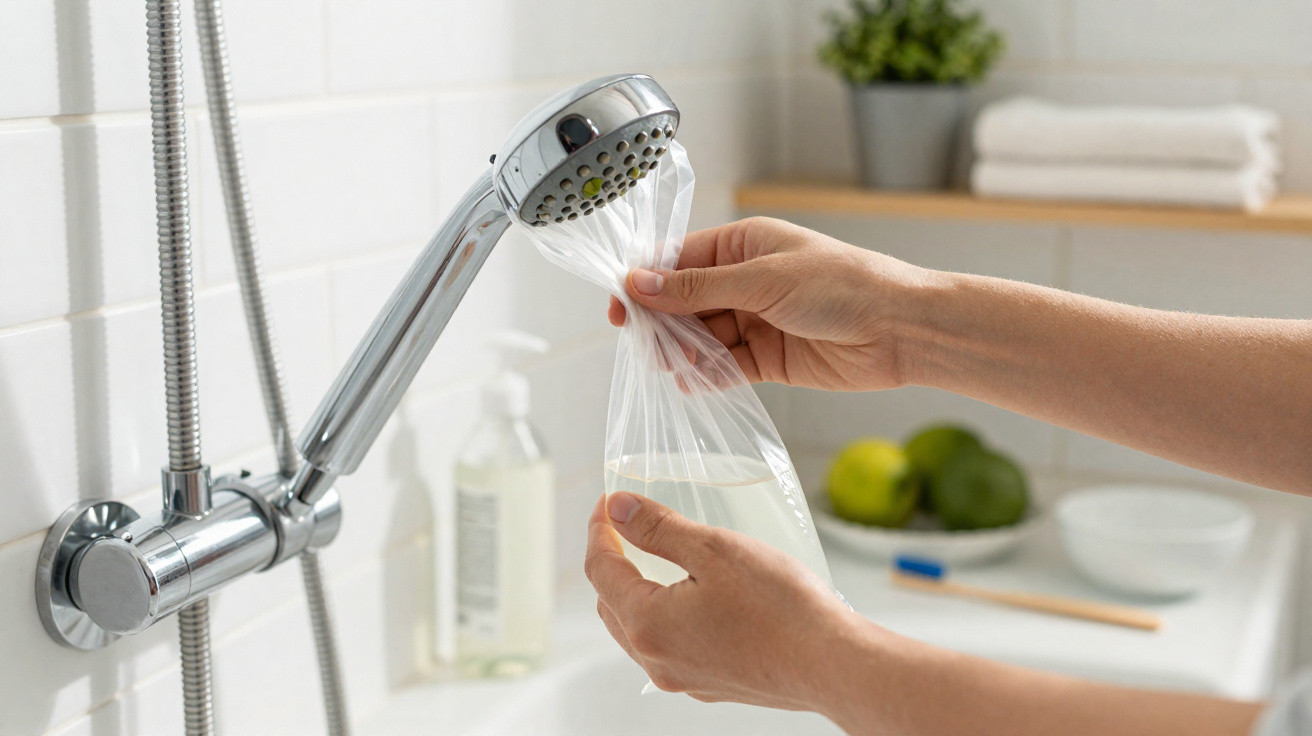
The showerhead holes can collect limescale, soap residue and minerals found in the water, particularly in areas with harder water. Once these tiny openings become blocked, water pressure drops, the spray becomes uneven and the shower feels weaker even when there is no issue with the plumbing.
Why do showerhead holes become blocked?
Blockages usually develop when calcium, magnesium and other minerals dry onto the showerhead. Over time, this whitish coating hardens and obstructs some of the water outlets.
Limescale also adheres more easily if the bathroom has limited ventilation or if the showerhead remains damp after every use. This is why the issue may return even after a quick clean.
How does white vinegar restore water pressure?
White vinegar is used because its acidity helps loosen mineral deposits built up in the showerhead holes. In most cases, the method does not require the fitting to be dismantled and can be carried out with simple household items.
- Fill a sturdy plastic bag with white vinegar, or with a mixture of vinegar and warm water.
- Place the bag over the showerhead so that it covers the holes.
- Secure it with an elastic band, string or cable tie to prevent leaks.
- Leave it to work for at least 30 to 60 minutes, or longer if there is heavy limescale build-up.
- Remove the bag and run the water to flush away any loosened residue.
When should you scrub the showerhead holes?
After soaking in white vinegar, some openings may still be partly blocked. If so, an old toothbrush or a soft brush can help remove crusted deposits lodged in the rubber or metal.
If the spray is still uneven, carefully use a fine needle or an opened paper clip only to clear the blocked hole. The aim is to remove the limescale, not to enlarge the showerhead holes or scratch the finish.
What precautions prevent damage to the showerhead?
A showerhead may have a chrome finish, specialist paintwork, sensitive rubber or internal plastic parts. Cleaning should therefore be done without harsh products or excessive force.
- Avoid bleach, as it can stain or damage certain finishes.
- Do not use wire wool on the holes or the outside of the showerhead.
- Test the vinegar for a shorter period on delicate metals or older fittings.
- If you remove the showerhead, note the position of the filter and seals before washing it.
- Rinse the fitting thoroughly so that no strong vinegar smell remains in the bathroom.
How can you keep the shower spray strong for longer?
Maintenance is easier when limescale is not allowed to form thick crusts. Cleaning the showerhead holes once a month can keep water pressure more consistent, especially in homes where the spray regularly becomes weaker.
After showering, wiping the showerhead with a dry cloth reduces the build-up of droplets that turn into mineral marks. Using white vinegar at the right frequency, along with gentle brushing and a final rinse, can help restore a more even water flow without replacing the showerhead.






Comments
No comments yet. Be the first to comment!
Leave a Comment