
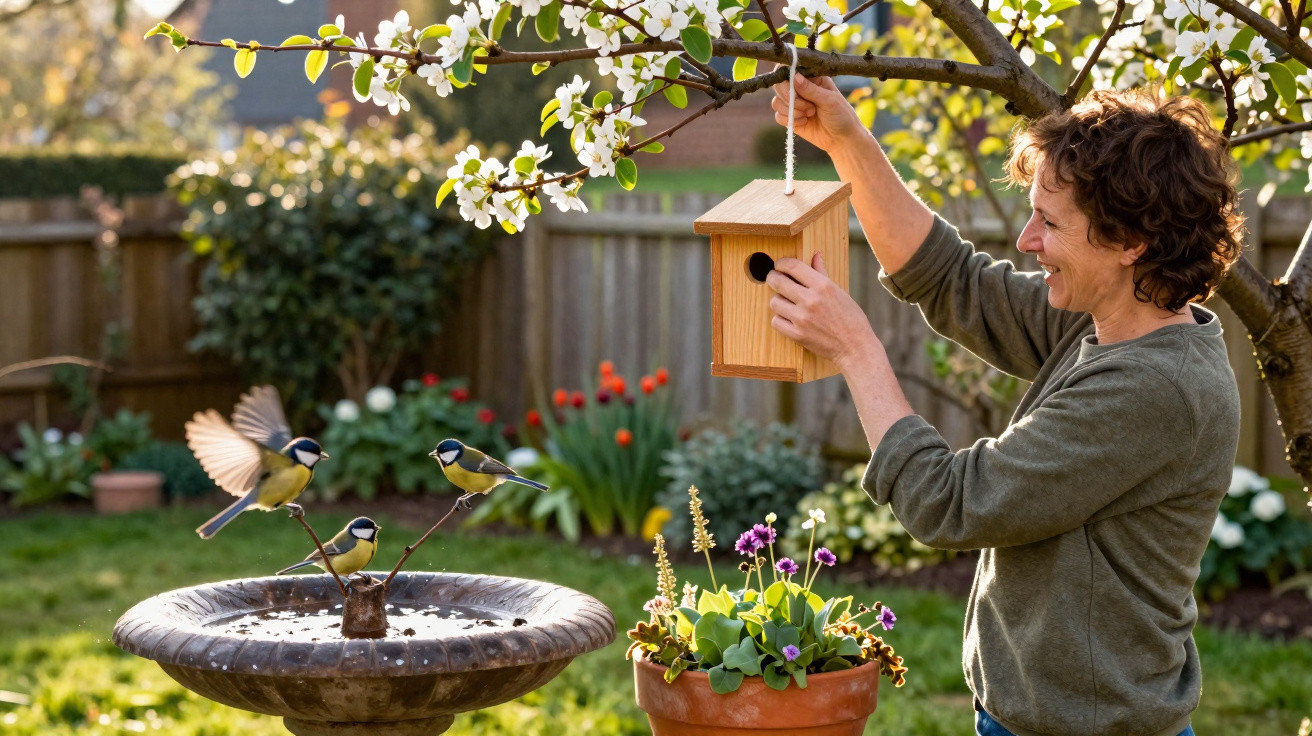
Anyone who has watched a tit darting busily back and forth early in the morning soon understands: these small birds bring activity, birdsong and even natural plant protection to any garden. With just a few carefully considered measures, an ordinary plot can become a safe haven for them – without chemicals, major effort or costly specialist equipment.
Why tits are a real asset in the garden
Tits are not merely attractive to watch; they also work behind the scenes as free gardening helpers. Great tits and blue tits in particular consume huge numbers of insects, especially during the breeding season.
“Anyone who attracts tits will reduce aphids, caterpillars and other pests – and can avoid using many garden chemicals.”
A few practical examples:
- During the breeding period, a pair of tits feeds hundreds of caterpillars to its young each day.
- Aphids on roses and fruit trees disappear noticeably more quickly when tits visit regularly.
- Spiders, mosquito larvae and small beetles are also included in their diet.
As a result, they ease the pressure not only on flower beds but also on fruit trees. Using fewer sprays also protects earthworms, wild bees and other beneficial creatures. Every garden that gives birds food and shelter becomes a small lifeline in a landscape where many species are declining sharply.
The ideal nest box: what really matters
A well-made nest box is the most important step towards encouraging tits to settle permanently. Many inexpensive models from DIY shops may look appealing, but they are unsuitable for birds or can even put them at risk.
Materials and construction
Untreated, durable timber is best, such as spruce, larch or oak. Paints and varnishes containing solvents have no place on the inside, as their fumes can harm birds. Walls around 18 to 22 millimetres thick provide protection from both heat and cold.
Key construction details include:
- A sloping roof so rainwater can run off.
- A few small ventilation holes beneath the roof edge to prevent the box from overheating.
- A hinged front or side panel to allow the box to be cleaned after the season.
- No perch in front of the entrance hole – it only makes access easier for predators.
The correct entrance-hole size for different tit species
The entrance hole determines which species will move in. If it is too large, starlings or sparrows may take over the box. If it is too small, even a blue tit will not fit through.
| Species | Recommended entrance-hole diameter |
|---|---|
| Blue tit | approx. 28 mm |
| Great tit | approx. 32 mm |
The lower edge of the hole should sit several centimetres above the floor of the box. This gives eggs and chicks better protection from cat paws and inquisitive beaks.
The best location for a tit nest box
Even the finest box will remain empty if it is positioned badly. Tits are selective about peace and quiet, height and orientation.
Height, orientation and spacing
The box should be placed at least two metres above the ground, and preferably higher. This makes it harder for cats, martens and curious children to reach.
“An east- or south-east-facing position is ideal – it provides morning sunshine without relentless midday heat.”
Practical positioning advice:
- Height: 2–3 metres above ground level.
- Orientation: East or south-east; north-east if necessary.
- Location: A quiet corner, not directly above a patio, swing or barbecue area.
- Stability: Always screw it firmly in place or secure it with strong wire brackets.
If putting up several boxes, leave at least eight to ten metres between them. Tits defend their territory and need some open space around the nest box.
The right time to put it up
Late winter to early spring is the best time to install a nest box. Birds are then exploring their surroundings and searching for breeding sites. Some tits also use boxes as overnight shelters in autumn and winter, so it is worth leaving them up throughout the year.
How to turn the whole garden into a haven for tits
A single box is rarely enough to attract a stable population of tits. The entire garden should offer food, shelter and water. A plot containing only closely mown lawn and stones is unlikely to receive many visitors.
Plants that attract tits indirectly
Tits feed mainly on insects during the breeding season. The more insects there are, the more appealing the garden becomes. Certain plants and features help create these conditions:
- Native shrubs such as elder, dog rose, privet and hawthorn.
- Flowering perennials that attract insects, including yarrow, lavender and sage.
- Areas with old wood, leaf piles or deadwood stacks for beetles and larvae.
- Avoiding a sterile lawn cut precisely short every week.
Those who allow one corner to become a little wilder often notice more bird activity within only a few months. A few metres left unmown, or a shrub that is not trimmed into perfect shape, is often enough to make room for more life.
Extra feeding and water points
Supplementary food is particularly useful in winter and during prolonged dry spells. Tits readily accept energy-rich options such as sunflower seeds, chopped nuts or special tit fat balls.
Important rules:
- Choose food without husk waste if you want to keep a balcony or patio tidy.
- Position feeding areas where cats cannot easily reach them.
- Clean bird feeders regularly to help prevent disease.
A shallow source of water is equally important. A simple bowl filled with fresh water, rinsed quickly and refilled each day, is sufficient. Birds use it not only for drinking, but also for bathing and maintaining their plumage.
Care, cleaning and small mistakes many people overlook
After breeding season, old nests, feathers and droppings remain inside the box. These materials provide an ideal home for parasites and disease-causing organisms. Cleaning is needed as soon as there is no longer any activity around the box.
“Empty it once a year while wearing gloves and rinse it with hot water – that is usually all a nest box needs.”
Cleaning products, including supposedly mild ones, should not be used in nest boxes. They may leave residues that can seriously disturb birds. Anyone with several boxes in the garden should note a fixed cleaning date in the diary, such as October or November.
Common mistakes that stop tits from moving in:
- Boxes are hung in strong winds or full midday sun.
- Entrance holes are either too large or too small.
- The box moves in the wind because it has only been tied on loosely.
- Constant noise surrounds the box, for example from a trampoline, barbecue parties or frequent traffic.
More benefits than expected: tits, children and neighbours
Creating a lively garden brings advantages on several levels. Children can see how nature works directly outside the window: nest building, breeding, feeding and young birds fledging. This often has a more lasting effect than any school textbook.
In densely built-up residential areas, several neighbours can work together to create a small network of nest boxes, shrubs and water sources. This forms a genuine corridor for birds and insects, improving entire streets. At the same time, the need for chemical plant protection falls because several gardens benefit from these busy insect-eaters.
Anyone wondering whether the effort is worthwhile should pause and notice the silence in many neighbourhoods. A few deliberate changes, a well-positioned nest box and a wild corner instead of a gravel desert – and birdsong can suddenly be heard again. That is precisely why tits will gladly arrive in numbers when conditions are right.




Comments
No comments yet. Be the first to comment!
Leave a Comment